
Recommended Raised Floor System Solution for Class 100 Cleanrooms
Acid & Alkali Resistant Cleanroom Raised Floor System
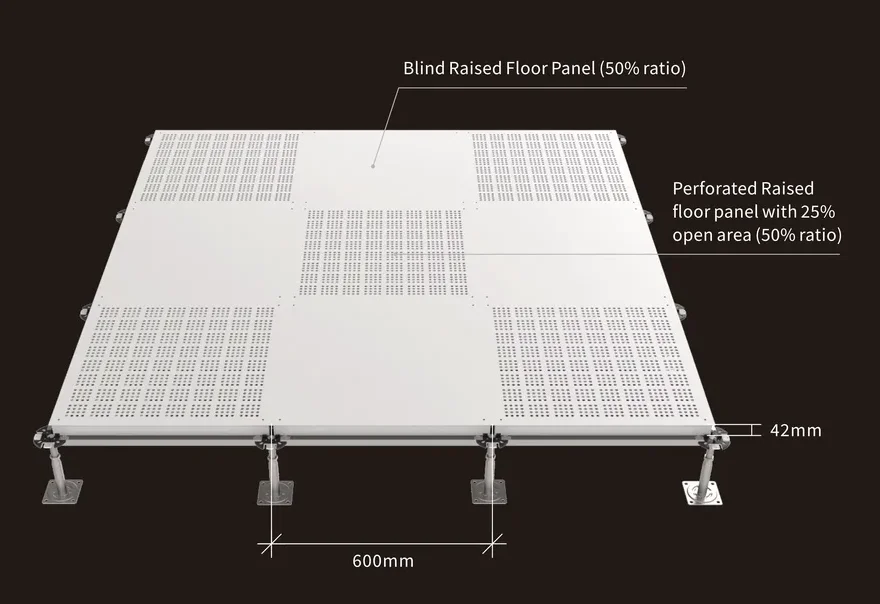
HUIYA provides a complete raised floor system solution for Class 100 cleanrooms, combining perforated and blind steel panels with a dual-layer anti-corrosion pedestal & stringer system. The system delivers vertical unidirectional airflow, rapid self-cleaning, and permanent anti-static performance while meeting strict acid and alkali resistance requirements.
Why Class 100 Clean Rooms Require Raised Floor
A Class 100 clean room is defined as a space where the concentration of particles ≥0.5 micrometers in size does not exceed 100 per cubic foot. Raised floor is utilized to facilitate a vertical unidirectional airflow in conjunction with the overhead air supply. Air flows through the perforations in the floor directly into the under-floor return air plenum, preventing the turbulence and particle rebound that would occur upon impact with a standard floor; this design enables rapid self-cleaning while also accommodating utility lines and providing anti-static properties.
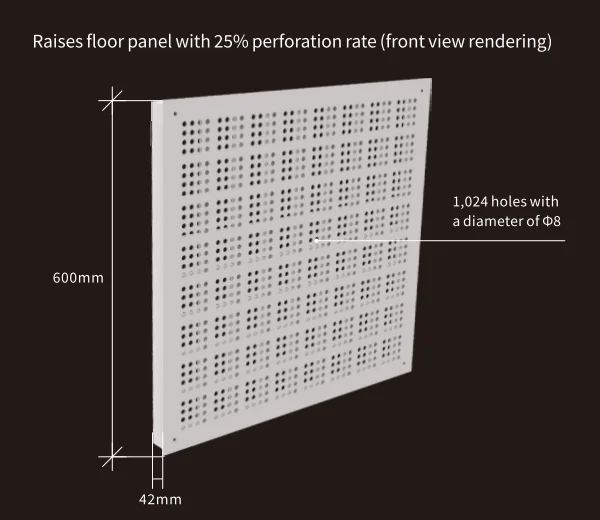
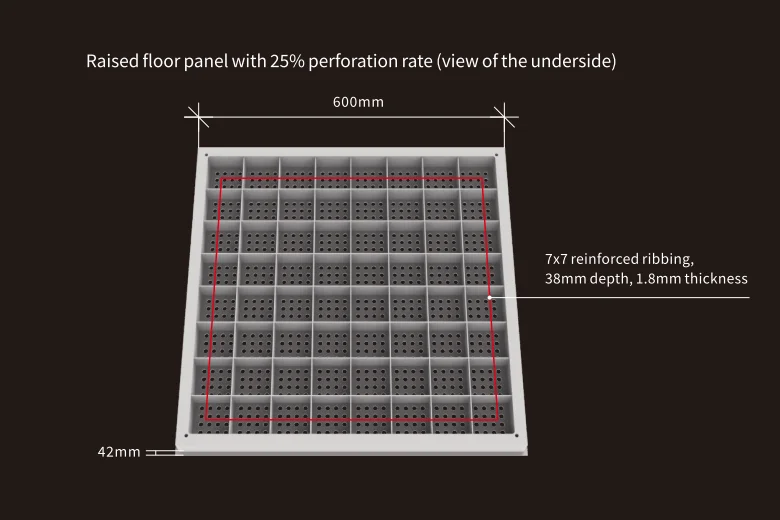
Perforated Raised Floor Product Display (25% Airflow Rate)
Mechanical Properties
Concentrated Load: Concentrated load testing was conducted in accordance with CISCA 2007 Section 1: a load of 4,500 N (450 kg) was applied via a 25.4 mm × 25.4 mm steel block. The deflection of the raised floor panel was required to be less than 2.5 mm. Testing was performed at four designated points.
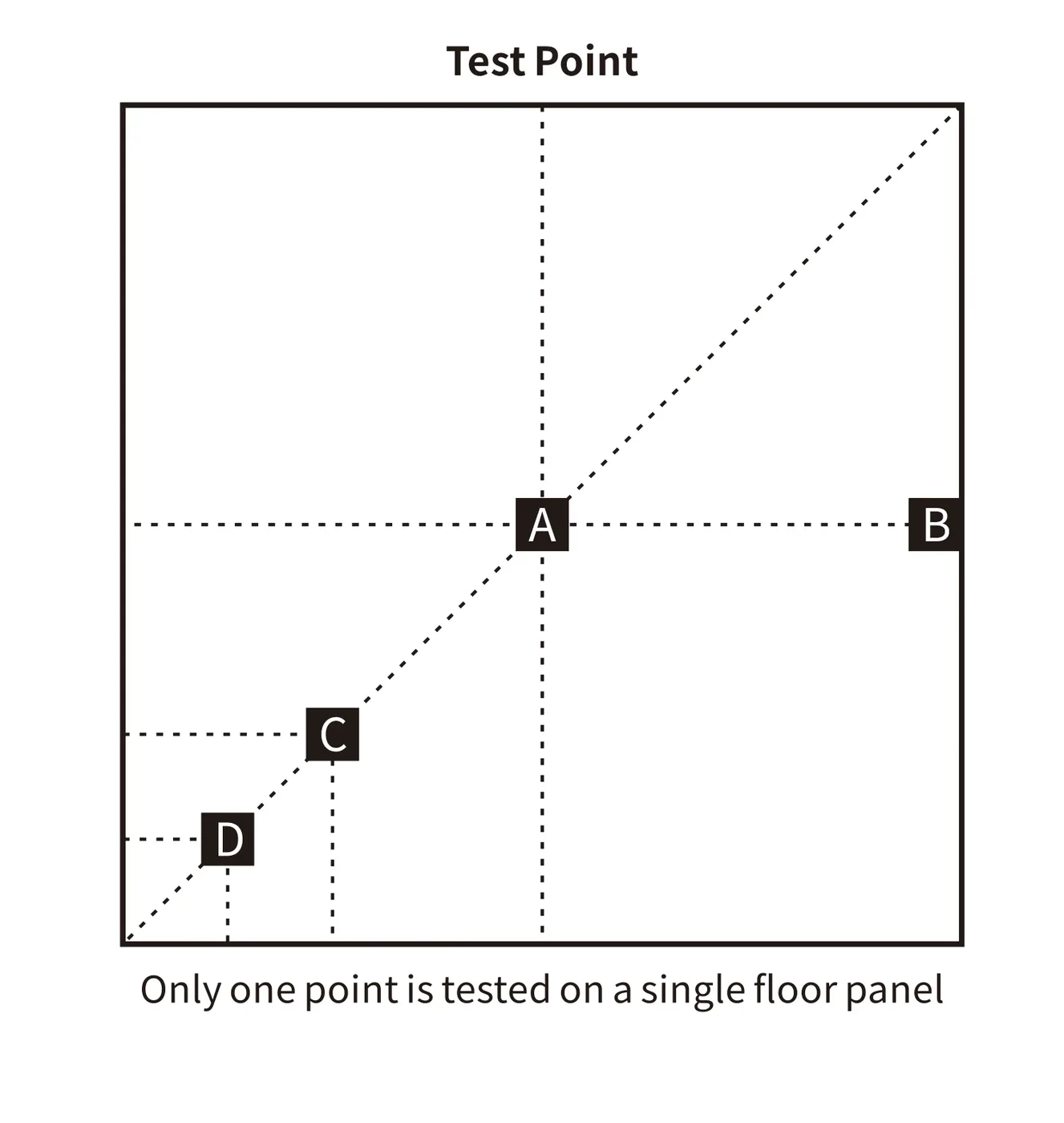
| Test Location | Deflection (mm) | Permanent Set (mm) | Client’s Requirement | Conclusion |
|---|---|---|---|---|
| At the Centre of the Panel | 1.67 | 0.08 | Deflection≤2.50mm | Pass |
| At the Center of the Edge | 1.87 | 0.20 | Deflection≤2.50mm | Pass |
| A quarter along a diagonal of the panel | 1.48 | 0.23 | Deflection≤2.50mm | Pass |
| 70cm × 70cm Corner a diagonal of the panel | 1.35 | 0.27 | Deflection≤2.50mm | Pass |
Client’s requirement: Deflection ≤ 2.50mm. Only one point is tested on a single floor panel.
Uniform Load
Uniform load assessment conducted in accordance with US CISCA 2007 Section 1: A pressure of 20,000 N (2,000 kg)/m² converts to a test load of 7,200 N (720 kg) for a 600 mm × 600 mm floor panel.
| Test Item | Test Method | Result | Conclusion |
|---|---|---|---|
| Uniform Load Test | CISCA Recommended Test Procedures for Access Floors (2007) Section 7 | See Result | Pass |
Ultimate Load Test
Ultimate load evaluation was conducted in accordance with CISCA 2007 Section 2: Maximum pressure was applied via a 25.4 mm × 25.4 mm steel block until the floor panel failed; testing was performed at four designated points.
| Test Location | Ultimate Load (N) |
|---|---|
| At the Centre of the Panel | 25258 |
| At the Center of the Edge | 18485 |
| A quarter along a diagonal of the panel | 19051 |
| 70cm × 70cm Corner a diagonal of the panel | 19375 |
Only one point is tested on a single floor panel.
Acid and Alkali Resistance Test
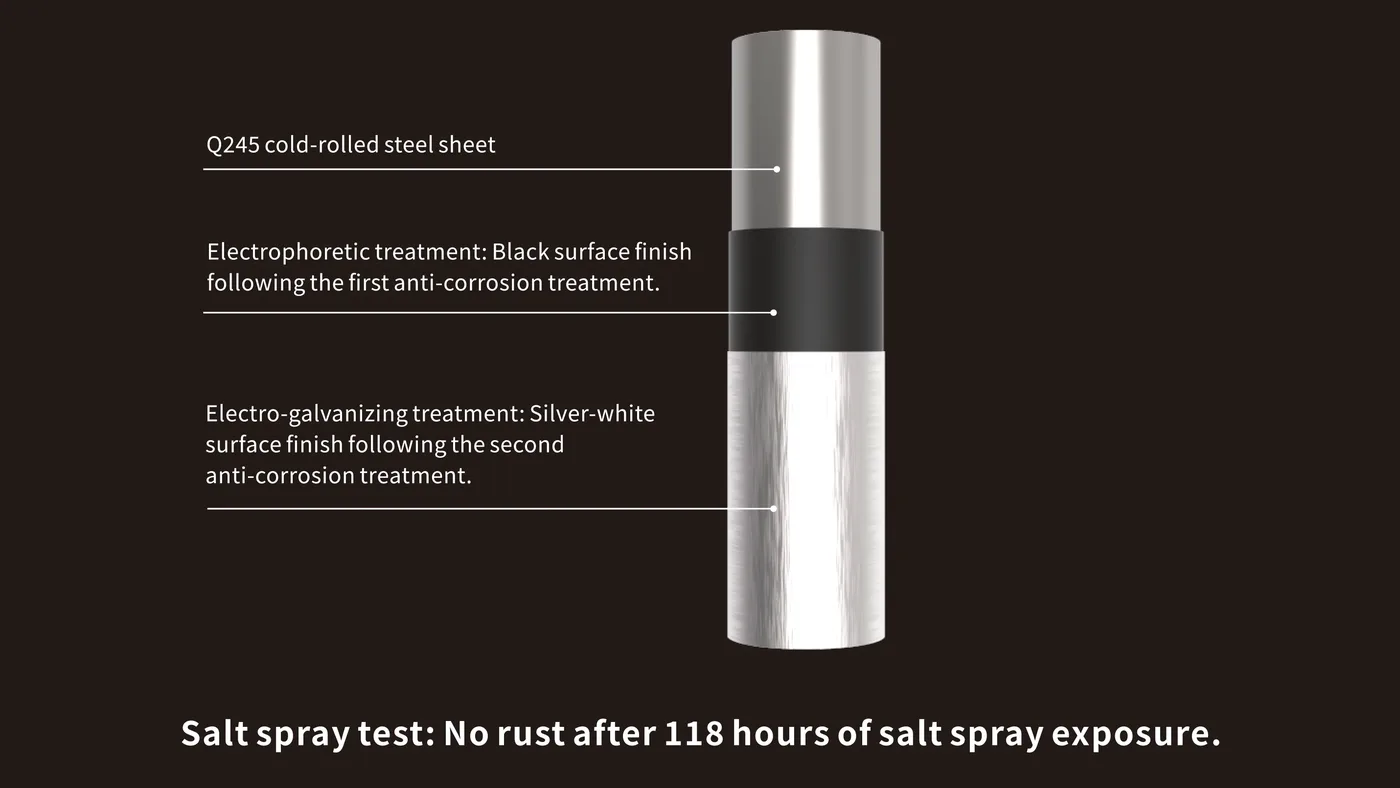
To meet the acid and alkali resistance requirements of cleanrooms, HUIYA’s raised floor systems utilize a dual-layer anti-corrosion protection method.
- Specialized Coating Process.
- Dual-Layer Protection (Electrophoresis + Spray Coating).
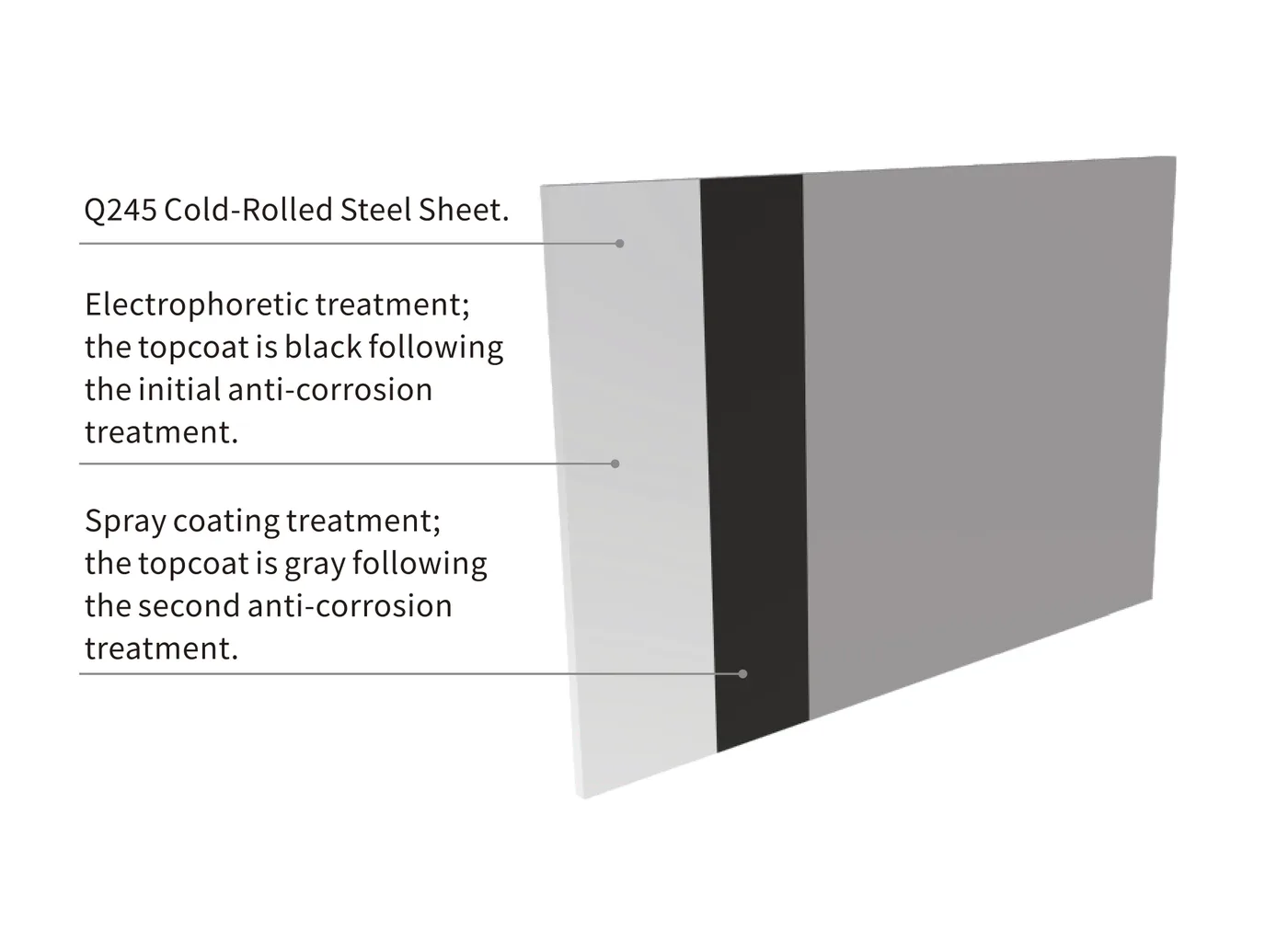
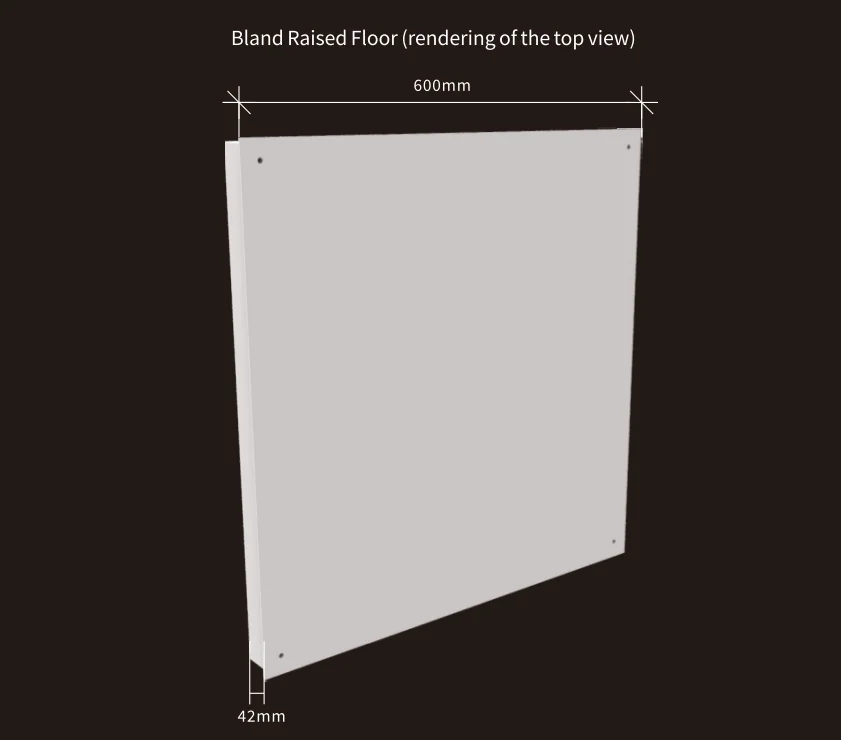
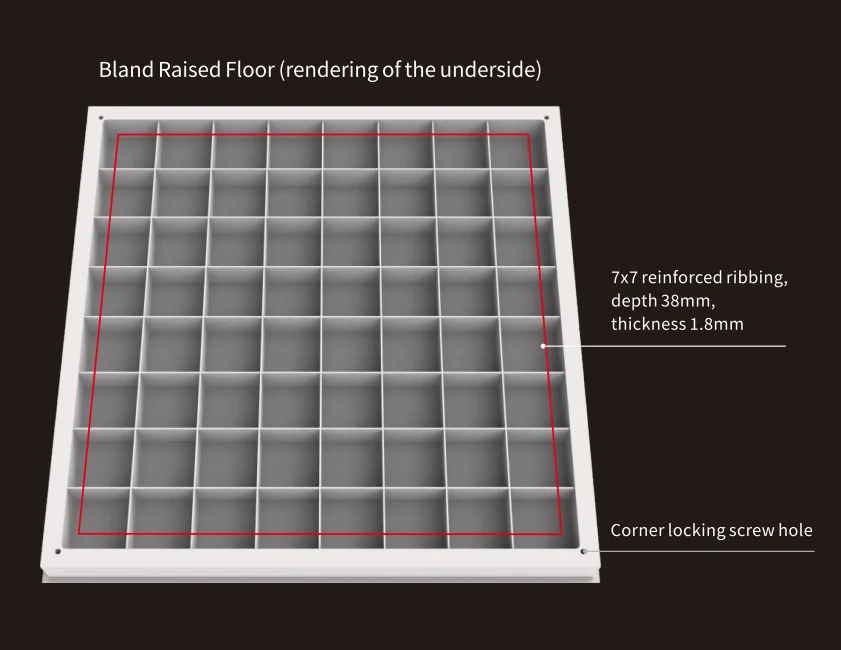
Huiya Blind Raised Floor
Bottom Pedestal System
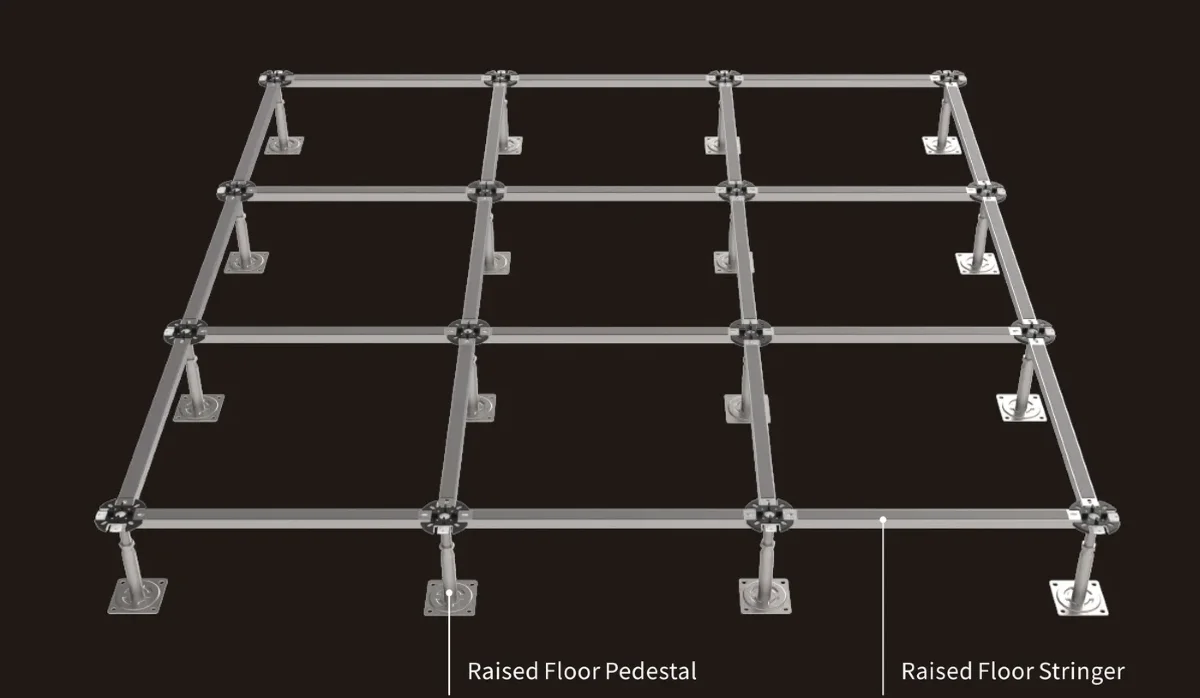
Pedestal & Stringer — Acid/Alkali Resistant and Anti-Corrosion Treated.
- Specialized coating process.
- Dual-layer protection via electrophoresis and zinc plating.
- To meet the acid and alkali resistance requirements of cleanrooms, HUIYA’s raised floor systems utilize a dual-layer anti-corrosion treatment.
The height of the raised floor is customizable; for specific pedestal design solutions, please refer to the HUIYA pedestal design system brochure.