

Picking flooring for a business is nothing like picking it for a home. Floors in restaurants, offices, retail stores, medical centers, data rooms, gyms, and salons face constant foot traffic, rolling loads, cleaning chemicals, moisture, and daily abuse. If you choose the wrong product, you could be replacing it far sooner than planned. This guide walks you through ten reliable commercial flooring options that hold up under pressure, rates each one on key performance factors, and finishes with practical advice on how to match the right product to your project.
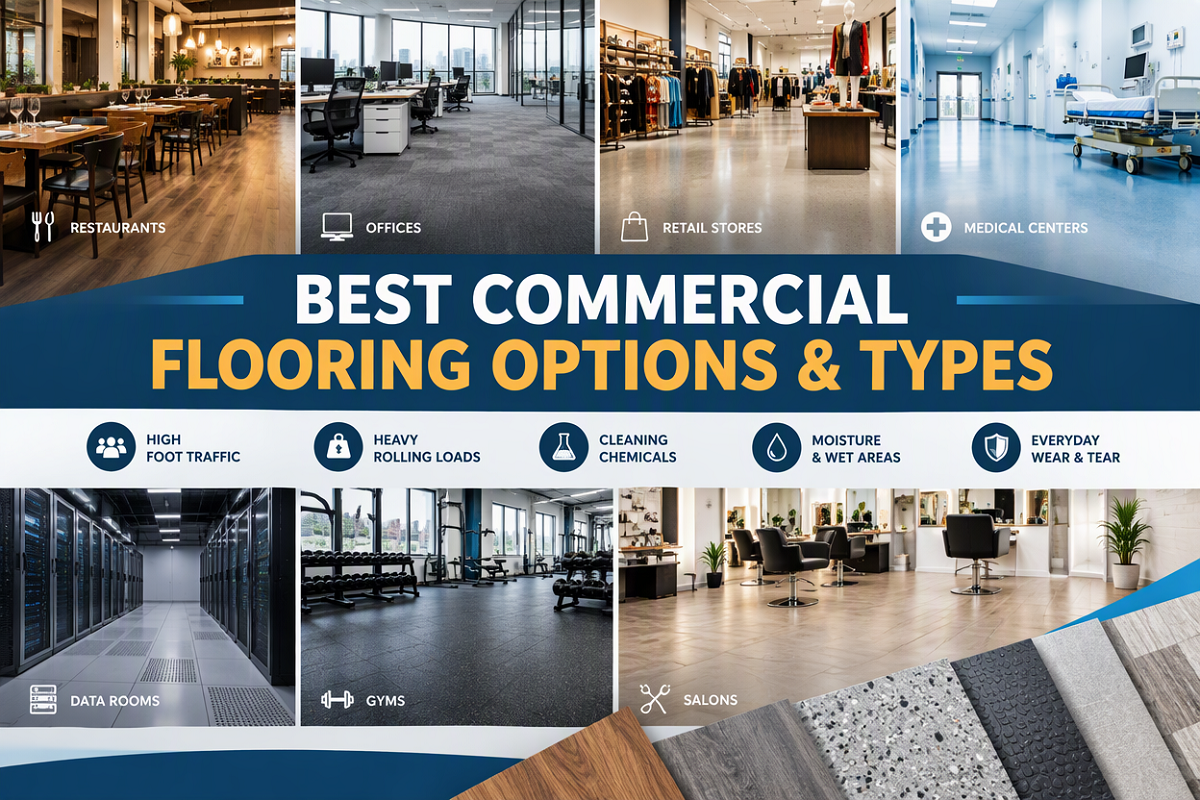
Top 10 Best Commercial Flooring Options (Types) for Heavy Duty & High-Traffic Areas 2026
Residential flooring is designed for normal daily life: low foot traffic, pets, and the occasional rolling chair. Commercial flooring has a much harder job. It deals with constant traffic, cleaning chemicals, moisture, and rolling loads all day, every day. When evaluating commercial floors, pay attention to wear layer thickness and surface durability, how stable the floor is under rolling loads and furniture, how it handles moisture and cleaning chemicals, and how it’s installed, because installation method matters just as much as the product.
According to the industry’s “big five” selection factors, you should always weigh cost, maintenance, durability, longevity, and safety. Budgets must be honored so clients don’t fall in love with products out of reach. Ask how much daily, weekly, monthly, and annual maintenance the owner is willing to perform. Consider traffic levels, moisture exposure, cleaning routines, sunlight, and acceptable downtime for repairs. With those priorities in mind, let’s get into the ten commercial flooring options that consistently perform well in heavy-duty and high-traffic environments.
1. Raised Access Floor
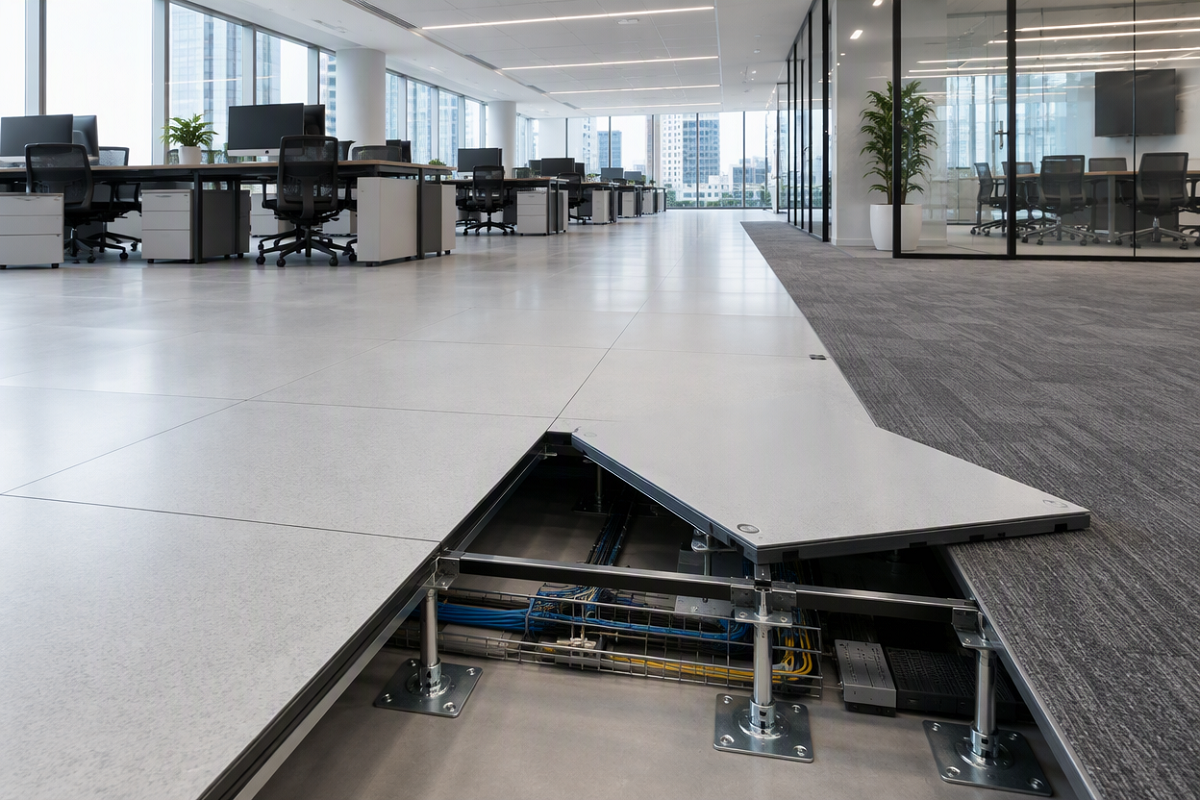
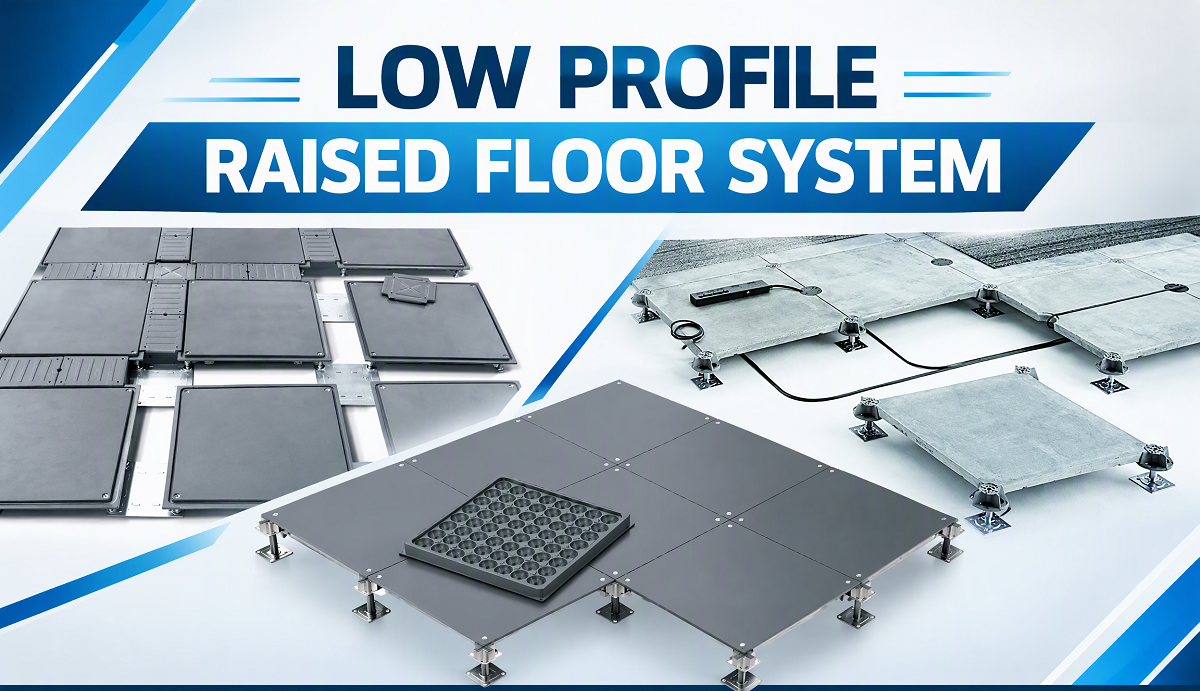
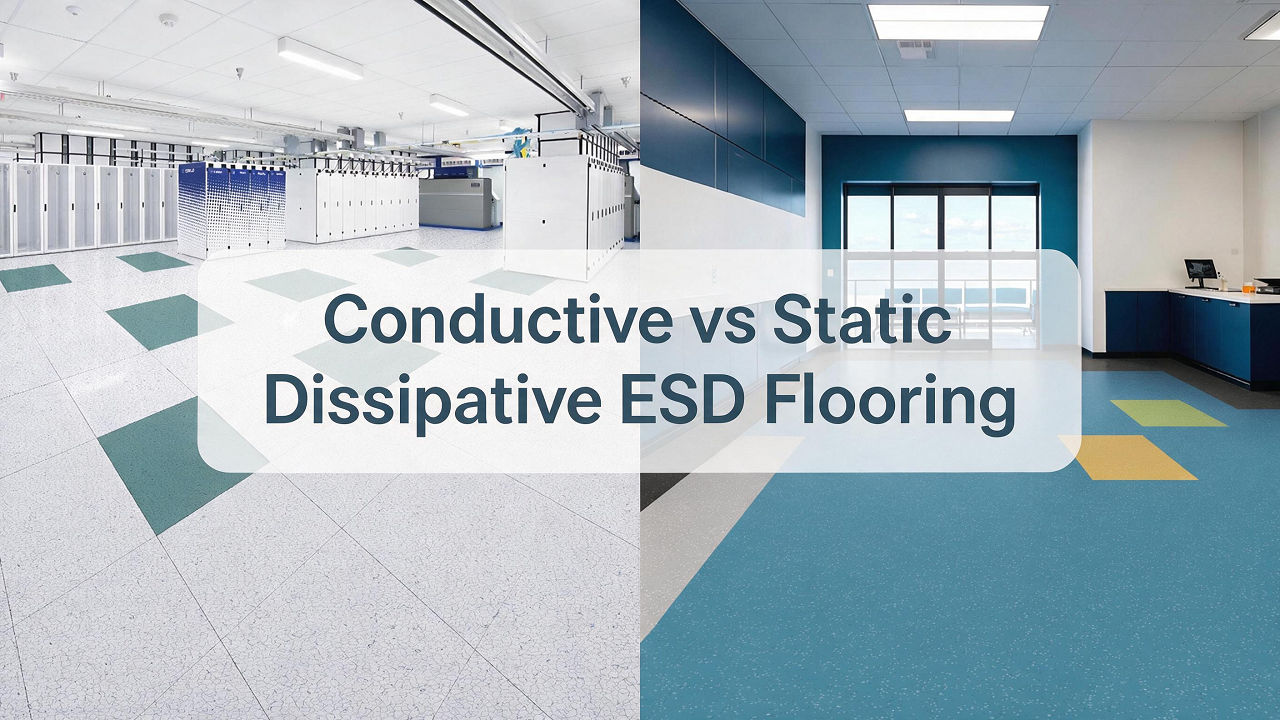
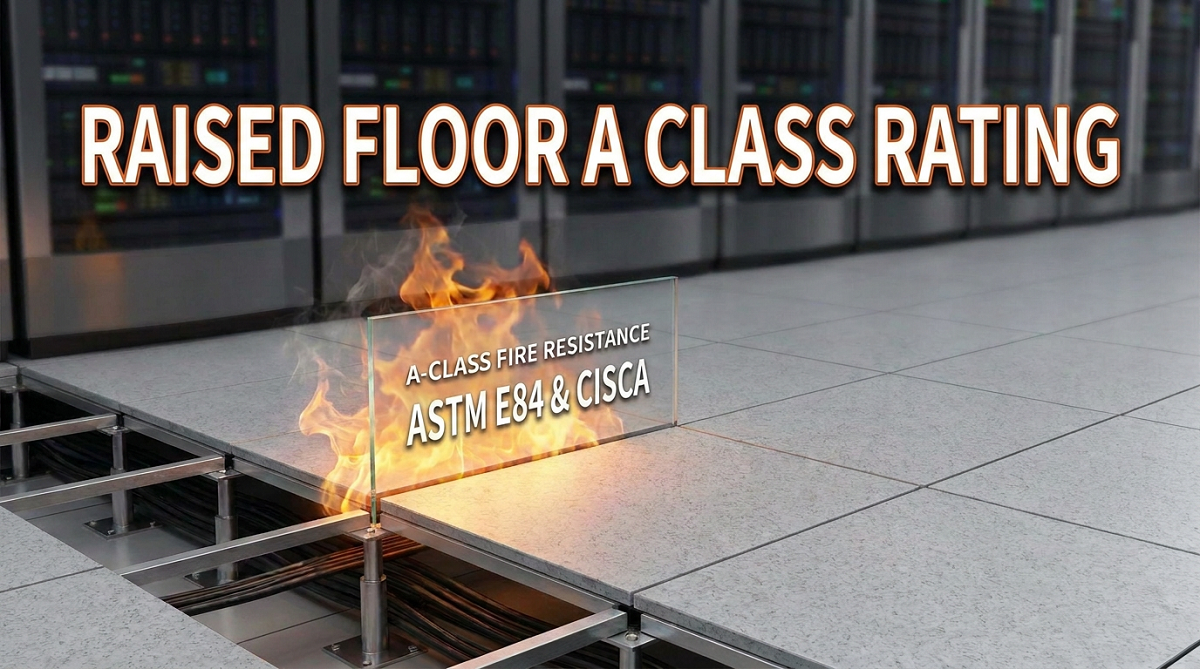
Raised access floor systems such as HUIYA’s products are widely used in data centers, offices, and semiconductor cleanrooms. They prevent electrostatic hazards and simplify the layout of power and data cables through a modular structure. Materials include steel-based, particleboard-based, calcium sulfate-based, and aluminum die-cast options, with surface veneers in ceramic, HPL, PVC, rubber, or carpet. Surface resistance ranges from 1×10⁴ to 1×10⁶ Ω for conductive types and 1×10⁶ to 1.0×10⁹ Ω for dissipative types. Height adjustment, modular disassembly, and A1 fire resistance make them a top pick for mission-sensitive environments.
- Durability: ⭐⭐⭐⭐⭐
- Waterproof: ⭐⭐⭐⭐☆
- Anti-slip: ⭐⭐⭐⭐☆
- Cost: Medium to Expensive
- Cable Management: ⭐⭐⭐⭐⭐
- ESD Protection: ⭐⭐⭐⭐⭐
- Best for: Data centers, server rooms, wafer fabs, semiconductor cleanrooms (Class 100), biopharmaceutical facilities, modern offices, marine robotics labs, prefabricated apartments, and modular exhibition booths.
2. Glue Down Vinyl (LVT)
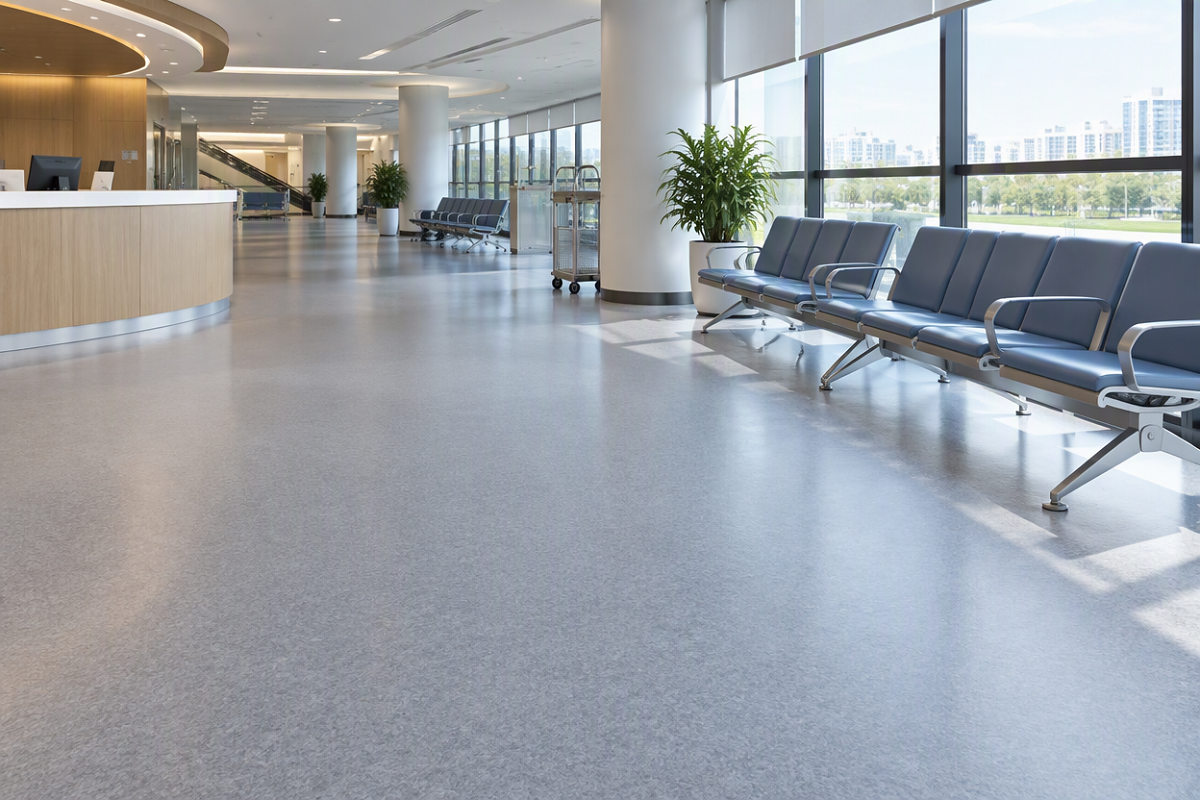
Glue down vinyl is one of the most reliable choices for high-traffic commercial spaces because it lays flat, stays put, and handles rolling chairs, carts, and constant foot traffic better than floating floors. It cleans quickly, resists water, and damaged pieces can be replaced individually without tearing out the entire floor. For true commercial areas, look for a heavier wear layer, typically 20 mils or higher, proper adhesive, and thorough subfloor prep with moisture testing. Keep in mind glue down vinyl can fade in direct sunlight, so plan for UV film, shades, or fade-resistant colors near large windows.
- Durability: ⭐⭐⭐⭐☆
- Waterproof: ⭐⭐⭐⭐☆
- Anti-slip: ⭐⭐⭐⭐☆
- Cost: Budget to Medium
- Repairability: ⭐⭐⭐⭐⭐
- Best for: Retail stores, office lobbies and break rooms, medical and dental clinics, salons, gym reception areas, and multi-tenant spaces.
3. Polished Concrete
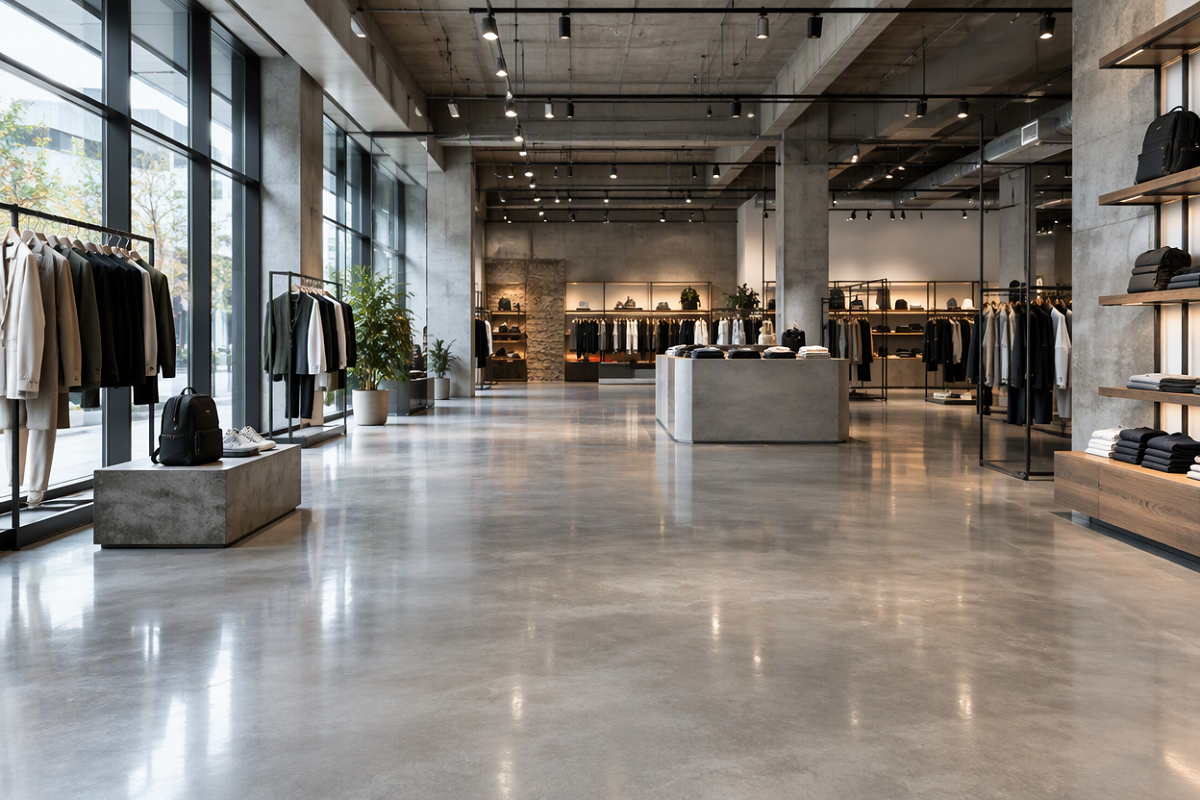
Concrete is the workhorse option for modern retail, industrial-style spaces, and large open areas. When the slab is in good condition, polished or sealed concrete offers extreme durability with low maintenance, and you avoid worrying about wear layers, seams, or replacement cycles. It also solves a common detail problem in retail spaces with metal window framing, since you’re not relying on perimeter trim to finish the install. On the downside, you’re married to the slab: uneven, cracked, or patched concrete can cost real money to prep. It feels hard and cold underfoot, acoustics can be rough, and the wrong finish can get slippery when wet.
- Durability: ⭐⭐⭐⭐⭐
- Waterproof: ⭐⭐⭐⭐☆
- Anti-slip: ⭐⭐⭐☆☆ (depends on finish)
- Cost: Medium (if slab is good) to Expensive (with heavy prep)
- Maintenance: ⭐⭐⭐⭐⭐
- Best for: Modern retail stores, industrial showrooms, large open restaurants, warehouses, breweries, and automotive showrooms.
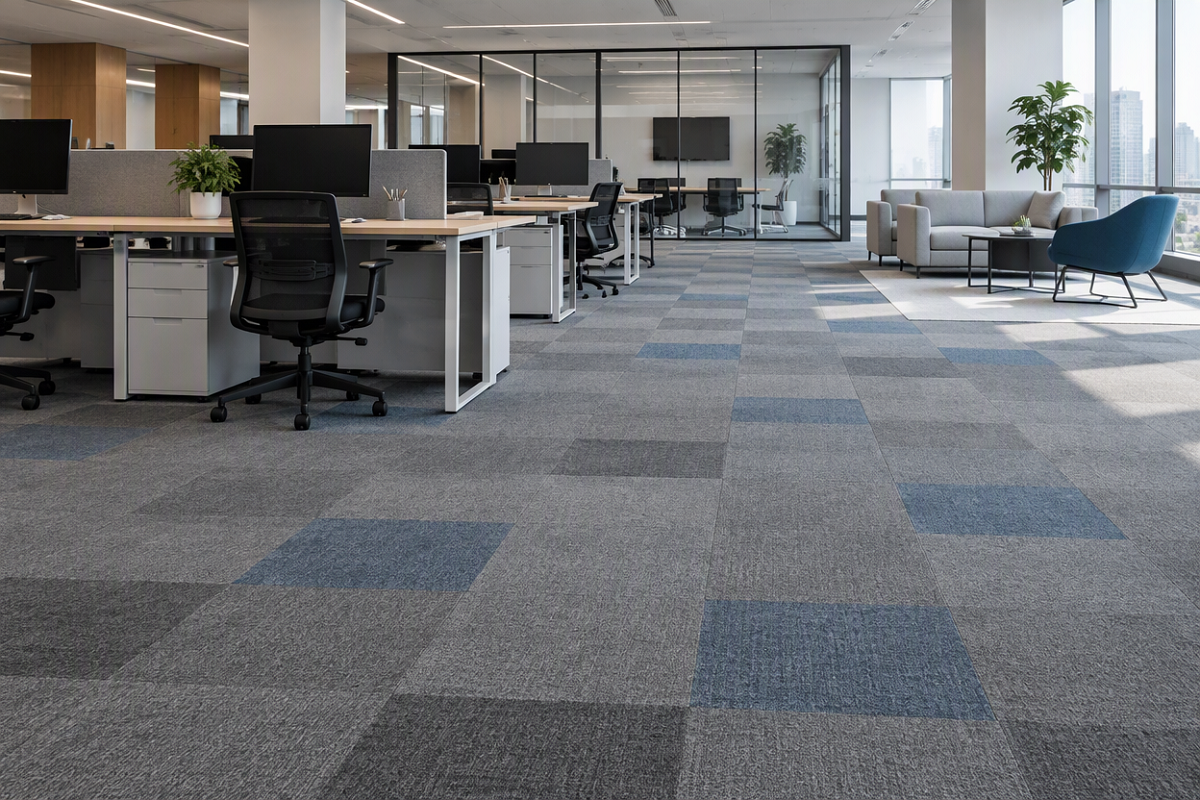
4. Carpet Tiles (Carpet Squares)
Carpet tiles are still one of the smartest commercial choices for offices and multi-tenant spaces. They’re comfortable, they reduce noise, and if a section gets stained or damaged you can swap out a few tiles instead of replacing the whole floor, which matters when you want to stay open and avoid downtime. These versatile tiles come in various shapes and sizes, and although they benefit from an annual deep clean, routine vacuuming keeps them looking great. They do not love moisture, so skip them in wet zones. Corners can lift in heavy traffic paths, and strong direct sunlight can cause fading.
- Durability: ⭐⭐⭐⭐☆
- Waterproof: ⭐⭐☆☆☆
- Anti-slip: ⭐⭐⭐⭐⭐
- Cost: Budget to Medium
- Comfort & Acoustics: ⭐⭐⭐⭐⭐
- Best for: Corporate offices, co-working spaces, hotels, classrooms, libraries, conference rooms, and multi-tenant commercial buildings.
5. Quarry Tile
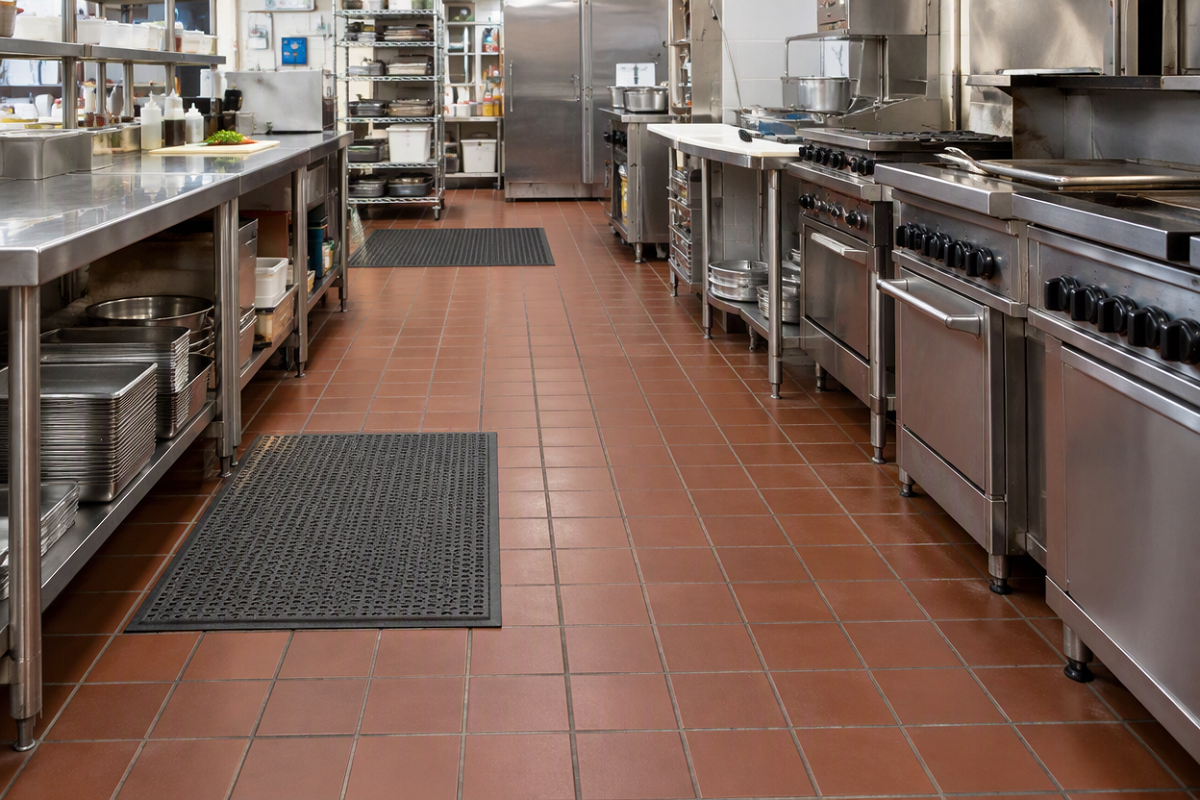
Quarry tile is one of the most underrated commercial workhorse floors, especially in restaurants, cafes, and any business with back-of-house traffic. It’s extremely durable, handles frequent cleaning and moisture better than most alternatives, and holds up to carts, heavy foot traffic, and daily abuse. It’s a classic choice in kitchens and prep areas because it performs well in wet, greasy, high-cleaning environments when installed with the right grout and maintenance plan. It is hard underfoot, so anti-fatigue mats help staff who stand all day. Grout lines also need routine care to prevent staining.
- Durability: ⭐⭐⭐⭐⭐
- Waterproof: ⭐⭐⭐⭐⭐
- Anti-slip: ⭐⭐⭐⭐☆
- Cost: Medium
- Grease & Chemical Resistance: ⭐⭐⭐⭐⭐
- Best for: Commercial kitchens, restaurant back-of-house, bakeries, breweries, food prep zones, and cafeteria service areas.
6. Porcelain and Ceramic Tile
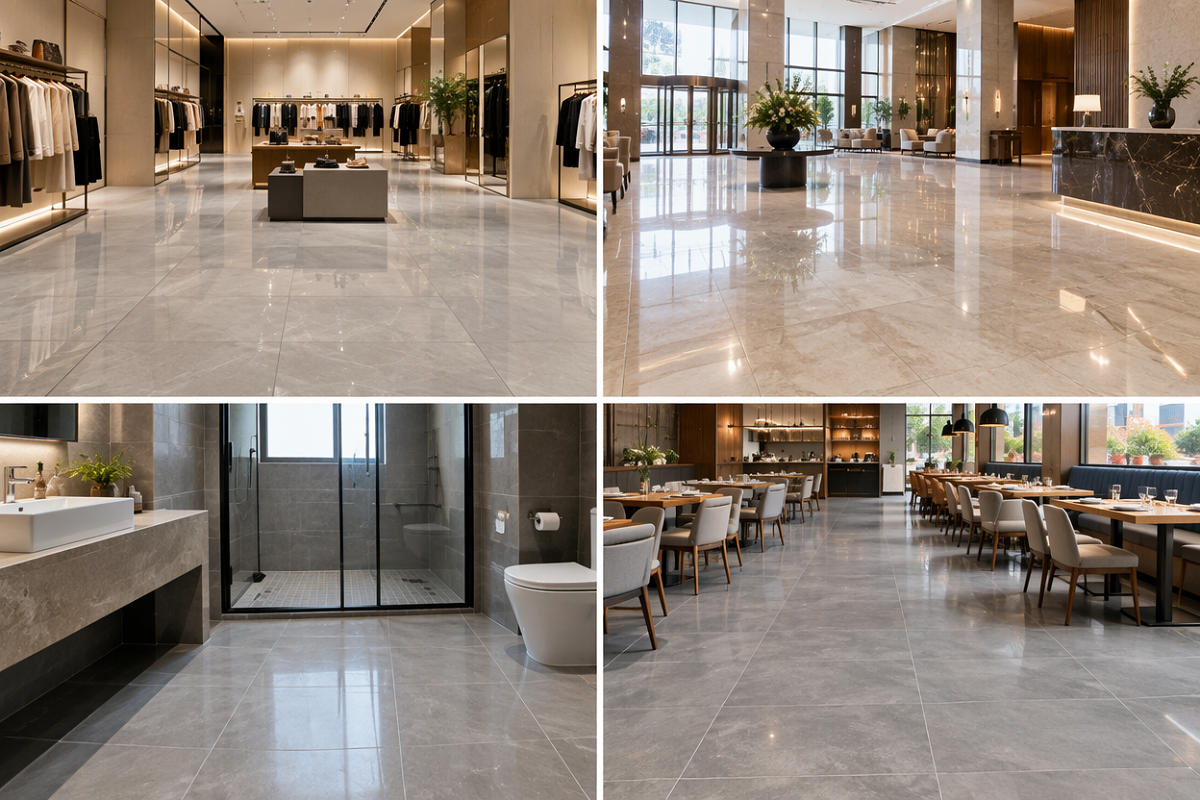
Porcelain and ceramic tile are solid picks for commercial storefronts, lobbies, restrooms, and front-of-house dining rooms. Installed directly to a flat, sound subfloor, they handle traffic well, resist moisture, and let you swap damaged pieces rather than redoing the whole floor. Natural stone fits in this family too when a more premium look is wanted. The install cost and prep requirements are higher than vinyl, and removal later is labor intensive.
- Durability: ⭐⭐⭐⭐⭐
- Waterproof: ⭐⭐⭐⭐⭐
- Anti-slip: ⭐⭐⭐⭐☆ (with the right finish)
- Cost: Medium to Expensive
- Design Variety: ⭐⭐⭐⭐⭐
- Best for: Retail storefronts, hotel lobbies, restaurant dining rooms, public restrooms, airports, and shopping mall common areas.
7. Urethane Cement
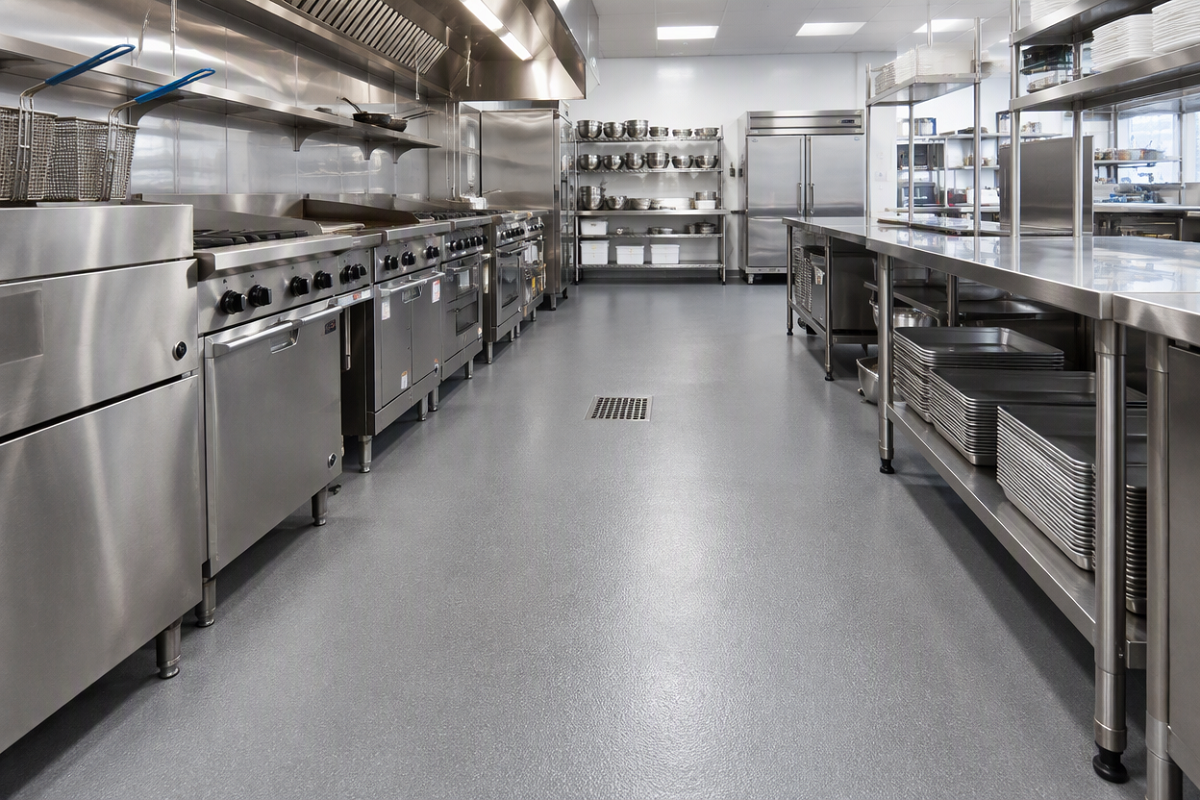
Urethane cement is the gold standard for commercial kitchens and food and beverage settings. It handles hot grease from fryers, hot water wash-downs with steam, and chemical exposure where traditional epoxy coatings would fail quickly. Applied as a three-component system (part A, part B, and aggregate), it’s typically installed at about 1/8 inch thickness with silica sand broadcast for slip resistance, then sealed with a urethane cement top coat. Full cure usually runs about 24 hours, so businesses can get back to service fast.
- Durability: ⭐⭐⭐⭐⭐
- Waterproof: ⭐⭐⭐⭐⭐
- Anti-slip: ⭐⭐⭐⭐⭐
- Cost: Expensive
- Heat & Chemical Resistance: ⭐⭐⭐⭐⭐
- Best for: Commercial kitchens, restaurant cook lines, food and beverage production, breweries, dairies, meat processing plants, and pharmaceutical production floors.
8. Epoxy Flooring with Polyaspartic Top Coat
Epoxy flooring finished with a polyaspartic top coat is purpose-built for industrial and commercial automotive environments. Fast cure times mean facilities aren’t shut down for days, and the system is built to handle constant vehicle weight, oil, and chemical exposure. Blue epoxy with yellow line striping has become a go-to for industrial plants that need permanent walkway and traffic zone markings that won’t wear off like paint. Advanced coating systems like these handle heavy loads, harsh environments, and high traffic with long-term durability.
- Durability: ⭐⭐⭐⭐⭐
- Waterproof: ⭐⭐⭐⭐⭐
- Anti-slip: ⭐⭐⭐⭐☆ (with aggregate add-ins)
- Cost: Medium to Expensive
- Chemical Resistance: ⭐⭐⭐⭐⭐
- Best for: Automotive service shops, aerospace facilities, industrial manufacturing plants, warehouses, veterinary clinics, and healthcare facilities.
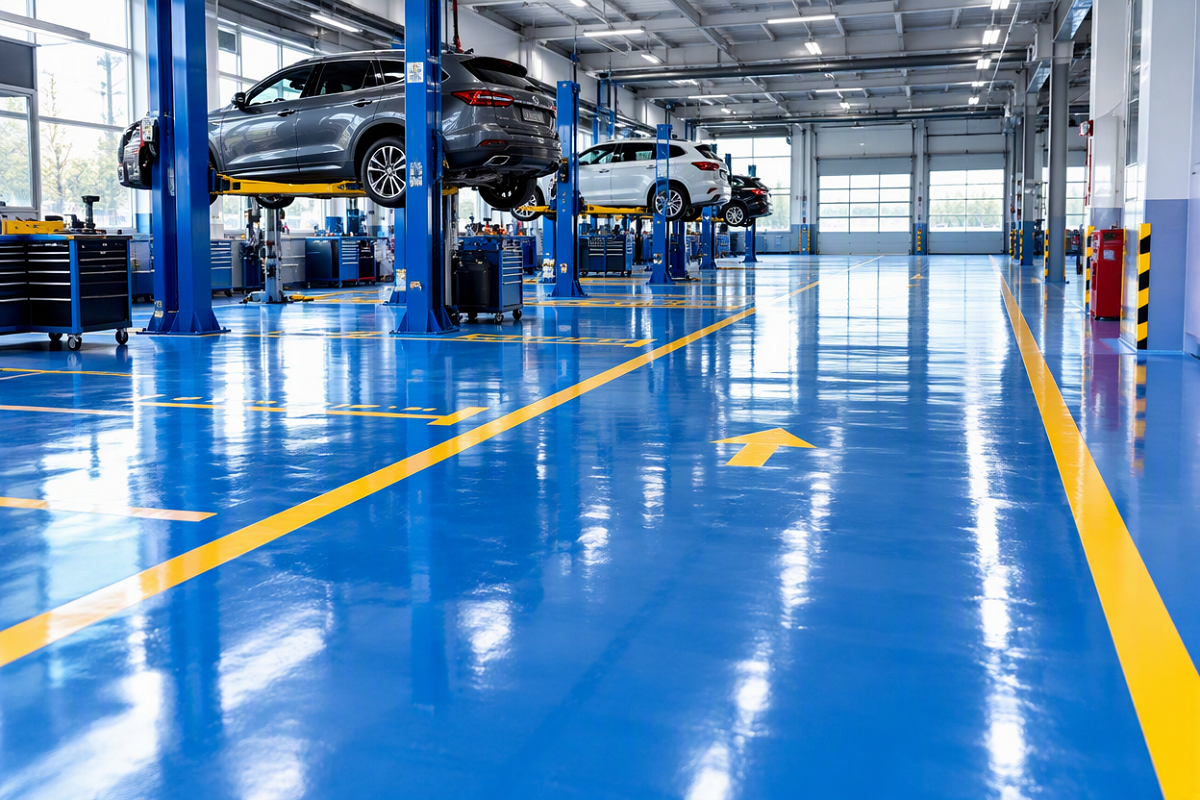
9. Epoxy Flake Flooring
Epoxy flake flooring combines a base coat of epoxy resin with colored vinyl chips in various hues and sizes, finished with a clear epoxy or polyurethane top coat for a seamless surface. It withstands heavyweight foot traffic in bustling commercial and industrial spaces, and the design can be customized with slip-resistant additives in higher-risk areas. UV-stable formulas work for both indoor and outdoor commercial settings. If you want style and functionality in one package with customizable patterns, this one is hard to beat.
- Durability: ⭐⭐⭐⭐☆
- Waterproof: ⭐⭐⭐⭐⭐
- Anti-slip: ⭐⭐⭐⭐☆
- Cost: Medium
- Design Customization: ⭐⭐⭐⭐⭐
- Best for: Showrooms, retail stores, garages, veterinary clinics, locker rooms, breweries, and public restrooms.
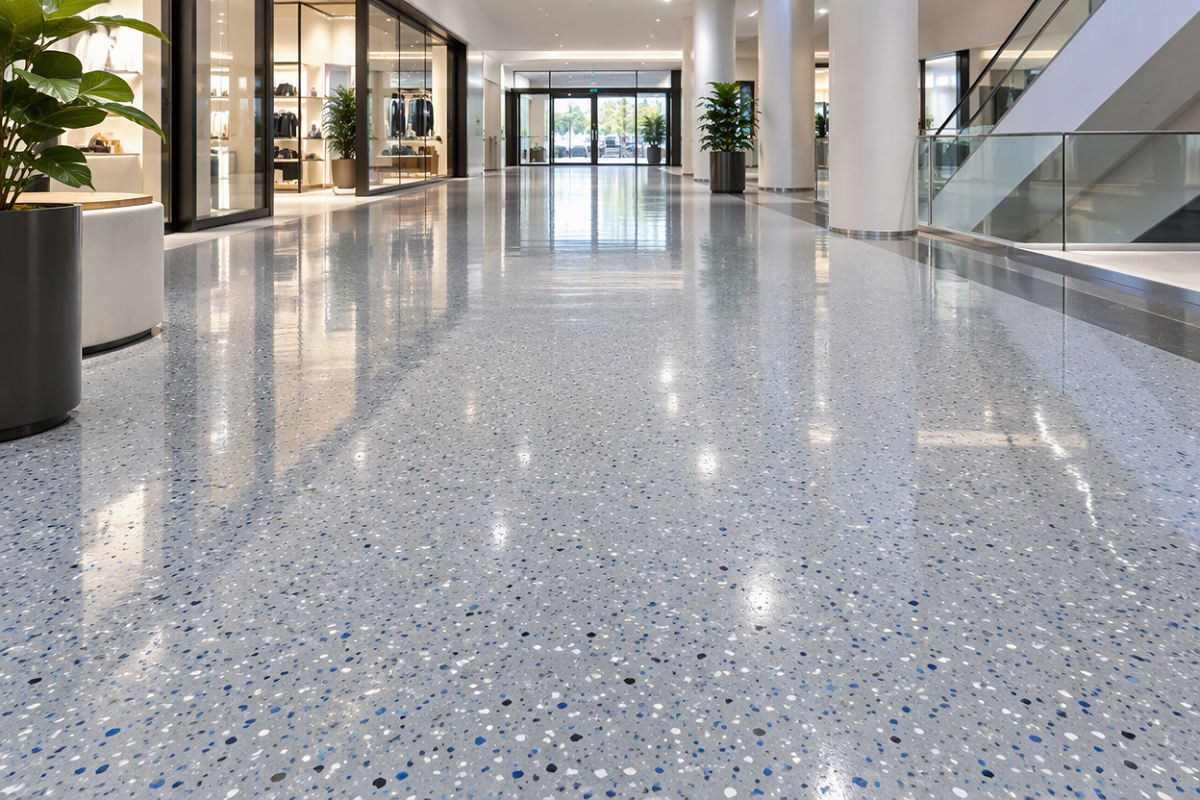
10. Quartz Flooring
Quartz flooring fuses colored quartz granules with epoxy resins into a robust system. The granules are harder than most mineral options, giving the floor serious strength and chemical resistance. The textured surface provides excellent grip, which is why it works so well in wet locker rooms and slippery bathrooms. If durability is your obsession and slip resistance is a safety priority, quartz is a strong finalist.
- Durability: ⭐⭐⭐⭐⭐
- Waterproof: ⭐⭐⭐⭐⭐
- Anti-slip: ⭐⭐⭐⭐⭐
- Cost: Medium to Expensive
- Chemical Resistance: ⭐⭐⭐⭐⭐
- Best for: Locker rooms, commercial bathrooms, pool decks, pharmaceutical labs, food plants, and heavy-duty industrial zones.
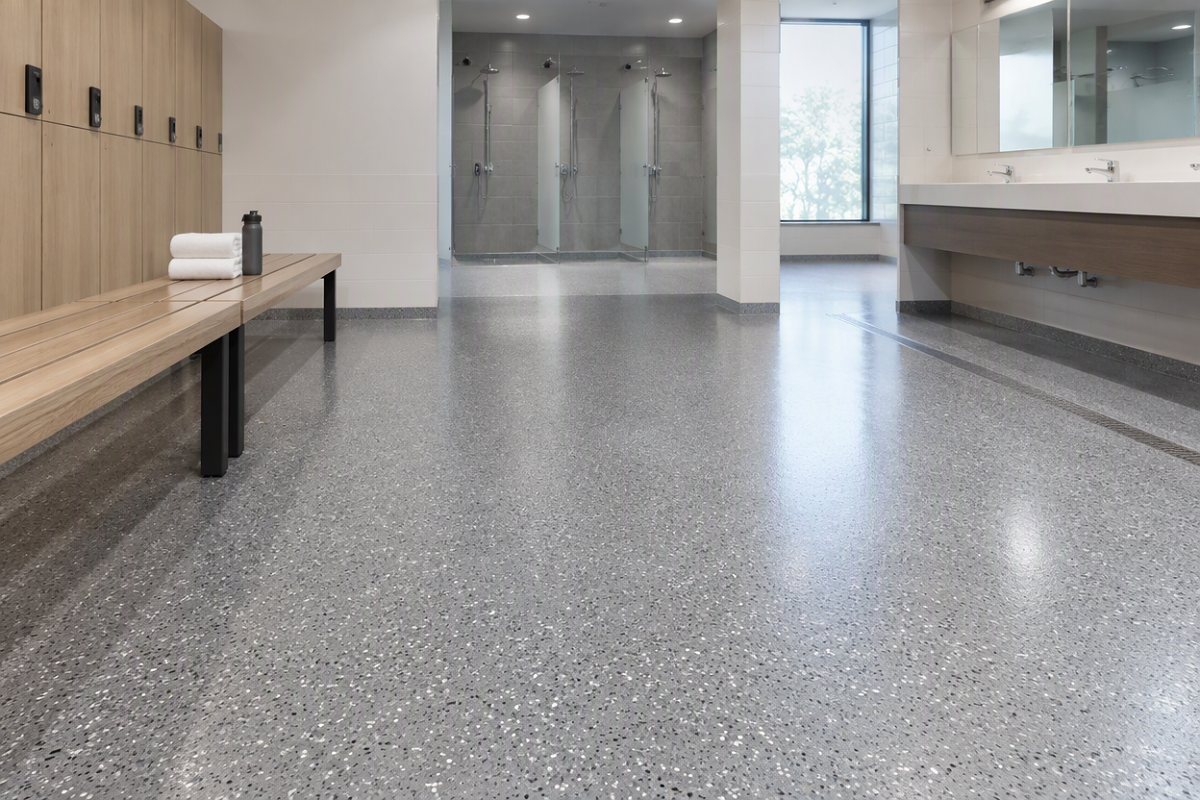
Bonus: Rubber Flooring
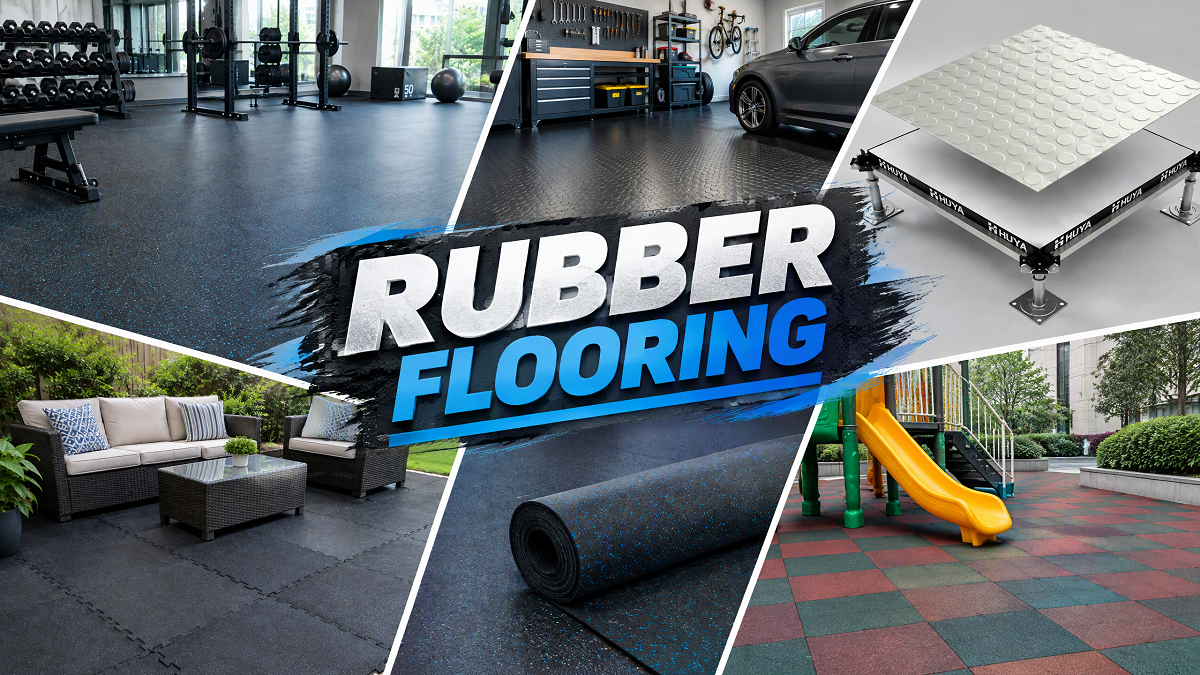
Rubber flooring deserves recognition for environments where impact absorption and safety come first. It’s not slick when wet and offers a more forgiving surface if a fall occurs, which is why we’re seeing more rubber floors in senior facilities, gyms, and children’s spaces.
- Durability: ⭐⭐⭐⭐☆
- Waterproof: ⭐⭐⭐⭐☆
- Anti-slip: ⭐⭐⭐⭐⭐
- Cost: Medium
- Impact Absorption: ⭐⭐⭐⭐⭐
- Best for: Gyms and fitness studios, senior care facilities, daycare centers, hospital rehab wings, and playgrounds.
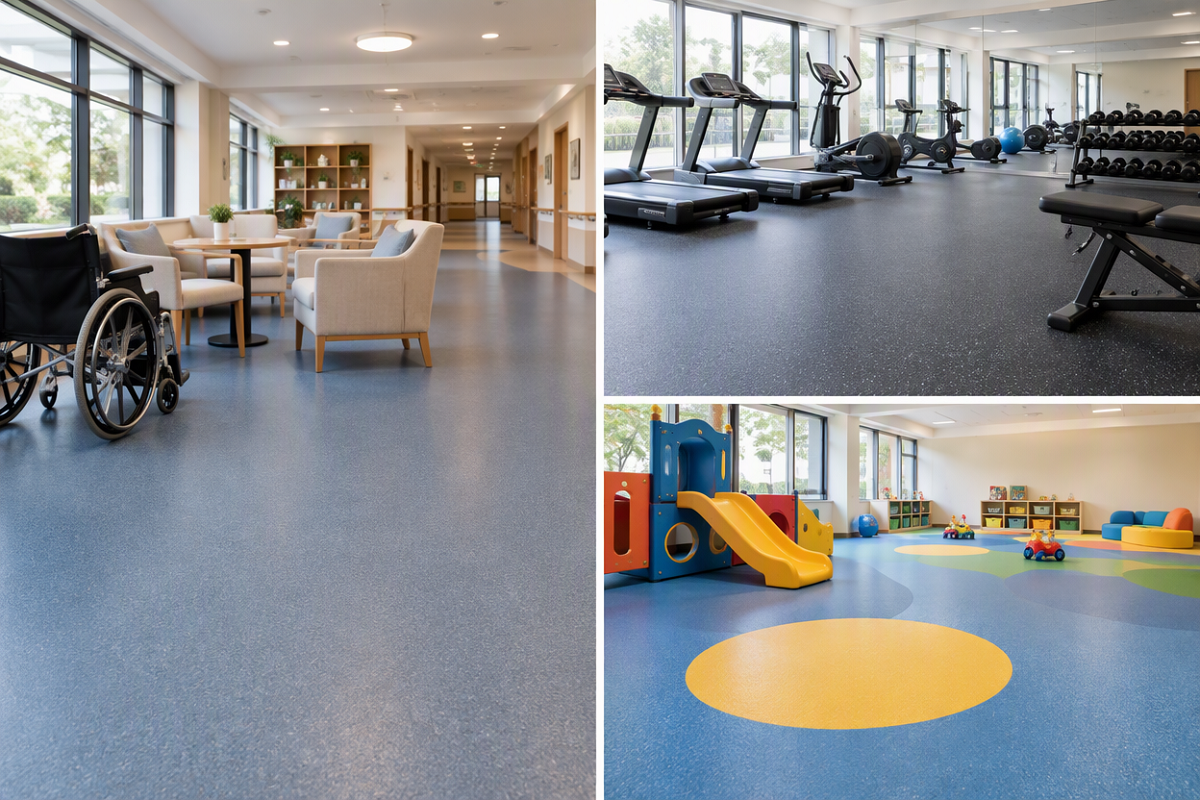
How To Choose The Right Commercial Flooring Type for Your Project?
Now that you’ve seen the ten options, the next step is matching the product to the way your space actually gets used. Here’s a quick starting point used by commercial flooring pros when clients ask what to choose.
- For retail stores – go with glue-down vinyl or finished concrete with entry mats at the doors. Porcelain tile also works beautifully in storefront entrances where a more premium look is wanted.
- For offices – carpet tiles cover most areas and glue-down vinyl works for lobbies and break rooms. If the office includes a data center, server room, or heavy cable routing, pair those zones with a HUIYA raised access floor system for cable management and ESD protection.
- For restaurants and cafes – use finished concrete or glue-down vinyl in customer areas, and quarry tile or porcelain in kitchens and food prep zones. For heavy-duty cook lines with hot grease and steam wash-downs, urethane cement is the top-tier pick.
- For medical and dental clinics – glue down vinyl is usually the go-to for durability and cleanability. Quartz coatings work well in sterile or wet-cleaning areas.
- For gyms and fitness centers – rubber flooring handles impact zones, while glue down vinyl or concrete fits reception and retail areas.
- For data centers, cleanrooms, and semiconductor facilities – the HUIYA raised access floor family (SCL, PBL, CSL, SP45 perforated, and aluminum cleanroom panels) handles ESD requirements, cable routing, airflow, and heavy point loads up to 5.0 MT on customized perforated steel panels.
- For industrial plants and automotive services – epoxy with a polyaspartic top coat delivers the fast cure times and chemical resistance you need, with line striping options for traffic flow and safety compliance.
Installation matters just as much as the product. Subfloor prep, moisture testing, and choosing the right install method for the space are huge factors in long-term performance. Skipping prep is one of the fastest ways to ruin a commercial floor. At the end of the day, the best commercial floor isn’t about trends. It’s about how your space is actually used: traffic, moisture, cleaning routines, sunlight, and downtime all matter. Match your product selection honestly to those conditions and your floor will keep performing long after day one.
Huiya Real-Time News
Huiya Real-Time News is dedicated to providing you with the latest and most authoritative information on the raised flooring industry.
We provide 24/7 updates on industry policy interpretations, market trend analysis, company news.
MORE DOWNLOADS

GENERAL CATALOGUE
HUIYA INTRODUCTION

HUIYA GREEN LABEL
CAD/BIM FULL STEEL
APPLICATION SCENARIOS


