

Rubber flooring has quietly become one of the most practical and versatile surface materials available today. From home gyms and playrooms to hospitals, schools, and modern kitchens, this resilient material offers a mix of durability, safety, and comfort that few other flooring options can match. In this guide, you’ll find everything you need to know about rubber flooring, including what it is, the pros and cons, the types available, where it works best, how to install it, and how to keep it clean.
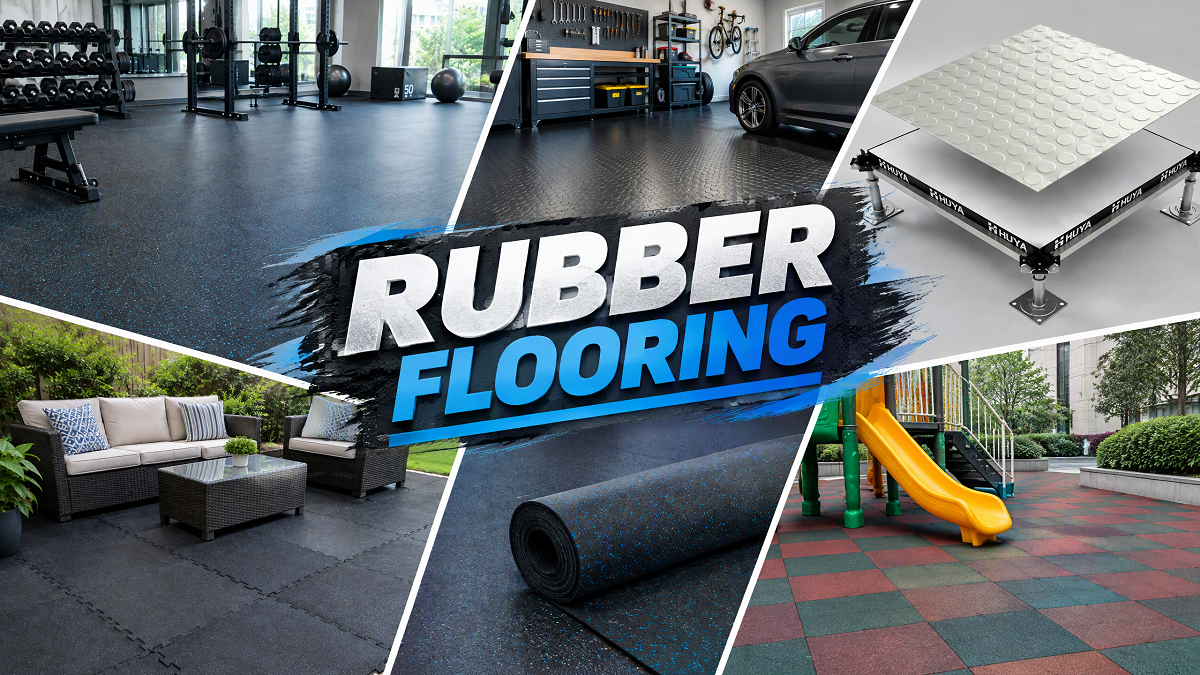
Rubber Flooring Guide 2026: Types, Pros & Cons, Application, Install, Clean & Cost
In 2026, rubber flooring is no longer just a utility surface for industrial zones or commercial fitness centers. Homeowners, designers, and facility managers are picking it for a wide range of spaces because it balances function with style. Modern production methods have expanded color choices, texture variety, and sustainable sourcing, which means today’s rubber floors can look just as polished as hardwood or vinyl while offering better shock absorption and noise reduction.
The push toward eco-friendly building materials has also boosted demand. Many rubber floors now use recycled truck tires or responsibly sourced natural rubber, which appeals to buyers who want greener options. Rubber has also moved into specialized architectural systems, such as raised access floor finishes used in airports, data centers, and hospitals, where products like the HUIYA Raised Access Floor Rubber Tile bond rubber surfaces to steel, calcium sulfate, and aluminum raised floor panels for heavy-traffic commercial projects.
On top of that, the rise of home gyms, hybrid workspaces, and multi-use rooms has made rubber a go-to pick for anyone who wants a floor that can handle heavy equipment, kids, pets, and daily foot traffic without wearing out.
What is Rubber Flooring?
Rubber flooring is a durable, flexible floor covering made from either natural rubber or recycled synthetic rubber such as repurposed tires. It is water resistant, slip resistant, and offers excellent noise reduction, along with underfoot comfort and cushioning.
Rubber is vulcanized together, where granules of rubber products are blended. The material can then be peeled into a thinner desired thickness, as low as 3.2 millimeters, or pressed into a tile or mold at the required thickness. Some versions are marbleized for a decorative look, while others combine rubber with cork for added sustainability and softness.
You will find rubber flooring in several formats, including rolls, interlocking tiles, mats, custom-cut sheets, and specialized raised access floor finishes. It shows up in gyms, playgrounds, commercial buildings, schools, basements, kitchens, hospitals, airports, and modern homes.
Advantages and Disadvantages of Rubber Flooring
Like any flooring material, rubber comes with a mix of strong benefits and a few trade-offs worth knowing before you commit.
✅Advantages
- Extreme durability. Rubber flooring can handle heavy foot traffic and equipment. It won’t crack, chip, or wear out easily, which is why it holds up so well in gyms and high-use commercial spaces. Premium commercial rubber products stay intact even under repeated crushing by heavy objects like forklifts, without any deformation.
- Water and slip resistance. Rubber performs well in moisture-prone areas and stays safe underfoot even when wet. Its high-elasticity non-porous structure boosts surface friction and waterproof performance, which makes it a smart pick for kitchens, bathrooms, hospitals, and laundry rooms.
- Shock absorption. It’s soft underfoot and absorbs impact, ideal for home gyms, playrooms, and workout zones where dropped weights or falls are a concern.
- Noise reduction. Rubber reduces sound transfer between floors, a big plus for apartments, offices, and multi-level homes.
- Eco-friendly options. Many rubber floors are made from recycled truck tires or natural rubber. Higher-end commercial products such as HUIYA’s raised access floor rubber tile use natural rubber, synthetic rubber, natural mineral fillers, and green pigments, with no harmful volatile substances like formaldehyde, benzene, toluene, or xylene.
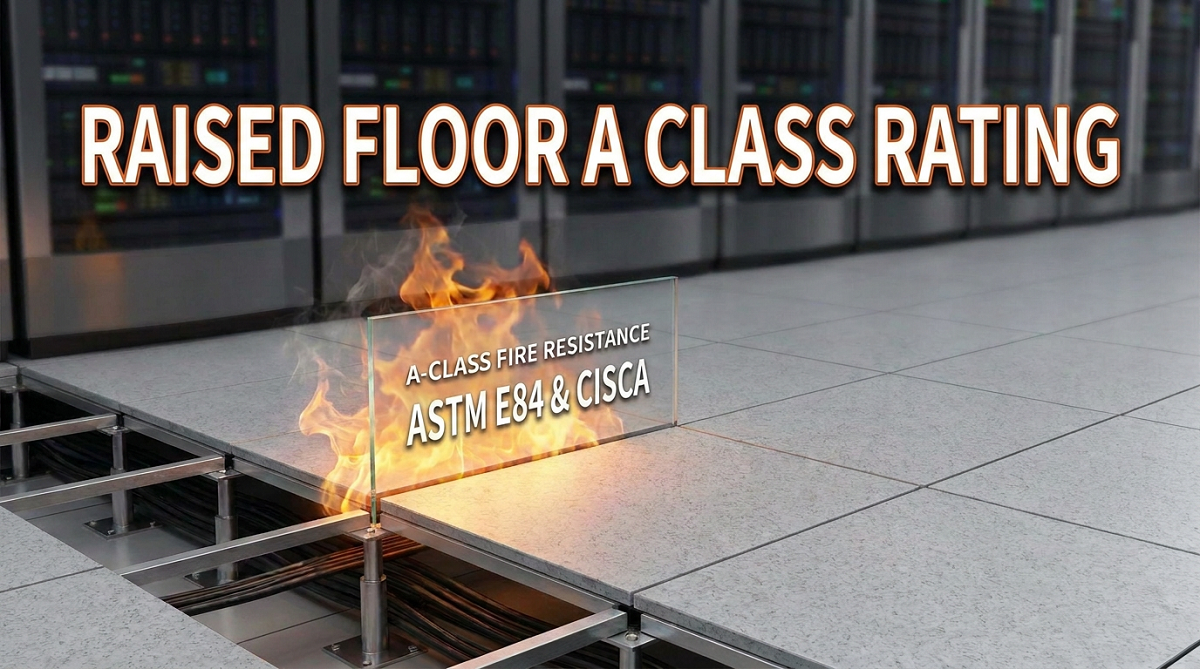
- Flame retardant performance. Quality rubber flooring meets B1 fire prevention standards and resists cigarette burns up to 600°C to 800°C with no burn marks on the surface.
- Low maintenance. Rubber is a breeze to clean. Regular sweeping and occasional mopping with mild cleaner is usually enough. No waxing or polishing required.
- Longevity. Because of its exceptional durability, rubber flooring can last many years without noticeable wear. Commercial-grade rubber flooring often has a lifespan of up to 20 years and can be recycled at end of life, protecting natural resources.
- Comfort underfoot. Rubber offers excellent cushioning, which is especially helpful in places where people stand for long periods, like commercial kitchens and retail stores. In healthcare spaces, surgeons, nurses, and staff standing on rubber flooring for eight hours a day report feeling better in their joints by the end of the shift.
❌Disadvantages
- Weight and handling. Rolls can weigh anywhere from 100 to 300 pounds each, so moving them into basements, garages, or upstairs rooms can be challenging and may require a second person.
- Cost. Rubber generally costs more than budget alternatives like EVA foam. Prices often run $2 to $3 per square foot, and higher-end flex patterns cost even more.
- Initial odor. Recycled rubber, especially horse stall mats, can have a strong smell that takes time to off-gas. Virgin rubber tiles and premium commercial products have far less odor and are safer for enclosed spaces like bedrooms or basement gyms.
- Precision needed on cuts. If you gap the seams or miscut a roll, there’s no easy fix. Unlike carpet, rubber is less forgiving once installed.
- Edge curling with rolls. Freshly unrolled rubber can curl along the edges. It usually relaxes over time, but double-sided tape or weight plates may be needed to keep seams tight.
Types of Rubber Flooring
Rubber flooring comes in several forms, and the right choice depends on your space, budget, and installation skill.
By Material
- Natural rubber flooring: Made from natural rubber, often condensed into a tile. A sustainable option that works well in design-focused spaces.
- Synthetic rubber flooring: Engineered for consistent performance and often used in commercial and healthcare settings.
- Recycled rubber flooring: The most popular category, usually made from recycled truck tires. It’s affordable, durable, and eco-conscious.
By Format
Rubber Floor Rolls – These are large continuous sheets that cover big areas with minimal seams. They offer a sleek, professional look and are great for gyms, fitness centers, playrooms, and basements. Rolls are quicker to lay in long open spaces, but cutting and fitting them in tight or irregular rooms can be tricky, and damage to one section may mean replacing the whole roll.
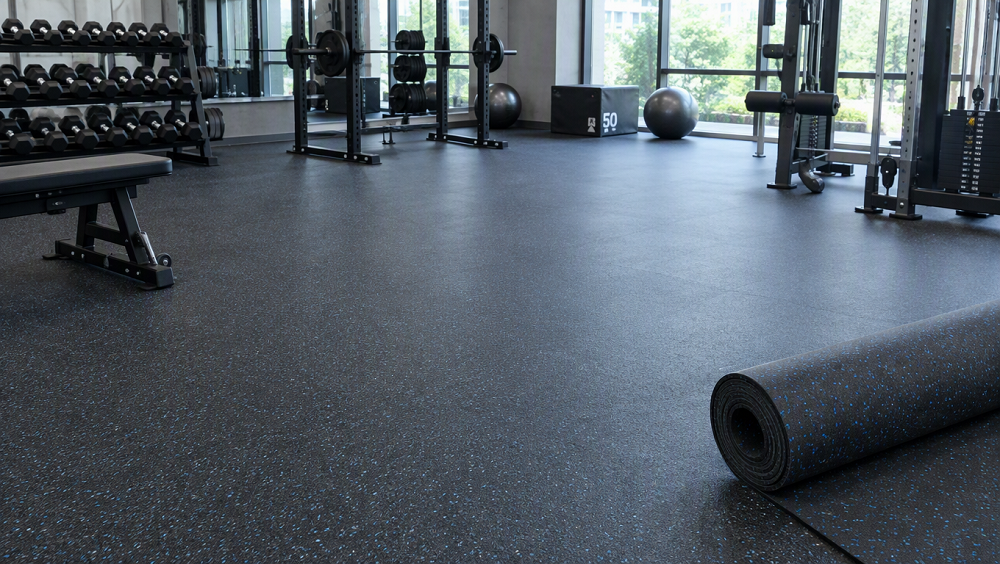
Rubber Floor Tiles – Individual tiles, often 20 by 20 inches or 2 by 2 feet, that assemble to cover an area. Many use interlocking tabs or plastic connectors to join without glue or tape. Tiles are easier to carry, easier to cut around obstacles, and simpler for DIY installs. The trade-off is more visible seams, though those tend to fade from a distance.
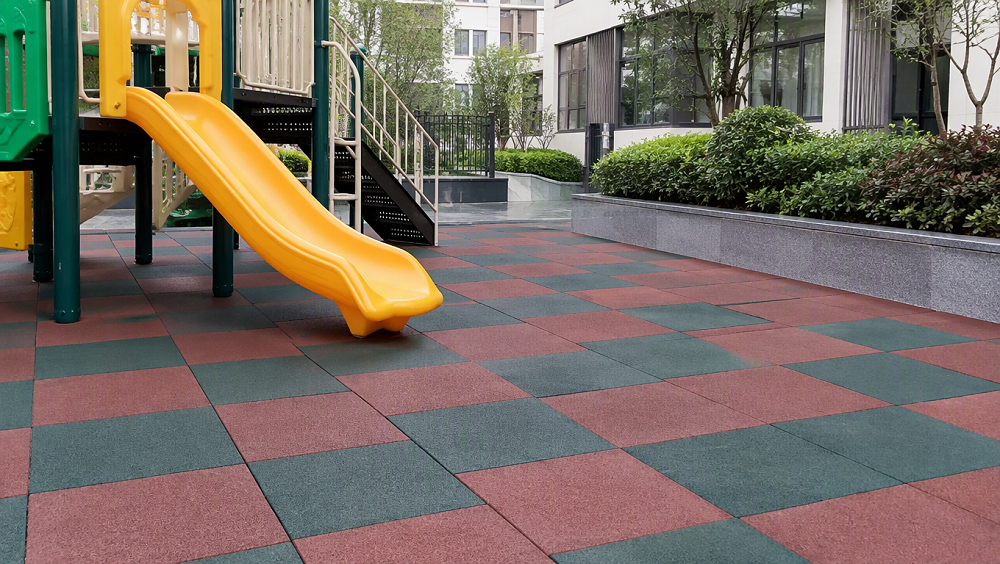
Interlocking Rubber Mats – A hybrid that combines the modular benefit of tiles with the puzzle-piece simplicity of foam mats. Perfect for DIYers who want a quick setup.
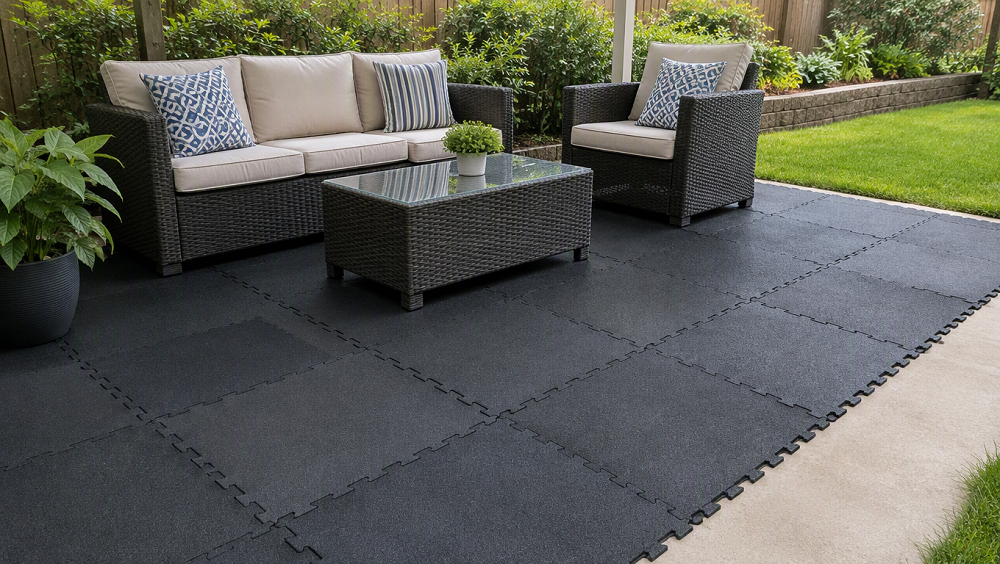
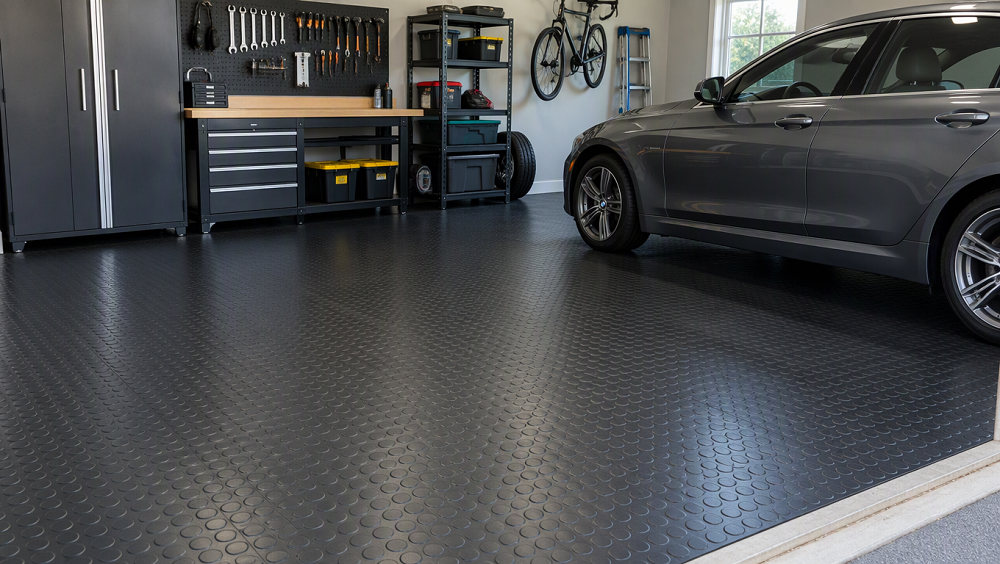
Rubber Flooring Mats for Garage & Stall – Thicker (often 3/4 inch), heavier (around 100 pounds for a 4 by 6 foot sheet), and typically the most budget-friendly option available at garage, stall, and tractor supply stores. They work for strict-budget home gyms, but they have a stronger rubber smell and are hard to maneuver in small spaces.
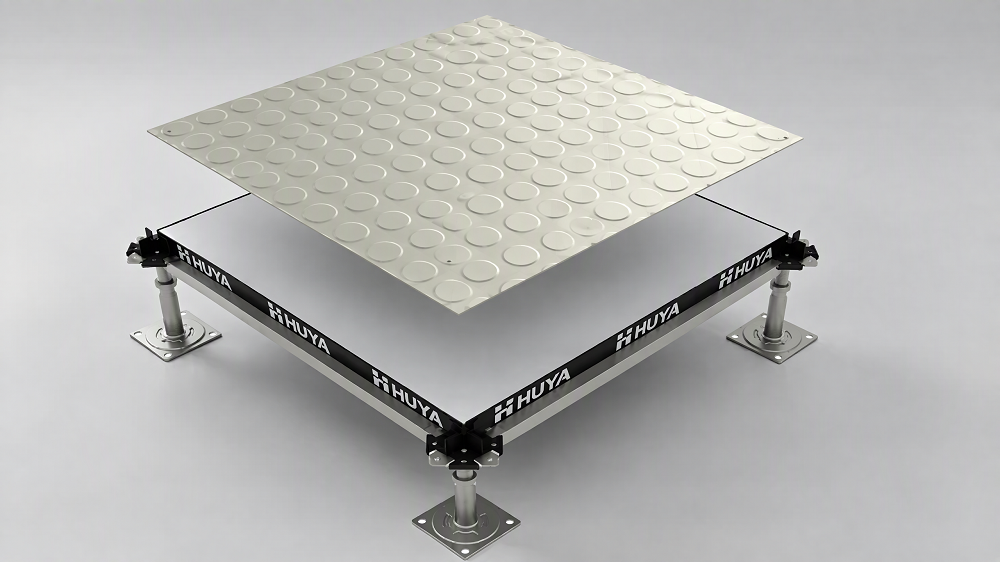
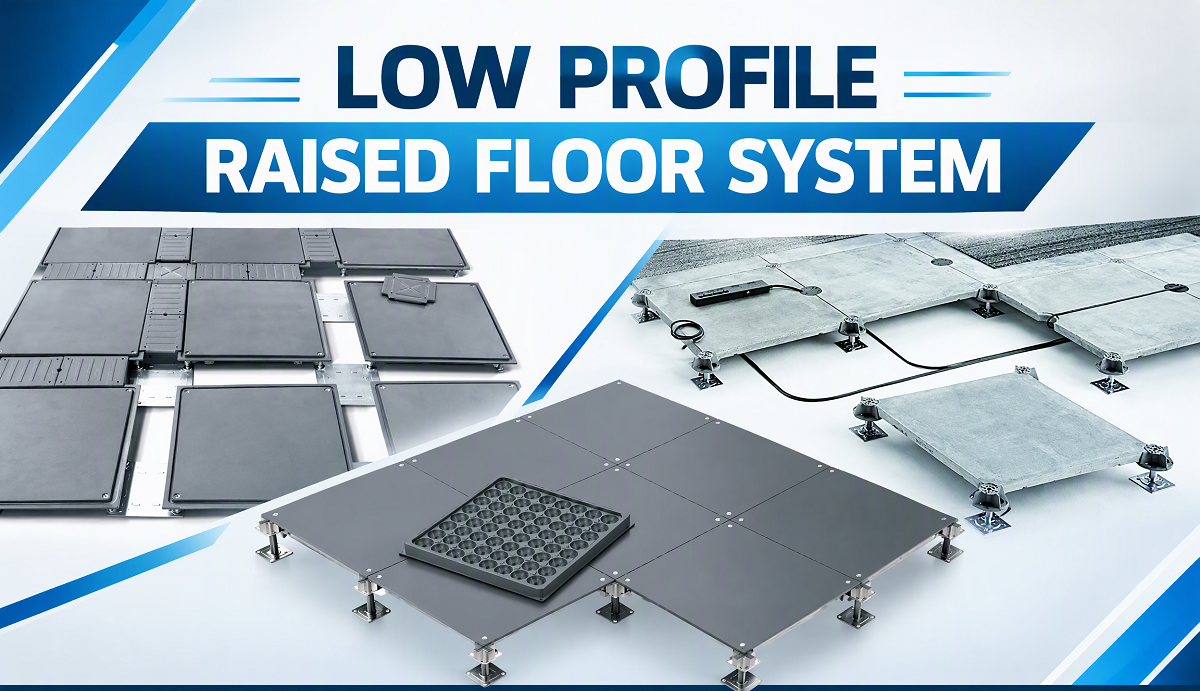
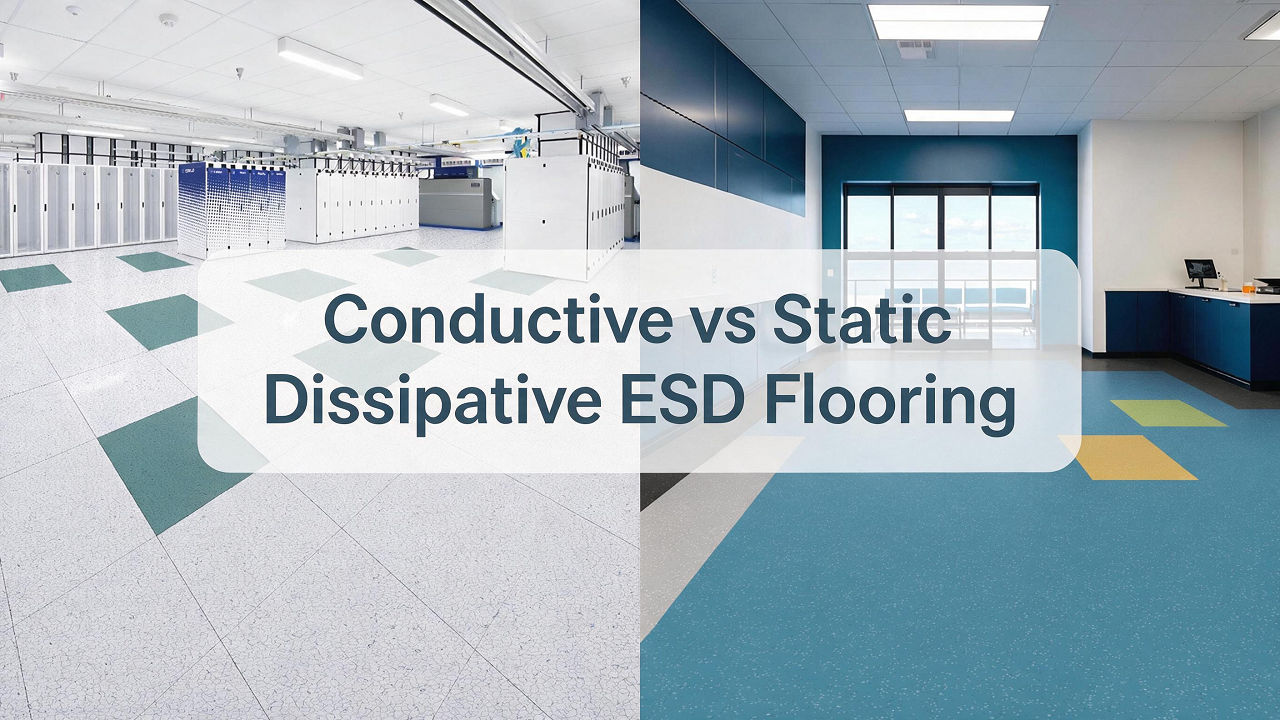
Anti-Static Rubber Floor Tiles for Raised Floor – Anti-static rubber flooring, designed for the electronics industry, uses a dissipative surface layer (10⁶⁻⁹ Ω) and a conductive bottom layer (10³⁻⁵ Ω) to safely handle static buildup, with stable color, high temperature resistance, and no odor. Raised access floor rubber tile takes it a step further by bonding rubber as a decorative finish onto raised floor panels. The HUIYA Raised Access Floor Rubber Tile, for example, bonds rubber flooring to all-steel, calcium sulfate, or aluminum raised floor panels, delivering Shore A hardness up to 90A, tensile strength above 10 KN/m, bonding strength up to 30 MPA, and permanent compression deformation of just 0.09 mm. These systems are built for airports, subways, hospitals, shopping malls, schools, and industrial applications where cables and HVAC run beneath the floor.
Specialty Rubber Flooring – Includes marbleized tiles, rubber laminated with cork, flex-colored tiles (10%, 30%, up to 95% flex), and premium textured options for corporate and healthcare spaces.
By Thickness
Thickness matters based on use. For heavy weightlifting with dropped weights, go with 5/8 inch or 3/4 inch. For functional training, battle ropes, stretching, or light cardio, 8 to 9 millimeters is plenty. A 3/8 inch thickness is a popular middle ground that lays flat without needing adhesive and offers solid cushion for workshops and multi-use rooms.
Applications of Rubber Flooring
Rubber flooring fits a wide range of environments, which is a big part of why it has grown so popular.
- Home gyms and fitness studios – It cushions workouts and protects the floor from dropped weights.
- Commercial gyms and fitness centers – The industry standard is often 8 millimeters, with thicker mats placed under squat racks and deadlift platforms.
- Kids’ playrooms – Soft and safe for falls, spills, and active play.
- Garages, basements, and workshops – Moisture resistant and tough enough for heavy tools and benches. Woodworkers appreciate the grip it provides even when wood chips cover the surface.
- Kitchens and laundry rooms – Slip-resistant and easy to clean, with cushion for long periods of standing.
- Schools and daycare centers – Quieter underfoot, easier to clean than carpet, and safer for younger children.
- Healthcare facilities – Used in surgical suites, maternity wings, and rehab centers because of its anti-fatigue properties, sound absorption, and self-healing surface that doesn’t need repairs after a dropped instrument.
- Equestrian and horse stable applications – Soft underfoot for horses’ hooves.
- Playgrounds, roof decks, and outdoor patios – UV-resistant rubber tiles handle sun, rain, and temperature swings well.
- Retail shops, cafeterias, and corporate offices – The newer wave of patterned and marbleized rubber works well in design-forward commercial spaces, offering easier maintenance and a longer lifecycle than carpet.
- Ice arenas – Dense molded rubber handles ice skates and cleats without issue.
How To Install Rubber Flooring
Installing rubber flooring is more approachable than most people expect, but a little planning saves a lot of frustration.
Step 1: Measure the Room
Measure the length and width of the room, then multiply those numbers to figure out your square footage. Always order about 10% more than you think you need. You’ll make cuts, waste a few pieces, and need extra for mistakes. Grab more, not less.
Step 2: Choose the Right Type
For long open spaces, rolled rubber is faster. Unroll it, tape it down, and move on. For rooms with corners, pillars, or odd features, individual tiles are easier because you only deal with 2 feet of rubber at a time instead of planning one giant cut across a 20-foot slab.
Step 3: Prepare the Subfloor
Clean the subfloor, make sure it’s dry, and level any obvious bumps. Vacuum thoroughly so nothing gets trapped under the flooring. If there’s old epoxy or debris, chisel or scrape it off first.
Step 4: Acclimate the Rubber
Let the rolls or tiles sit in the room for a couple of days so they adjust to the temperature and humidity. This helps reduce edge curling after installation.
Step 5: Install
- Interlocking tiles: Simply snap them together. Many come with plastic connectors you place at corners and sides. No glue or tape needed. Tile floats on the floor.
- Rolled rubber: Position the first roll against your starting wall. Cut the short ends to fit using a straight edge, a sharp utility knife, and a piece of wood underneath to protect the subfloor. Score once or twice and the rubber slices through easily. Pull slack back carefully until it slips into place against the wall.
- Glue-down installation: For permanent setups, use the adhesive recommended by the manufacturer and follow the instructions exactly.
- Double-sided tape: For rolls, apply tape along perimeter edges and seams. Press down firmly, peel off the backing, and lay the rubber on top. This locks seams tight and prevents edge curling.
Step 6: Finish and Trim
Use a razor-sharp knife and change blades often. Trim slowly in layers, getting close first and then fine-tuning around baseboards, doorways, and transitions. Rubber is one-and-done once cut, so take your time.
Pro Tips from Installers
Set weight plates on freshly installed rolls to help them lay flat while seams and edges relax. If you’re joining factory seams that gap slightly, run duct tape across the top to pull them together while the glue sets, then remove the tape later. For heavy rolls, slide a stick of 3/4 inch pipe through the cardboard tube to make it easier to carry two-person style.
How To Maintain and Clean Rubber Flooring
One of the best things about rubber flooring is how little work it takes to keep looking good.
- Daily or weekly: Sweep with a soft broom or vacuum to pick up dust, dirt, and debris. Rubber doesn’t catch grit the way carpet does, so this goes fast.
- Routine cleaning: Mop with warm water and a mild pH-neutral cleaner. Avoid harsh chemicals, bleach, or solvents, which can degrade the rubber over time.
- Spills: Wipe up liquids quickly. Rubber is water resistant but prolonged pooling can seep into seams. For things like epoxy spills, rubber handles them better than EVA foam because the epoxy chips off instead of binding to the surface.
- Deep cleaning: Every few months, use a rubber-safe floor cleaner to remove built-up grime. For gym floors, this helps keep sweat and dust from embedding into the texture.
- No wax or polish required. Rubber doesn’t need refinishing. It keeps its appearance with basic care.
- Color tip: Darker or flex-colored tiles hide dirt, footprints, and debris better than plain black. If keeping the floor looking spotless matters to you, a 10% or 30% colored flex can be worth the extra cost.
When To Choose Rubber Flooring for Your Room
Rubber flooring is the right call when you want a surface that balances safety, comfort, and toughness without the fuss of hardwood or carpet.
Pick rubber if you’re building a home gym and plan to drop weights. Pick it for playrooms where kids will fall and spill. Pick it for a workshop where tools, chisels, and planes will occasionally hit the floor. Pick it for kitchens, laundry rooms, and basements where moisture is a factor. Pick it for commercial, healthcare, or educational spaces where long hours on your feet, noise control, and sanitation all matter.
If you want seamless aesthetics in a large open room, go with rolls. If your space has odd corners, tight spots, or you want flexibility to swap out damaged pieces, go with interlocking tiles. If budget is tight and the smell doesn’t bother you, horse stall mats still work. If you want premium look and feel with less odor, virgin rubber tiles or hammer-clad style flex flooring are worth the investment.
More FAQs About Rubber Flooring
Is rubber flooring safe indoors?
Yes. Premium rubber flooring products contain no harmful VOCs and no carcinogens. Products that use natural rubber, synthetic rubber, natural mineral fillers, and green pigments contain no formaldehyde, benzene, toluene, or xylene. Virgin rubber tiles have almost no smell and are safe even for bedrooms. Recycled stall mats may off-gas for weeks, so ventilate the space during that period.
How long does rubber flooring last?
With proper care, rubber floors can last 15 to 25 years or more. Commercial-grade raised access floor rubber tile is rated for lifespans of up to 20 years, and the material can be recycled at the end of its life cycle.
Can I install rubber flooring over tile or concrete?
Yes. Rubber works over most hard, level subfloors. If you’re protecting a surface like tile, go with a thicker mat (3/8 inch or more) to add a buffer.
Rolls or tiles, which is better?
Rolls look cleaner and have fewer seams but are heavy and tricky in complicated rooms. Tiles are lighter, easier to install, and simpler to swap out, with a bit more visible seaming. Big open rectangular rooms favor rolls. Small or oddly shaped rooms favor tiles. Commercial raised floor projects favor rubber tiles bonded to raised access panels.
Does rubber flooring smell?
Recycled rubber and stall mats often have a strong rubber odor that fades over several weeks. Virgin rubber and premium commercial-grade rubber have little to no smell.
Can rubber flooring be used outdoors?
Yes. UV-resistant rubber tiles are available for patios, balconies, roof decks, and playgrounds. Avoid using standard indoor rubber outside, since sun exposure can shorten its life.
How much does rubber flooring cost?
Budget horse stall mats run under $1 per square foot. Mid-range interlocking tiles and 3/8 inch rolls typically fall between $2 and $3 per square foot. Premium flex and designer rubber flooring can run $4 or more per square foot. Commercial raised access floor rubber tile is priced per project based on panel type and surface specifications.
Is rubber flooring good for people who stand all day?
Yes. Its cushion and anti-fatigue properties make it one of the best floors for commercial kitchens, retail spaces, healthcare, and workshops.
Can I move heavy furniture or equipment on rubber flooring?
Yes, but carefully. Rubber grips well and heavy items can be slid across it rather than lifted, though you’ll need some force. Avoid dragging anything with sharp edges, which can tear the surface. Commercial rubber flooring can even withstand repeated forklift traffic without deformation.
Does rubber flooring absorb sound?
Yes. Rubber reduces impact noise and echo noticeably compared to concrete, tile, or hardwood. Thicker rubber absorbs more sound, which is one reason it’s often picked for hospitals, schools, and corporate conference rooms.
Is rubber flooring fire resistant?
Quality commercial rubber flooring meets the national B1 fire prevention standard and resists cigarette burns at ignition points of 600°C to 800°C without leaving burn marks on the surface.
Rubber flooring brings together durability, comfort, safety, and style in a way few other materials can match. Whether you’re setting up a basement gym, outfitting a workshop, renovating a kitchen, or planning a large commercial facility with a raised access floor system, rubber is a solid pick that pays off for years. Measure carefully, pick the right type for your space, take your time with the install, and enjoy a floor that handles whatever life throws at it.
Huiya Real-Time News
Huiya Real-Time News is dedicated to providing you with the latest and most authoritative information on the raised flooring industry.
We provide 24/7 updates on industry policy interpretations, market trend analysis, company news.

MORE DOWNLOADS

GENERAL CATALOGUE

HUIYA INTRODUCTION

HUIYA GREEN LABEL
CAD/BIM FULL STEEL
APPLICATION SCENARIOS


