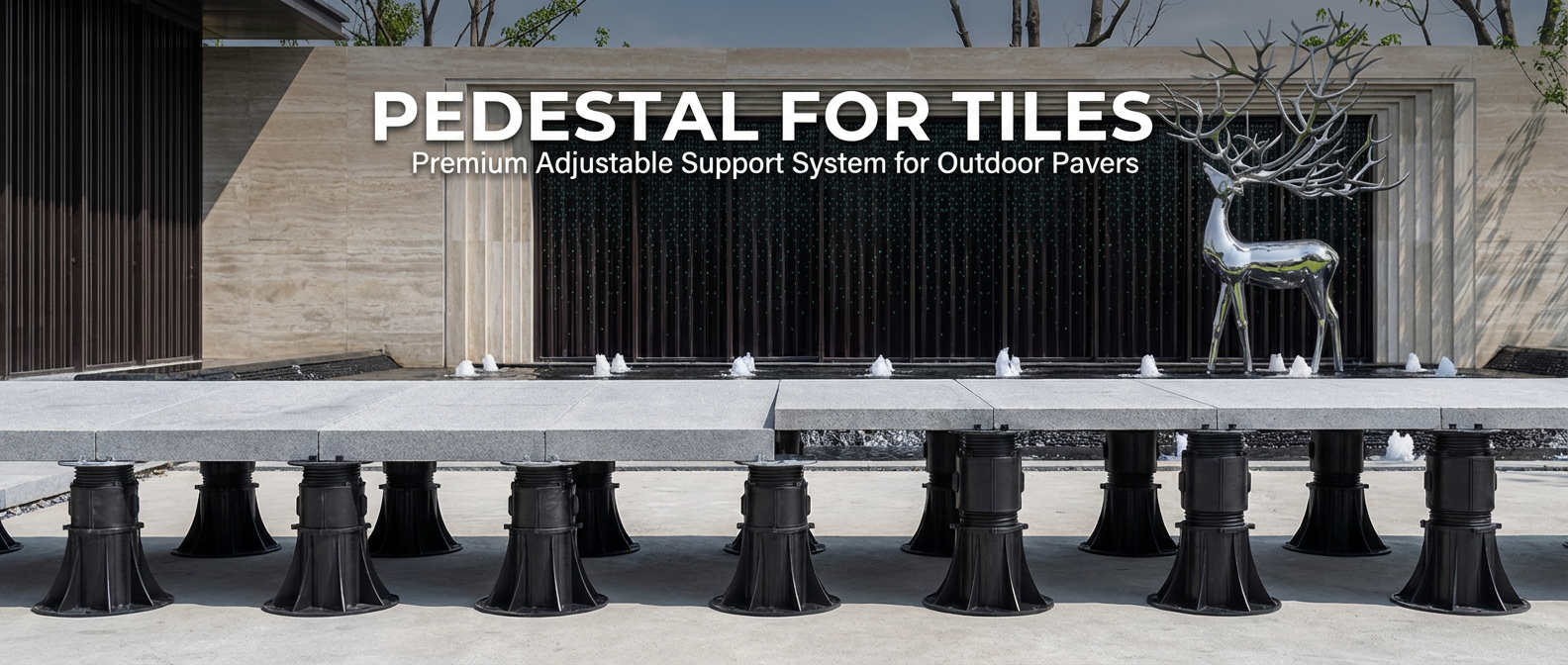
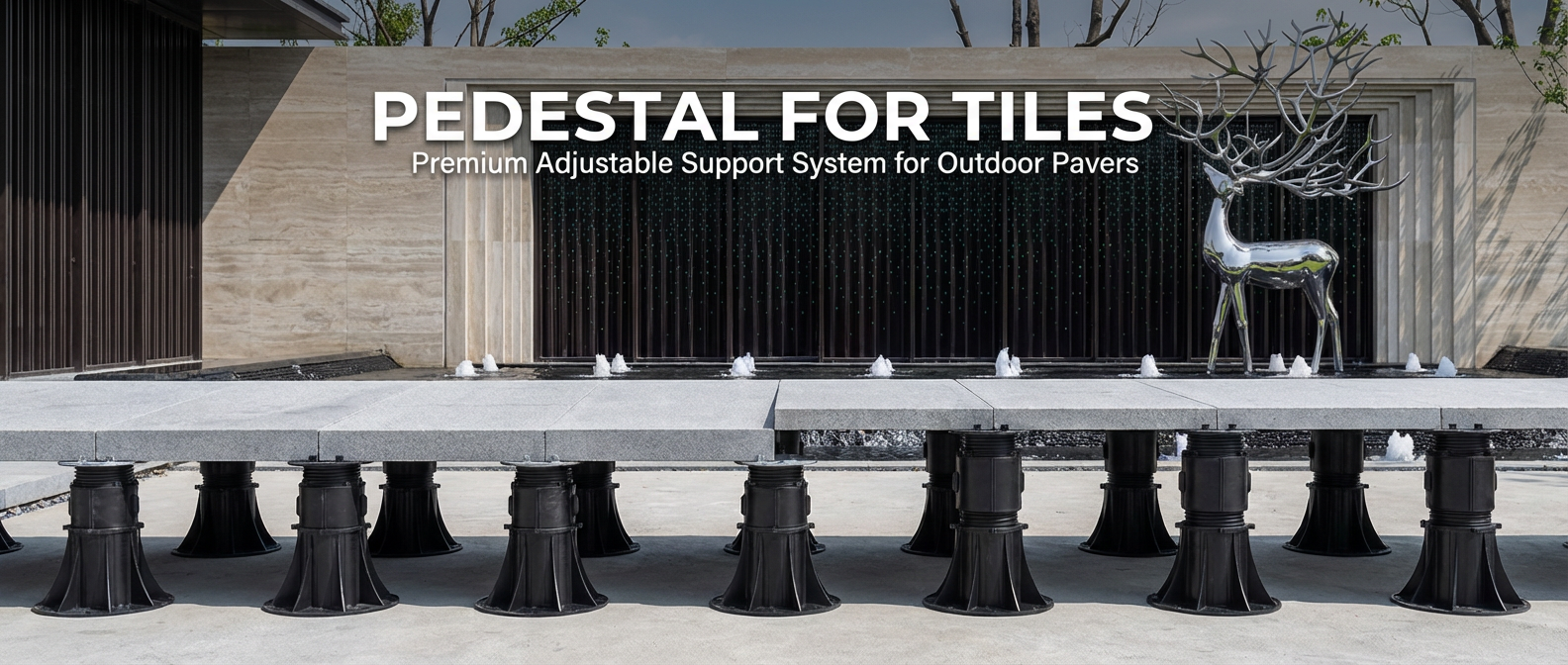
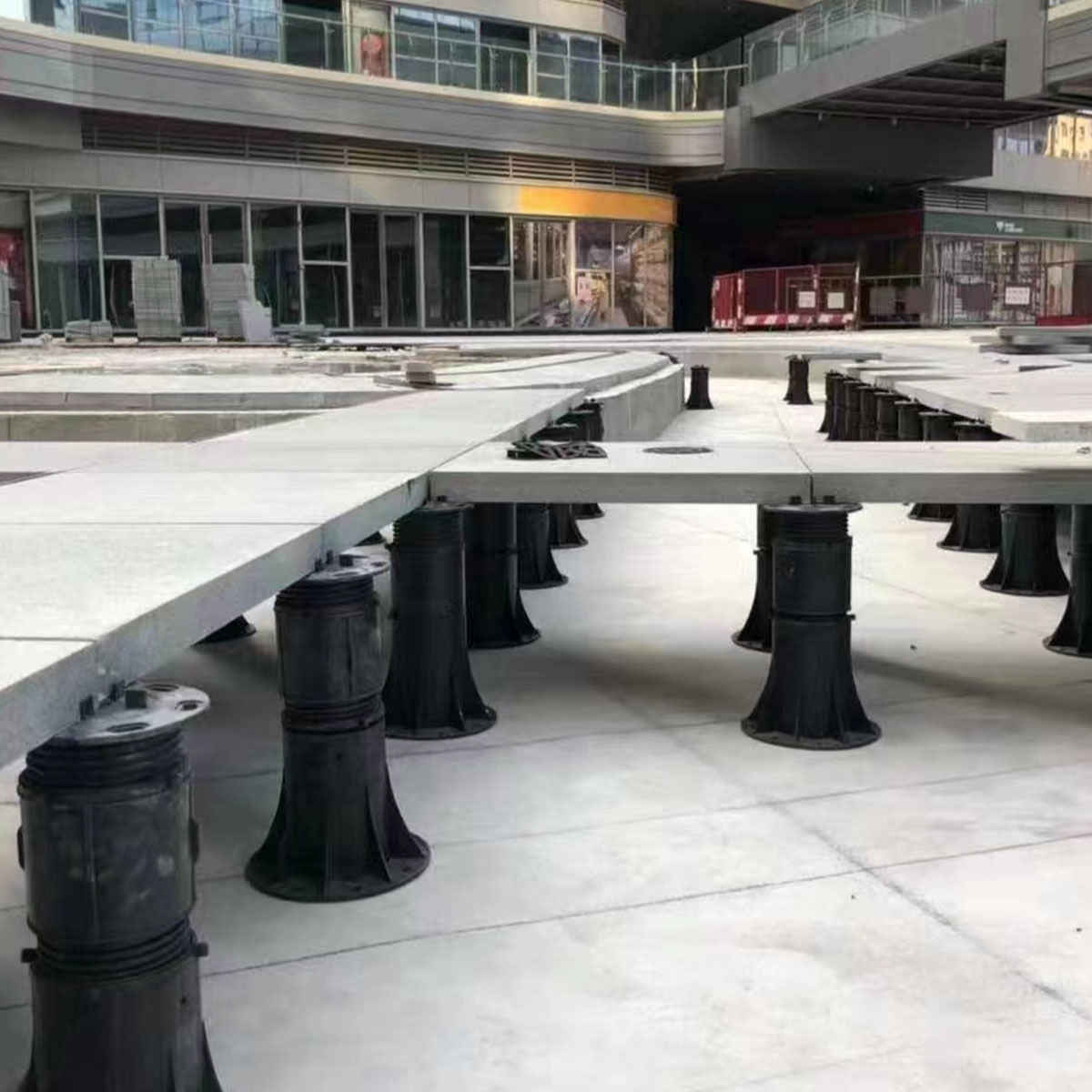
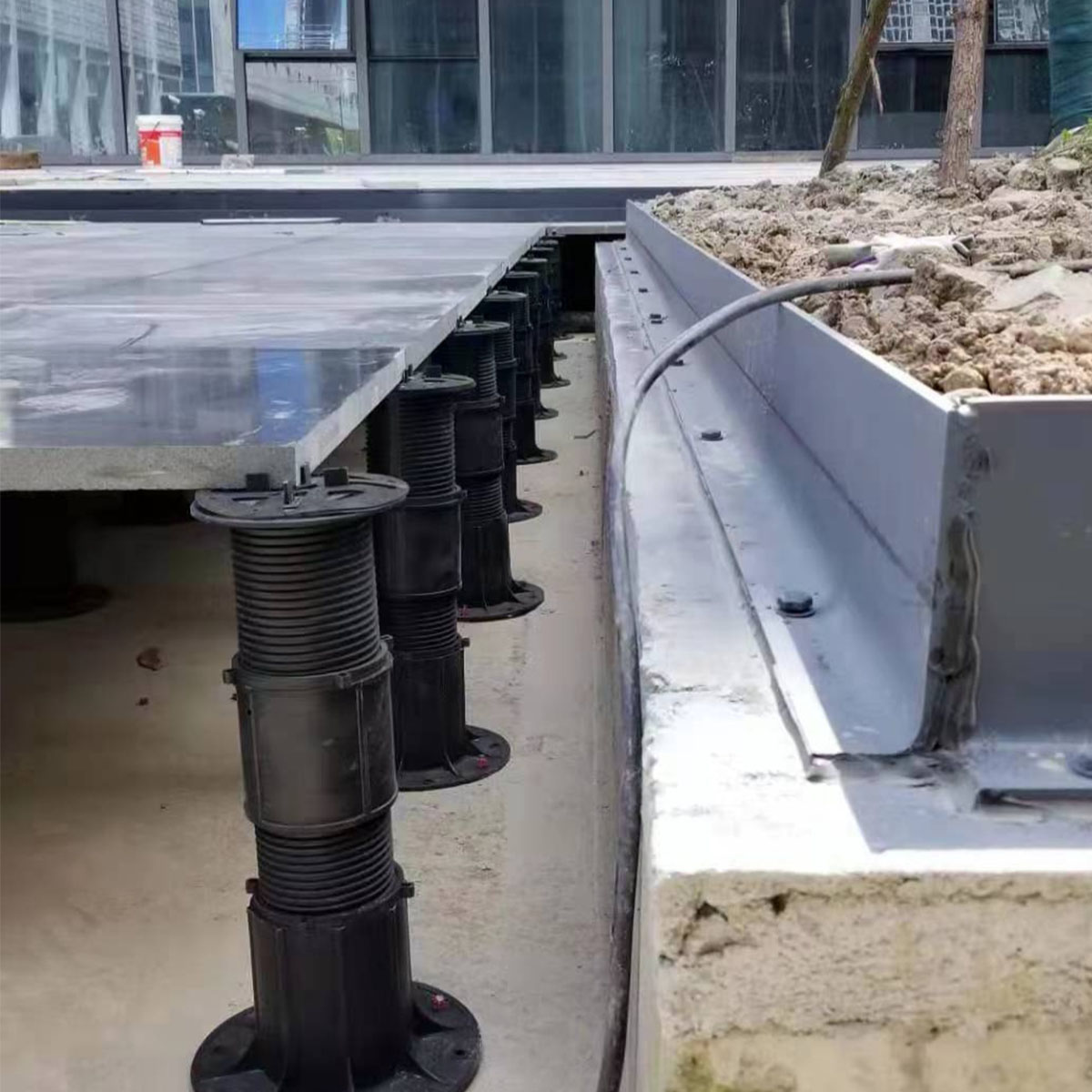
High-Quality Pedestals for Tile, Redefine Raised Access Flooring with the Trumshi CXL Adjustable Deck Supports
At Huiya Inc., we are dedicated to supplying the innovative building materials to commercial and residential construction projects globally. As part of our premium product line, we are proud to offer the Trumshi CXL Series Adjustable Deck Support – Pedestal for Tile, engineered specifically for elevated stone floor panel and raised floor ing tile applications.
Developed by Trumshi – a China-based specialist in raised floor support systems – the CXL Series represents the pinnacle of dry-lay stone installation technology. Whether you are paving a rooftop garden, a commercial plaza, a hotel terrace, or a luxury residential outdoor space, this system delivers the precision leveling, structural strength, and installation speed that modern construction demands.
Traditional mortar-bed stone installations are heavy, permanent, and labor-intensive. The Trumshi CXL Adjustable Deck Support replaces all of that with a clean, reversible, height-adjustable pedestal system that can be installed in a fraction of the time, at a fraction of the cost, without compromising on aesthetics or performance.
What Is the Adjustable Deck Support?
An Adjustable Deck Support (also referred to as a pedestal support, raised floor pedestal, or adjustable tile pedestal) is a height-adjustable structural component used to create elevated, ventilated paving surfaces above an existing concrete slab, waterproofing membrane, or other base substrate.
Rather than embedding tiles or stone in mortar, each paving unit is placed directly on the pedestal heads – fully supported at all corners, fully removable, and fully adjustable after installation.
Trumshi adjustable deck supports have become the industry standard for premium outdoor stone and tile installations in commercial, hospitality, and high-end residential projects worldwide. Their advantages over traditional wet-lay methods are so significant that leading specifiers, landscape architects, and contractors now specify them as a matter of course on any project where long-term performance and aesthetics are a priority.
Trumshi CXL Series Adjustable Deck Support – Pedestal for Tile
The Trumshi CXL Series Adjustable Deck Support is a professional-grade pedestal system engineered specifically for stone slab and tile applications (Pedestal for Tile). Unlike pedestal systems designed to carry timber joists or composite decking, the CXL series features a flat top head with integrated functional spacers that directly support tile and stone at each corner junction, ensuring uniform load distribution, consistent joint gaps, and a flawless finish.
Designed for Large-Format Stone/Ceramic/Porcelain/Granite Tiles
The CXL Series supports the following tile and stone formats commonly specified in landscape construction:
500mm – 800mm formats:
500×500×50mm
600×600×50mm / 600×600×60mm
800×800×60mm
1000mm – 1200mm formats:
1000×500×50mm
1000×600×60mm
1200×600×60mm
Both cross-joint and running bond paving patterns are fully supported.
Why Adjustable Floor Pedestal for Tile Outperforms Traditional Wet-Lay Tile Installation:
Traditional Mortar Bed
Trumshi CXL Pedestal for Tile
Permanent – cannot be adjusted after setting
Fully reversible – lift and re-lay any tile at any time
Heavy – adds significant dead load to structure
Lightweight PP pedestals – minimal added load
Prone to cracking from thermal movement
Expansion joints maintained by functional spacers
Risk of alkali staining on natural stone
Zero cement contact – stone stays pristine
Restricted drainage – water can pond beneath
Continuous drainage void beneath paving
Maintenance access requires breaking up paving
Lift any tile for instant access to substrate
High labor cost – specialist wet trades
Fast, clean installation – lower labor cost
How the Tile Pedestal System Works:
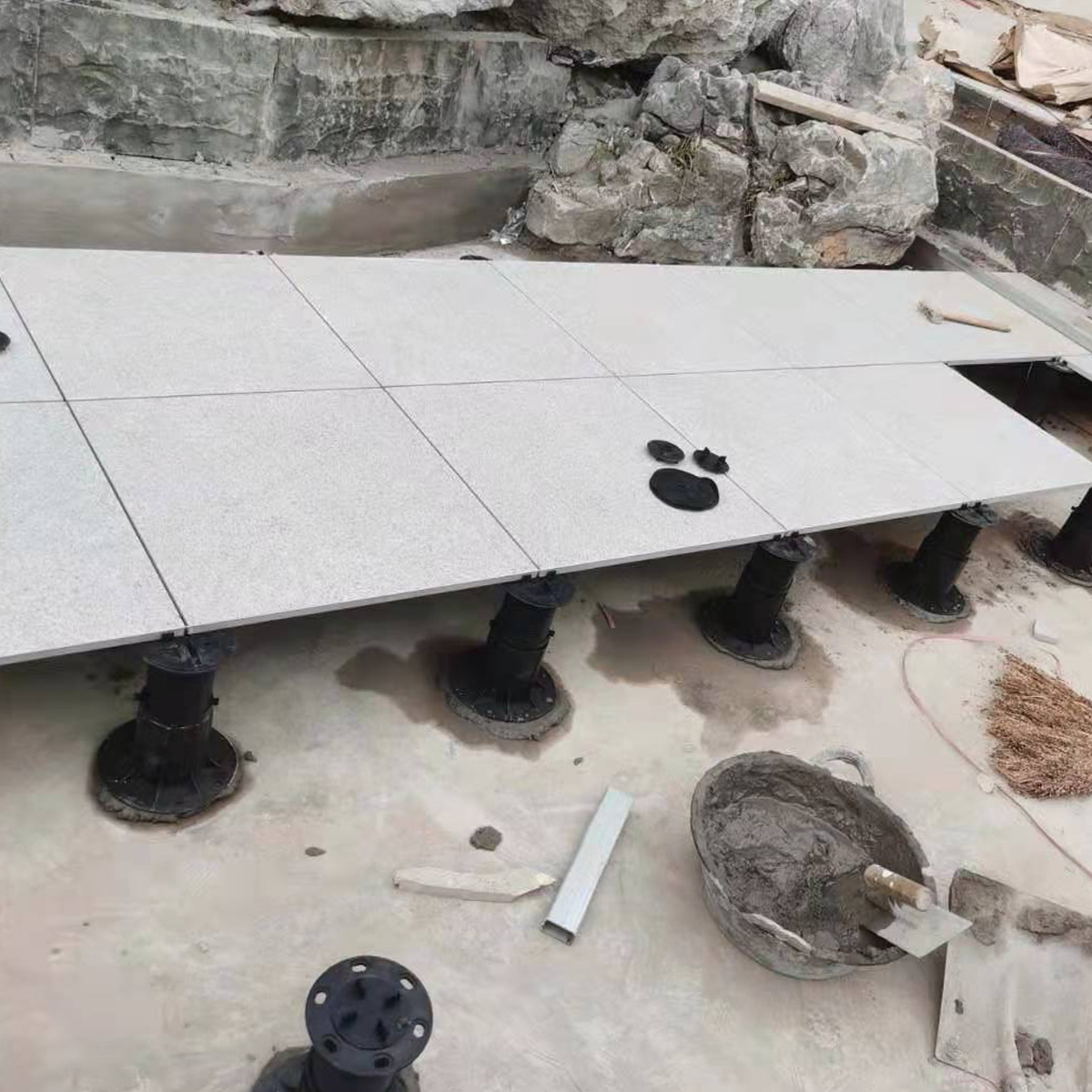
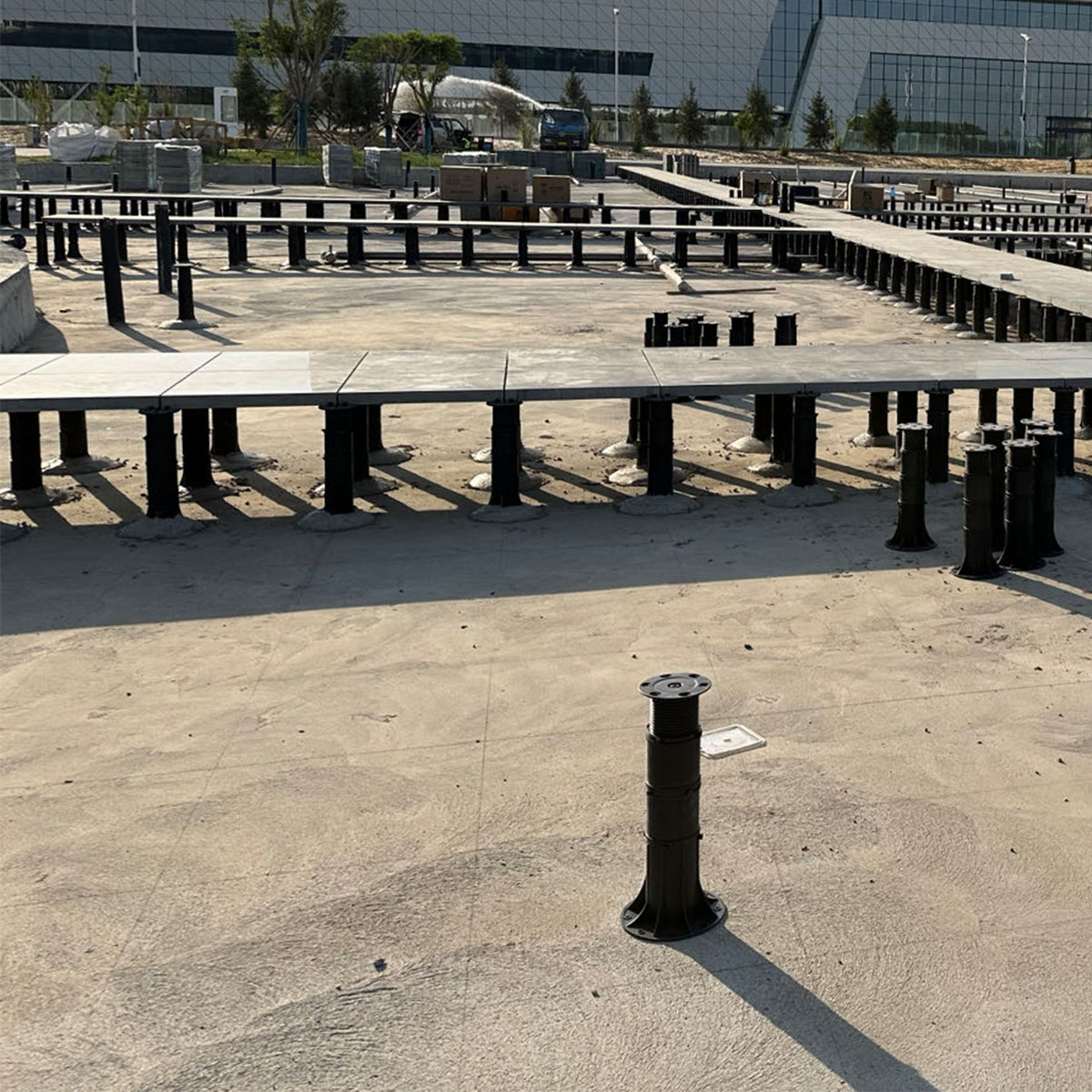
Pedestals are positioned on the substrate in a grid layout according to the project’s spacing plan, with each pedestal placed at the intersection point (corner junction) of adjacent tiles.
Heights are adjusted by rotating the threaded middle column to achieve a perfectly level plane. Slope correction of 0–5 % can be dialed in to ensure proper surface drainage.
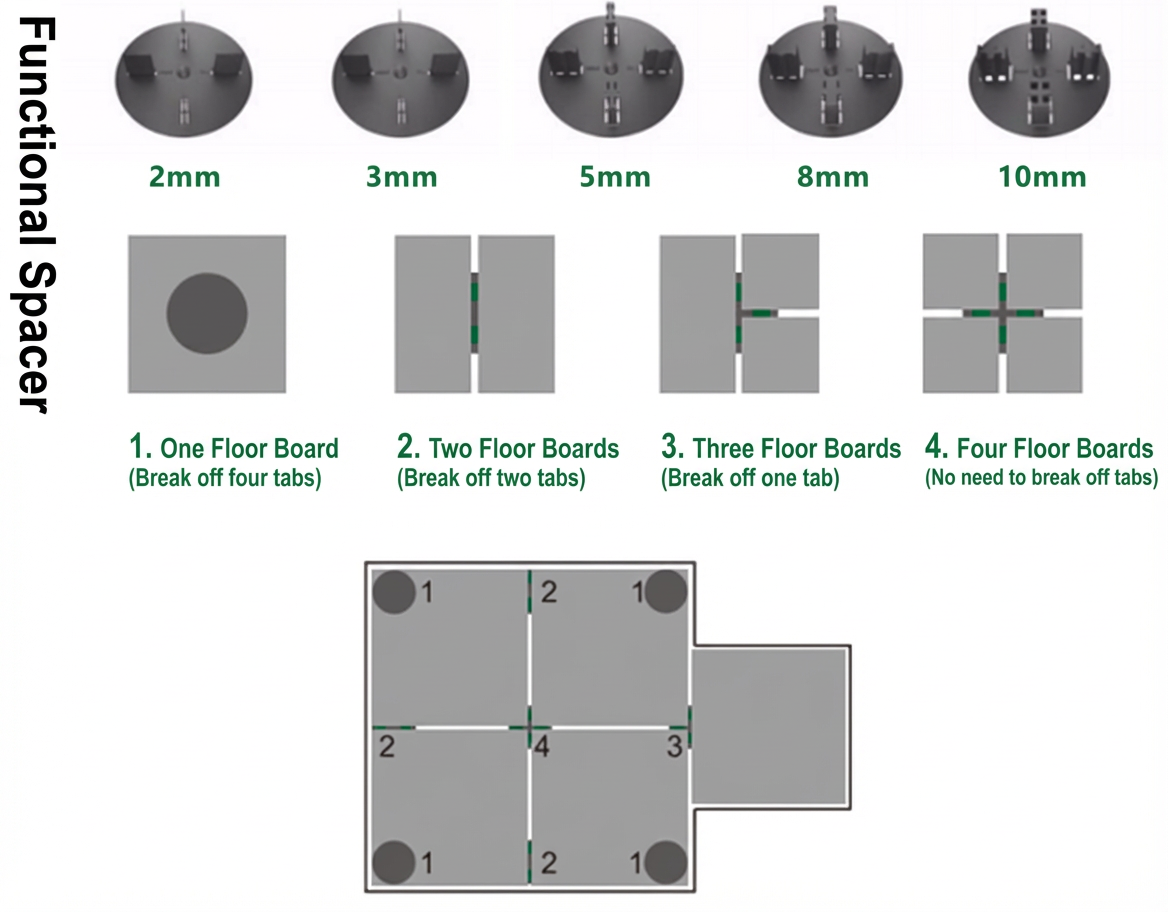
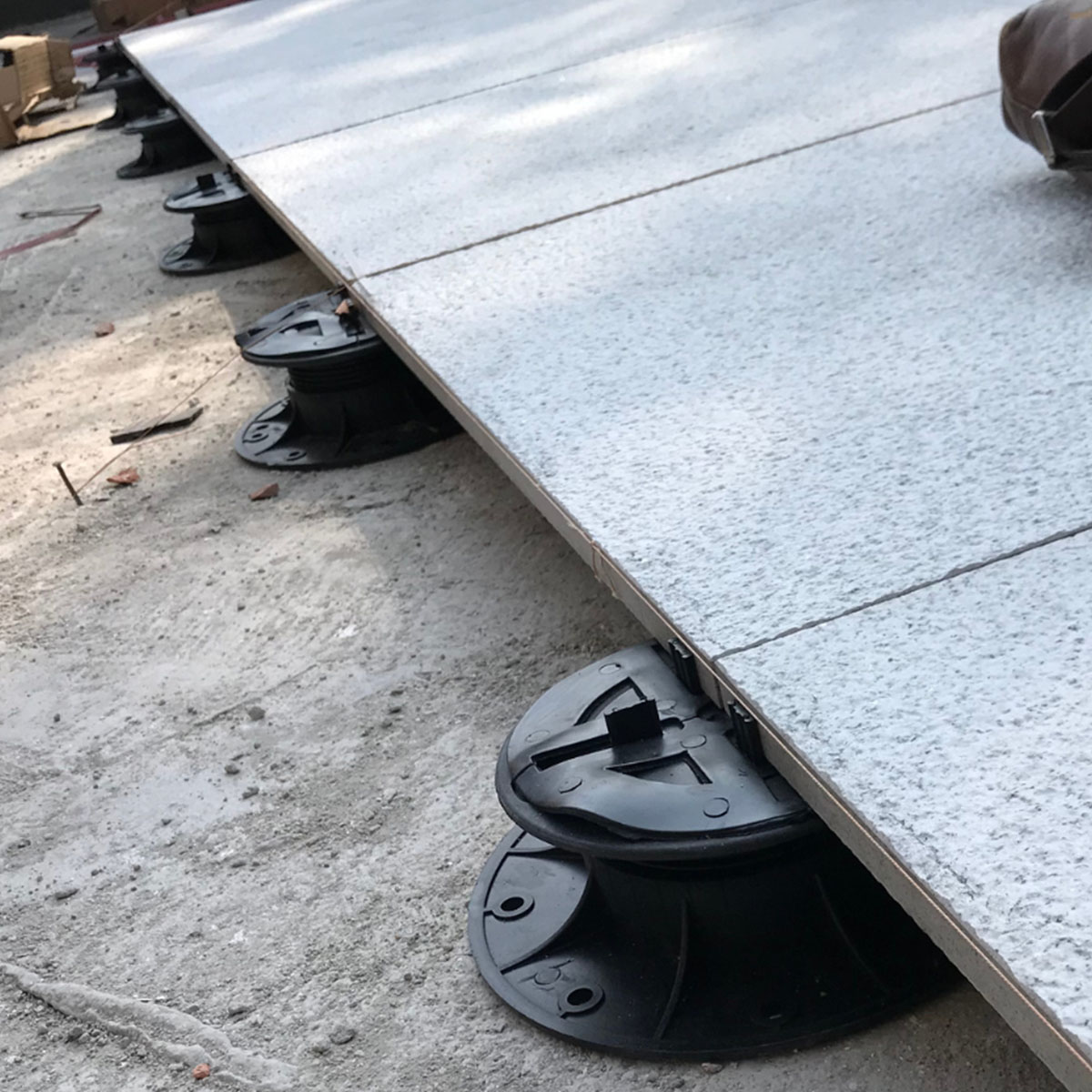
Functional spacer tabs are inserted into the pedestal head. The number of tabs retained or snapped off depends on how many tiles meet at that pedestal — four tabs for a center cross-joint, two for an edge, one for a T-joint, or none for a single corner.
Stone slabs, porcelain tiles, or granite pavers are then placed directly onto the pedestal heads. The spacer tabs automatically create consistent joint widths (2 mm, 3 mm, 5 mm, 8 mm, or 10 mm) across the entire surface.
Locking rings are tightened to secure each pedestal at its final adjusted height, ensuring the entire paved surface remains stable under load.
This method provides a fast, mortar-free installation with precise leveling, excellent drainage through open joints, and a clean separation between the finished paved surface and the waterproofed or structural substrate below. Individual tiles can be lifted at any time for inspection, maintenance of underlying pipes, cables, lighting, or waterproof membranes, and then simply placed back without damage.
Best Suited For:
Porcelain tiles (500 × 500 mm, 600 × 600 mm, 800 × 800 mm, and larger formats)
Natural stone slabs (granite, marble, slate, sandstone, limestone)
Granite pavers (standard and custom-cut formats)
Large-format engineered stone tiles (1000 × 500 mm, 1000 × 600 mm, 1200 × 600 mm)
Polygonal and irregularly shaped stone pavers for complex landscape designs
Reconstituted / artificial stone paving for commercial and residential terraces
Components of Trumshi CXL Adjustable Deck Support – Pedestal For Tile
The CXL Series is a modular five-component system. Every part is designed to work together for maximum structural efficiency, simple assembly, and long service life.
1. Base Plate
Diameter: 95 mm
Wide-flange circular base providing stable load distribution across the substrate
Ribbed underside geometry prevents slipping and allows free drainage beneath the pedestal
Threaded upper collar accepts the middle column assembly
2. Middle Column / Extension Tube
Diameter: 95 mm
Precision-threaded barrel that screws into the base to extend overall pedestal height
Rotating the column clockwise or counter-clockwise raises or lowers the pedestal height continuously across the full adjustment range
Height Adjustment Range: 37 mm – 1,600 mm (achieved by combining single and multiple extension columns)
Supports slope correction from 0% to 5% to deliver a level finish over sloped drainage substrates
3. Locking Ring / Fixing Collar
One locking ring is fitted at the base-to-column junction
A second locking ring is fitted at the column-to-head junction
Once the desired height is set, the locking ring is rotated down to the nearest thread and tightened, locking the assembly rigidly at the set height and preventing any unintentional rotation or height change during and after installation
Colour: Black (standard for CXL Series)
4. Head / Top Cap
Flat circular top plate that directly supports the underside of the paving tile
Receives and retains the Functional Spacer Tabs and Functional Shims in its upper seating
Designed to accommodate cross-joint (+) and brick-bond (工) laying patterns
Compatible with tile formats including 500×500×50 mm and 600×600×50 mm natural stone slabs
5. Functional Spacer / Tab
Functional spacer tabs are thin profiled inserts that clip into the top of the support head. Mounted on the pedestal head, these tabs create uniform joint gaps between adjacent tiles. The functional spacer maintains precise, consistent joint gaps between tiles throughout the installation. Available in five standard thicknesses:
Spacer Thickness
Typical Application
2mm
Tight architectural/interior joints
3mm
Standard outdoor paving joint
5mm
Enhanced drainage joint
8mm
Wide decorative joint
10mm
Maximum gap / accessibility applications
Each spacer tab has four arms (one per quadrant of the support head), corresponding to the four possible tile edges that may meet at that pedestal. Depending on the pedestal’s position in the layout, some arms must be snapped off so that only the arms facing active tile joints remain:
1 tile on the pedestal (corner position) → Keep all 4 tabs
2 tiles on the pedestal (edge position) → Break off 2 tabs, keep 2
3 tiles on the pedestal (T-joint position) → Break off 3 tabs, keep 1
4 tiles on the pedestal (center cross-joint position) → No tabs required (break all off)
Tip: At corner positions where only one tile rests on the pedestal, all four spacer tab arms are removed because there are no adjacent tile-to-tile joints to space. At a full cross-joint in the field of the layout, all four arms remain to separate the four tiles evenly.
6. Functional Shims / Micro-Adjustment Washers
Functional shims are placed on top of the support head (beneath the tiles) to provide micro slope correction on substrates that are not perfectly level, or to intentionally create a slight fall for drainage.
Each functional shim is a circular disc with a pre-scored split line down the center, allowing it to be separated into two half-moon pieces.
Configuration
Placement
Slope Correction Achieved
Full shim (unsplit)
Placed whole on the support head
2 mm uniform raise across the full head
Half shim (split)
One half placed on one side of the support head
2 mm raise on one side only — creates a directional tilt
Stacked / additional shims
Multiple shims or half-shims layered
4 mm or more — increased correction as needed
How it works: When a full (unsplit) shim is placed on the support head, all tiles resting on that pedestal are raised uniformly by 2 mm. When the shim is split and only one half is used, the tile tilts slightly toward the unsupported side, correcting for a sloped or uneven substrate. By stacking additional shims or combining full and half configurations, corrections of 4 mm or greater can be achieved at a single pedestal point.
Trumshi CXL Series Adjustable Tile Pedestal Specifications
Why use the Trumshi CXL Adjustable Tile Pedestal Support for your project? Here are the reasons:
✅ Fast Installation, Lower Labor Costs Dry-lay installation eliminates the need for mortar, screeds, or curing time. A trained crew can pave large areas significantly faster than with traditional wet methods.
✅ Fully Adjustable Position, Height & Slope Each pedestal is independently adjustable on-site, enabling precise leveling even on irregular or sloped substrates. Slope correction up to 5 % ensures proper water run-off.
✅ Lightweight Yet Powerful Load Capacity Weighing far less than concrete piers, each pedestal can support up to 2–3 tons — providing a high safety margin for pedestrian and light commercial traffic.
✅ Durable PP Material Polypropylene construction delivers waterproof, corrosion-resistant, UV-stable, and anti-aging performance, ensuring a long service life in outdoor environments.
✅ No Alkali Efflorescence on Stone Because the stone does not sit in wet mortar, there is no risk of mineral salts migrating to the surface and causing unsightly white staining.
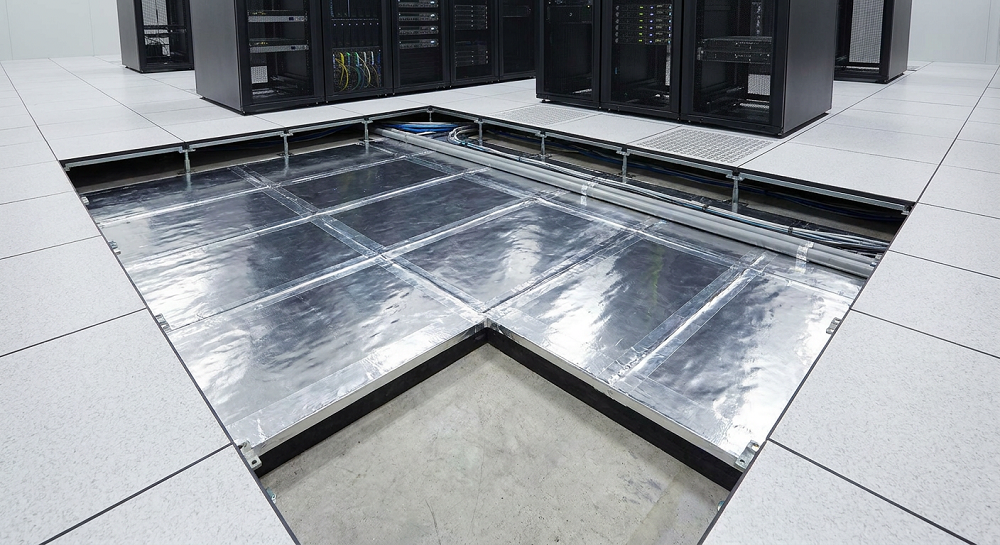
✅ Easy Maintenance Access Tiles can be individually lifted to inspect or service underlying pipes, lighting, cables, or waterproof membranes, eliminating destructive removal.
✅ Eco-Friendly & Recyclable PP is fully recyclable. The dry-lay method also reduces construction waste and water consumption.
Trumshi CXL Series Adjustable Deck Support – Tile Pedestal Installation
How to Assemble the Trumshi CXL Series Pedestal for Tile?
The Trumshi CXL Series pedestal for tile (stone pedestal) is a modular system composed of individual components that are threaded together on site. Assembly is tool-free and intuitive. Follow the steps below to build each pedestal unit before placement.
Step 1️⃣ – Attach the Middle Column to the Base Take the middle column (which comes pre-fitted with a black locking ring) and screw it clockwise into the threaded socket at the center of the base plate. Thread it to approximately the midpoint of the available thread length, do not screw it all the way down or leave it near the top.
Step 2️⃣ – Secure the Middle Column Locking Ring Once the middle column is threaded into the base, rotate the black locking ring on the middle column downward toward the base until it sits firmly against the top surface of the base plate. This locks the middle column in position and prevents unintentional rotation.
Step 3️⃣ – Attach the Support Head to the Middle Column Take the support head (which also comes pre-fitted with its own black locking ring) and screw it clockwise onto the top of the middle column. Again, thread it to approximately the midpoint, not fully tightened and not too loose.
Step 4️⃣ – Secure the Support Head Locking Ring Rotate the black locking ring on the support head downward until it meets the top of the middle column. This locks the support head at its current height and stabilizes the entire assembly.
Step 5️⃣ – Insert Functional Spacer Tabs and Functional Shims Place the appropriate functional spacer tab (selected for your desired joint width) into the slots on top of the support head. If slope correction is required, place the functional shim (slope-correction pad) onto the support head surface before laying tiles. See detailed guidance for both accessories below.
How to Install & Layout the Trumshi CXL Series Pedestal for Tile?
This section covers pedestal placement patterns, tile size compatibility, and the step-by-step installation process for creating a finished elevated tile surface.
Supported Tile Sizes & Laying Patterns
The Trumshi CXL pedestal system supports two primary laying patterns across a range of standard tile and stone paver sizes:
In the cross-joint layout, all flooring tiles are aligned in a straight grid. Four floor tile corners meet at every interior adjustable pedestal, forming a + shaped joint intersection.
In a staggered-joint layout, each row of tiles is offset by half a tile length from the row above and below. Three tile edges meet at most interior pedestals, forming a T-shaped or H-shaped joint intersection.
Compatible tile sizes for staggered-joint layout:
Tile Dimensions
Tile Thickness
500 × 500 mm
50 mm
600 × 600 mm
50 mm or 60 mm
800 × 800 mm
60 mm
1000 × 500 mm
50 mm
1000 × 600 mm
60 mm
1200 × 600 mm
60 mm
Step-by-Step Installation Process
Step 1 – Prepare the Substrate Ensure the substrate (concrete slab, waterproof membrane, rooftop surface, or structural deck) is clean, free of sharp debris, and structurally sound. The substrate does not need to be perfectly level — the pedestal’s threaded height adjustment and functional shims will compensate for minor irregularities and slope.
Step 2 – Establish a Reference Layout Determine the tile size, joint width, and laying pattern (cross-joint or staggered-joint). Snap chalk lines or use a laser level to establish reference grid lines across the substrate. Identify the starting corner or starting edge of the installation.
Step 3 – Position Pedestals on the Substrate Place assembled pedestals at every point where tile corners will meet:
Cross-joint (+ pattern): Pedestals are spaced at intervals equal to the tile dimension (e.g., every 600 mm for 600 × 600 mm tiles) in both directions, forming a regular grid.
Staggered-joint (H pattern): Pedestals are placed at the same row spacing, but the column spacing shifts by half a tile length on alternating rows. Additional pedestals are required along the staggered mid-span points where tile edges land.
How many pedestals are needed per square meter?
Tile Size
Approx. Pedestals per m²
300 × 300 mm
~12 pcs
400 × 400 mm
~7 pcs
500 × 500 mm
~5 pcs
600 × 600 mm
~3 pcs
800 × 800 mm
~2 pcs
Step 4 – Adjust Pedestal Heights Rotate the middle column and/or support head threads to raise or lower each pedestal until the tops of all pedestals form a perfectly level plane (or a controlled drainage slope, as designed). Use a spirit level or laser level to verify.
For slope correction on individual pedestals, insert functional shims (full or half) as described in Accessory B above.
Once the correct height is achieved, tighten all locking rings downward to lock each pedestal at its final position.
Step 5 – Insert Spacer Tabs Place the correct functional spacer tab (2 mm, 3 mm, 5 mm, 8 mm, or 10 mm) into each pedestal head. Snap off the appropriate number of tab arms based on the pedestal’s position:
Corner pedestals → snap off all 4 arms (1 tile meets here)
T-joint pedestals → snap off 1 arm (3 tiles meet here)
Center / cross-joint pedestals → keep all 4 arms (4 tiles meet here)
Step 6 – Place Tiles onto Pedestals Starting from the reference corner or edge, carefully lower each tile onto the pedestal heads. The spacer tabs will automatically set the joint width as the tile edges press against them. Ensure each tile sits squarely on its supporting pedestals and is fully supported at all corners.
Step 7 – Verify Level, Adjust if Needed After placing a section of tiles, check the surface with a straightedge or level. If any tile rocks or sits unevenly, lift it, adjust the relevant pedestal height, re-lock the locking ring, and replace the tile. Because this is a dry-lay system with no adhesive, individual tiles can be lifted and repositioned at any time without damage.
Step 8 – Complete Perimeter and Edge Details At the edges of the installation area, tiles may need to be cut to fit. Pedestals at perimeter positions are placed at the edge of the last full or cut tile. Perimeter spacer tab arms facing outward (toward walls or edges with no adjacent tile) should be snapped off.
Step 9 – Final Inspection Walk the entire surface and verify:
All tiles are stable and do not rock
Joint widths are consistent across the field
All locking rings are secured
Drainage paths through the open joints and beneath the elevated surface are unobstructed
Applications of Trumshi CXL Pedestal for Tile
Where Is the Trumshi CXL Pedestal for Tile Used?
The Trumshi CXL Adjustable Deck Support is specified across a wide range of project types where elevated, dry-lay stone or tile flooring is required:
?️ Commercial Plazas & Public Squares Large-format stone slabs elevated on Trumshi CXL pedestals create level, ADA-compliant walking surfaces across complex structural slabs with varying gradients. The slope-correction head (0–5°) eliminates costly concrete screeding.
? Rooftop Gardens & Podium Terraces The elevated void beneath the paving protects the waterproofing membrane, allows natural drainage, and keeps the membrane fully accessible for inspection, a key requirement on occupied rooftop terraces and green roofs.
? Hotel & Resort Outdoor Spaces Premium hospitality projects demand premium finishes. Trumshi CXL pedestals deliver the clean, mortar-free joint lines and stone-on-stone aesthetics that luxury specifications require, with the practical advantage of easy tile replacement for maintenance.
? Residential Terraces & Balconies From private villa terraces to urban apartment balconies, the CXL system is equally suitable for smaller residential projects, offering a professional result with straightforward installation.
⛲ Fountain Surrounds & Water Features The system’s PP construction is fully waterproof and corrosion-resistant, making it ideal for use in wet zones around fountains, water features, and pool surrounds.
? Landscape Pathways & Garden Features Adjustable deck supports allow level paving paths to be created over uneven natural ground conditions without excavation or concrete work.
Huiya Inc. & Trumshi: Strategic Supply Partnership
Huiya Inc. and Trumshi (创象) – Zhejiang Trumshi New Materials Co., Ltd. – are long-term strategic partners. This partnership brings Trumshi’s industry-leading adjustable deck support systems to international construction and landscape markets through Huiya’s global procurement, logistics, and technical support network. When you specify Trumshi products through Huiya Inc., you have the combined strength of a specialist manufacturer and an internationally experienced supply partner behind every order.
About Trumshi (创象)
Founded: 2018 Headquarters: Hangzhou, Zhejiang Province, China Registered Capital: RMB 10,000,000 Specialty: Professional adjustable deck support systems and landscape building materials
Located in Hangzhou – one of China’s most innovative manufacturing and technology cities, at the southern end of the historic Grand Canal, Trumshi has built a strong reputation in just a few years as a dedicated specialist in professional pedestal support systems. The company’s sole focus on this product category means every design decision, every material choice, and every manufacturing process is optimized for the demands of elevated stone, tile, and timber flooring applications.
Trumshi’s four innovation pillars – New Processes, New Materials, New Equipment, New Technologies – drive continuous product improvement that keeps their systems at the forefront of the pedestal support market.
Trumshi’s capabilities include:
✅ Independent R&D Team – in-house development of new pedestal products, components, and system solutions
✅ Large Production Management Team – structured manufacturing operations across multiple facilities
✅ Comprehensive Product Range – adjustable deck supports, stone support brackets, stainless steel drainage covers, linear drain channels, tree pit grates, HDPE drainage systems, and more
✅ National & International Sales Network – integrated online/offline sales serving projects across all of China and internationally through Huiya Inc.
Trumshi’s adjustable deck support systems are widely specified in large and medium-scale commercial and landscape projects throughout China, a testament to the confidence the professional construction market places in their products.
Why Specify Trumshi Through Huiya Inc.?
Benefit
Details
? Manufacturer-Direct Pricing
Direct supply chain from Trumshi’s facilities, no middleman markup
? Global Shipping
Huiya’s logistics network delivers to projects worldwide
? Technical Support
Installation guidance, project-specific specification support
? Quality Assurance
Every production batch verified against Huiya’s quality standards
? Strategic Partnership
Long-term relationship ensures supply continuity and product consistency
FAQs About Trumshi CXL Adjustable Deck Support (Pedestal for Tile)
Is the CXL Series suitable for both indoor and outdoor applications?
Yes. The Trumshi CXL Adjustable Deck Support is rated for both indoor and outdoor use. Its PP (polypropylene) construction is:
✅ Fully weatherproof — UV stabilized against solar degradation
✅ Waterproof — unaffected by rain, irrigation, and standing water
✅ Frost-resistant — rated to -30°C operating temperature
✅ Heat-resistant — rated to +120°C operating temperature
✅ Corrosion-resistant — ideal for coastal environments and areas with chemical exposure
Can the CXL pedestal be used over a waterproofing membrane?
Yes, and this is one of the primary reasons the pedestal system is specified on rooftop and podium projects. The CXL base sits directly on the waterproofing membrane without puncturing it (at heights ≤400mm no mechanical anchoring is required). The elevated void beneath the tiles allows natural drainage and keeps the membrane fully accessible for inspection and maintenance — something impossible with a traditional mortar bed installation.
⚠️ For heights exceeding 400mm, if mechanical anchoring is required, use Option A (screw fixing through pre-drilled base holes) and select an appropriate non-penetrating anchor method compatible with your membrane specification. Consult your waterproofing system supplier before anchoring through any membrane.
Will the pedestals damage a waterproofing membrane over time?
No, when correctly installed, the wide, flat PP base distributes the point load across a generous contact area, keeping contact pressure well within the tolerance of standard roof waterproofing membranes. The smooth PP base material is also non-reactive and will not chemically affect bituminous, PVC, TPO, or liquid-applied membranes.
For maximum protection, a rubber isolation pad can optionally be placed beneath the base on highly sensitive membrane systems.
What is the height adjustment range of the CXL Series?
The CXL Series provides a height adjustment range of 37mm to 1,600mm (approximately 1.5 inches to 63 inches). This is achieved by:
Rotating the middle column within the base to fine-tune height via threaded engagement
Stacking additional extension columns when heights greater than the single-column range are required
This makes the CXL Series suitable for everything from a minimal 37mm raised terrace (just enough clearance for drainage) all the way to deep utility voids of 1.6 meters.
Can I adjust the height after the tiles have been laid?
Individual tiles can be lifted at any time – they are not bonded or mortared – and the pedestal height can then be adjusted by rotating the column and re-locking the fixing ring. This is one of the greatest long-term advantages of the dry-lay pedestal system versus traditional mortar installation. Fine leveling adjustments, corrections after settlement, and re-leveling following utility work are all straightforward operations.
What is the load capacity of the CXL Series?
Type
Load Capacity per Pedestal
Standard
1.5 – 2 metric tons (≈ 3,300 – 4,400 lbs)
Enhanced / Reinforced
2 – 3 metric tons (≈ 4,400 – 6,600 lbs)
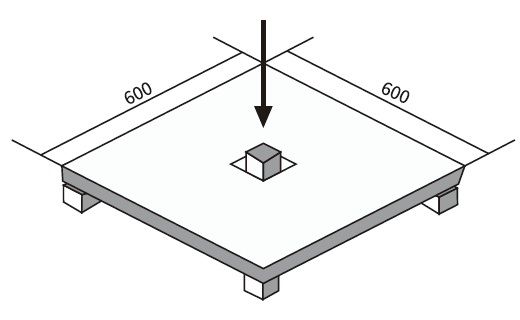
This load capacity refers to static compressive load applied vertically to a single pedestal. Under normal pedestrian and light maintenance traffic, the actual loads experienced by any individual pedestal are a fraction of this rated capacity, providing a generous safety margin.
⚠️ Motor vehicles must not drive over pedestal-supported tile surfaces. The system is rated for pedestrian use only. Vehicle loading (including maintenance vehicles, electric buggies, and heavy equipment) is not permitted on CXL pedestal-supported surfaces.
Does the load capacity change at greater heights?
Yes. As with any column under compressive load, slenderness increases with height, and the effective load capacity reduces at greater heights due to the risk of column buckling under eccentric load. For installations at heights exceeding 600mm, it is advisable to:
Consult with a structural engineer regarding pedestal spacing
Consider using the enhanced (reinforced) pedestal variant
Ensure the substrate is capable of receiving the point loads from the pedestal bases
For heights >400mm, use mechanical anchoring or mortar encapsulation of the base (see assembly notes)
Contact the Huiya technical team for project-specific loading guidance on deep-void installations.
Is the CXL pedestal system lighter than a traditional mortar bed?
Significantly lighter. A traditional mortar bed for a large-format stone installation typically adds 80–150 kg/m² of dead load to the structure, depending on screed thickness and stone weight. The Trumshi CXL pedestal system adds only the weight of the pedestals themselves (each weighing approximately 0.3–0.8 kg depending on height) plus the stone tiles above, with no mortar, no screed, and no additional concrete.
This weight reduction is critically important on rooftop and podium structures where the slab’s maximum imposed load capacity is a primary design constraint.
How long do Trumshi CXL pedestals last?
Trumshi CXL pedestals are manufactured from high-grade PP (polypropylene) with UV stabilizers, designed for a service life in excess of 25 years under normal installation and use conditions. PP is inherently resistant to:
Water and moisture ingress
UV solar radiation (with stabilizer additives)
Freeze-thaw cycling
Alkalis, acids, and most common chemicals
Biological growth (mold, algae, root penetration)
Thermal expansion and contraction
Unlike metal support systems, PP pedestals will never rust, corrode, or stain the stone above.
Do the pedestals require any maintenance after installation?
Under normal conditions, the pedestal system requires no routine maintenance. The accessible void beneath the tiles should be kept clear of debris buildup that might impede drainage, but since tiles are easily lifted, this is a straightforward periodic inspection task rather than a specialist maintenance operation.
If any individual tile becomes damaged, it can be lifted and replaced without disturbing adjacent tiles or the pedestal system, a huge advantage over mortar-bed installations where damage to one tile can require breaking up a large surrounding area.
Get a Quote for the Trumshi CXL Pedestal for Tile
Ready to specify the Trumshi CXL Series Adjustable Deck Support for your next project? Whether you need 100 pieces or 100,000, HUIYA and Trumshi can deliver competitive pricing, fast lead times, and expert technical support.
Huiya Real-Time News
Huiya Real-Time News is dedicated to providing you with the latest and most authoritative information on the raised flooring industry.
We provide 24/7 updates on industry policy interpretations, market trend analysis, company news.