

During the selection process for a raised access floor, the question buyers most frequently ask is “how much weight can this panel bear?” From an engineering perspective, however, the question itself is incomplete. What truly determines the value of a panel is not an isolated load figure, but the structural efficiency it can achieve under given constraints of self-weight, thickness, and cost, in other words, the stiffness and load capacity contributed per unit of weight.
This is precisely why the steel cementitious structure has been able to hold the high-end market for so long. Its construction principle can be summarized as a classic composite load-bearing system: upper and lower high-strength steel plates are press-formed and spot-welded into a closed shell, and a lightweight foamed cement core is then poured and packed inside. Under load, the steel shell carries the tensile and bending stresses, while the cement core carries the compressive stress and suppresses local buckling of the steel shell. The two work together through their interface, forming a mechanical distribution similar to an I-beam. The high elastic modulus of steel provides stiffness, while the continuous support of the cement core significantly improves compression and impact resistance, at the same time delivering damping characteristics and fire performance that a pure steel structure cannot offer.
The product that pushed this structural process to a global benchmark level is ConCore®, the flagship product of Tate in the United States. Backed by a stable steel cementitious system, ConCore has become the technical reference point for high-performance access floors in scenarios such as data centers and financial trading centers, where load capacity and stability demand near zero tolerance for error, and to a large extent it has defined the performance ceiling of this category.
Yet precisely because ConCore established the benchmark, a more professional standard of judgment was established alongside it: evaluating the quality of a steel cementitious floor should not be based on brand reputation, but on the mechanical data it presents under a unified testing protocol. That protocol is CISCA, the internationally recognized public standard.
CISCA Load Testing: Translating “Solid and Stable” Into Verifiable Engineering Language
The raised access floor testing protocol developed by CISCA (the Ceilings and Interior Systems Construction Association of the United States) has its core value in converting the subjective feeling of “solid” into a set of quantified metrics that can be measured by instruments and reproduced by third parties. For steel cementitious structures, the following four tests form a complete evaluation loop.
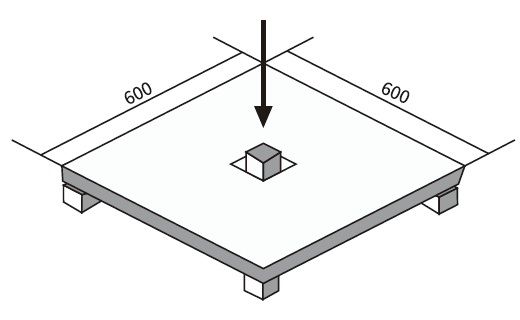
🔸Concentrated Load – Concentrated Load measures the deflection performance of a panel when it bears concentrated pressure at the most unfavorable loading point. The test typically applies a load head of a specified area at the panel center and panel corner, recording the amount of deformation. This metric corresponds to the most common everyday conditions, such as a single person standing, equipment feet, or the localized pressure of cabinet leveling feet. What engineering truly needs to focus on is not whether the panel fails, but whether its deflection under working load is controlled within an acceptable range, because excessive deflection directly affects the levelness of precision equipment and the overall flatness of the floor system.
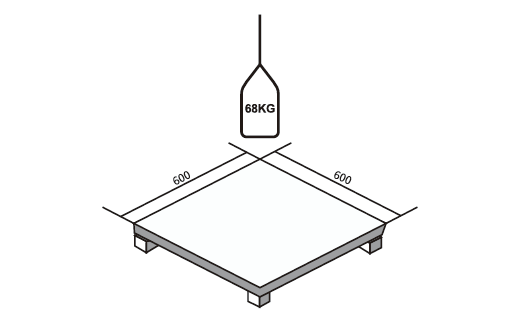
🔸Ultimate Load – Ultimate Load refers to the maximum value a panel can withstand when pressure is continuously applied until just before structural failure. The ratio of ultimate load to design working load is the safety factor. The CISCA system generally requires this ratio to be no less than 2.0, meaning that a panel with a nominal working load of a given value must possess more than double that as failure redundancy. For steel cementitious structures, the failure mode often manifests as plastic yielding of the steel shell occurring together with crushing of the cement core, so the uniformity of core density directly determines the stability and dispersion of the ultimate load.
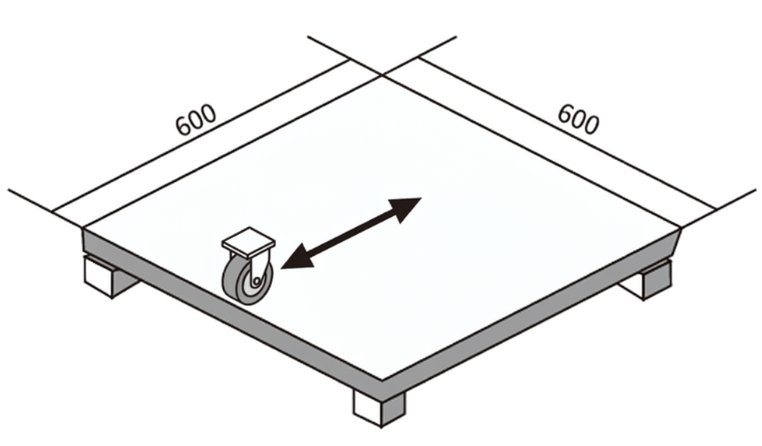
🔸Rolling Load – Rolling Load simulates the long-term repeated rolling pressure of moving loads such as material handling carts and precision instrument trolleys on the panel, assessing the permanent deformation after a specified number of cycles (usually tens of thousands). This metric is often underestimated in actual projects, yet it is exactly the primary cause of panel failure in scenarios such as cabinet installation in data centers and equipment transfer in clean rooms. A panel that passes static loading but fails to meet the rolling load requirement will develop irreversible dents and joint misalignment within months of being put into service.
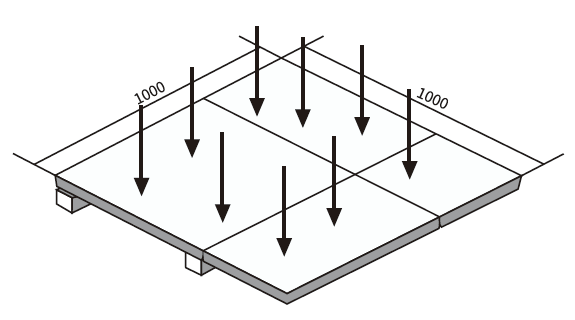
🔸Uniform Load – Uniform Load and System Stability extend from the single panel to the system level, assessing the overall deflection of an entire floor under full load, as well as the resistance to lateral movement under horizontal thrust. The latter is closely related to the coordinated design of the support system (pedestals and stringers).
The reason the steel cementitious structure has been able to become the first choice for high-end scenarios is precisely that it can achieve balanced and outstanding performance across all four of the above metrics. The HUIYA-SC series is a product engineered specifically around this examination.
Same Technology, Same Standard: The Technical Positioning of HUIYA-SC
Since its establishment in 2005, HUIYA has focused on the niche field of access flooring for twenty years. Its core flagship products, the HUIYA-SC and SCL series, adopt exactly the same steel cementitious technology route as ConCore: SPCC steel plates are press-formed into a shell, and foamed cement core is packed inside, forming a closed composite load-bearing unit.
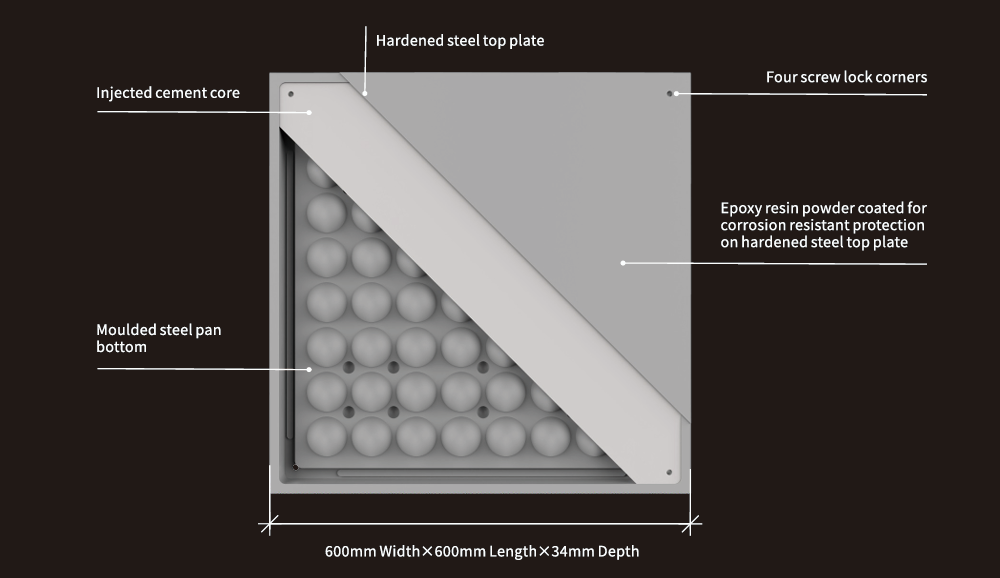
It should be emphasized that in its official materials, HUIYA clearly lists that its products strictly comply with five major global standard systems, including CISCA 2007 (United States standard), and additionally cover China’s GB 36340-2018, Europe’s EN 12825:2001, Korea’s KS F 4760, and Japan’s JIS A 1450:2005. This means that HUIYA-SC and Tate ConCore face the same examination paper and the same scoring rules. On this premise, a technical comparison between the two becomes genuinely meaningful.
🔷This benchmarking is laid out side by side in objective parameters below:
| Technical Dimension | Steel Cementitious Benchmark (represented by ConCore) | HUIYA-SC / SCL Series |
|---|---|---|
| Core Structure | Fully welded steel shell + cement core fill | ✅ Same core technology: SPCC steel plate press-formed + foamed cement fill |
| Testing Standard | Follows CISCA load testing protocol | ✅ Same standard: explicitly follows CISCA 2007, and also covers China, Europe, Korea, and Japan standards |
| Concentrated Load Coverage | Multiple tiers (approx. 1250 to 2500 lbs class) | ✅ SC series covers multiple tiers; custom series can reach 1.5 tons and even 5.0 tons point load |
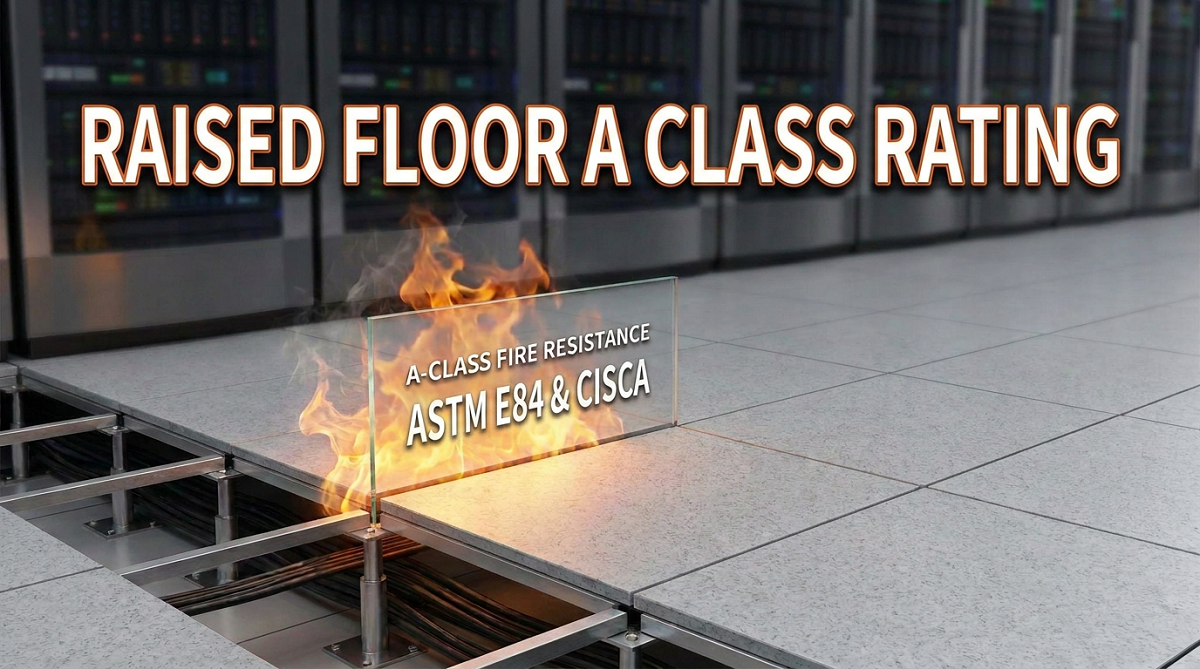
| Fire Performance | Cement core provides excellent non-combustibility | ✅ Cement core + aluminum alloy / perforated versions can reach Class A1 fire rating |
| Quiet and Shock Absorbing | Core damping reduces footstep noise | ✅ Foamed cement core + rubber surface layer, ultra quiet |
| Capacity Assurance | Global supply | ✅ 8 production lines, daily output 8000+ sqm, annual capacity 1.2 million+ sqm |
The purpose of presenting this table is not to praise or criticize, but that by laying out pure structure and parameters side by side, it restores an objective fact: when two products adopt the same process and pass the same CISCA tests, the comparison itself becomes a transparent and verifiable process. Particularly worth noting is the load ceiling row. HUIYA is one of the few Chinese manufacturers with the capability to mass-produce heavy-duty all-steel cementitious floors, and the point load capacity of its custom perforated steel panels can reach 5.0 tons, sufficient to cover the extreme working conditions of ultra-high-density data centers and heavy-duty precision manufacturing workshops.
The Real Technical Barrier Lies in Controlling Batch Consistency
If the structural principle of steel cementitious flooring is already fully understood by the industry, then its real manufacturing barrier lies not in “whether cement can be filled,” but in consistency control under large-scale mass production: Is the core density of every panel uniform? Is the weld strength stable? When tens of thousands of panels are assembled together, can the flatness meet the standard? This is exactly the watershed that separates benchmark manufacturers from ordinary suppliers.
From an engineering perspective, the performance dispersion of steel cementitious panels is mainly affected by three variables. The first is the uniformity of core density. If a density gradient or cavity appears in the foamed cement during pouring and curing, it will directly cause significant fluctuation in the ultimate load of panels within the same batch, thereby weakening the overall safety redundancy of the system. The second is the stability of weld strength. The quality of the closed welding of the steel shell determines the transmission efficiency of tensile stress, and cold welds or weld fatigue can become the starting point of structural failure. The third is the flatness of the finished product. When tens of thousands of panels are assembled into a complete system, the thickness tolerance of a single panel accumulates and amplifies, ultimately reflected as a deviation in the overall flatness of the floor system, directly affecting the installation datum of precision equipment.
🔷It is precisely at this level that HUIYA’s twenty years of manufacturing accumulation demonstrate their value:
🔹In-house testing laboratory:
HUIYA has established independent load testing and vibration testing laboratories, performing load and vibration verification on every batch of products before they leave the factory, turning the test items specified by CISCA into a routine quality control action on the production line, so that the standard is implemented as an actual measurement step before shipment rather than a paper promise.
🔹3D research and design capability:
HUIYA uses 3D technology to assist mold and structural development, ensuring the fit precision between the steel shell and the core from the design source, thereby compressing the performance dispersion of mass production.
This consistency is ultimately verified by real projects. The repeated selection of the HUIYA-SC series by a group of high-standard clients, including the China Merchants Bank Shenzhen Financial Innovation Building (ECS1000, 15,000 square meters), the Shanghai Pujiang Laboratory AI office space (SC800, 35,000 square meters), the Siemens medium-voltage intelligent digital factory, and the Tokyo Electron (TEL) IC Design Building, itself constitutes the most rigorous on-site examination of its batch consistency. In addition, Konishi, a Japanese listed company with a 155-year history, has combined its KU928 pedestal adhesive with HUIYA flooring to jointly promote them in overseas markets. This kind of product collaboration relationship actively established by an established international enterprise further confirms the reliability of HUIYA’s manufacturing quality from the supply chain level.
Under a Unified Standard, Selection Becomes Simple and Accurate
Through its long-term engineering practice, Tate ConCore has proven the performance height that the steel cementitious structure can reach. CISCA, with a set of public and reproducible testing protocols, has turned this height into a measurable and comparable engineering language. Together, the two form the technical coordinate system of this category.
🔷The answer provided by the HUIYA-SC series is clear: on the steel cementitious route, which best tests real manufacturing strength, a Chinese-made product that adopts the same core technology, passes the same set of CISCA tests, and possesses 5.0 ton heavy load capacity has not only already stood on the same technical starting line, but has also formed its own differentiated advantage through more abundant capacity, more on-site-oriented technical service, and more competitive overall cost.
The answer provided by the HUIYA-SC series is clear: on the steel cementitious route, which best tests real manufacturing strength, a Chinese-made product that adopts the same core technology, passes the same set of CISCA tests, and possesses 5.0 ton heavy load capacity has not only already stood on the same technical starting line, but has also formed its own differentiated advantage through more abundant capacity, more on-site-oriented technical service, and more competitive overall cost.
📍 Changzhou Huiya Decoration Material Co., Ltd.
📞 +86-519-83811288 | 🌐 huiyainc.com
Request the HUIYA-SC series product catalog and CISCA load test report.
Huiya Real-Time News
Huiya Real-Time News is dedicated to providing you with the latest and most authoritative information on the raised flooring industry.
We provide 24/7 updates on industry policy interpretations, market trend analysis, company news.
MORE DOWNLOADS

GENERAL CATALOGUE
HUIYA INTRODUCTION

HUIYA GREEN LABEL
CAD/BIM FULL STEEL
APPLICATION SCENARIOS


