

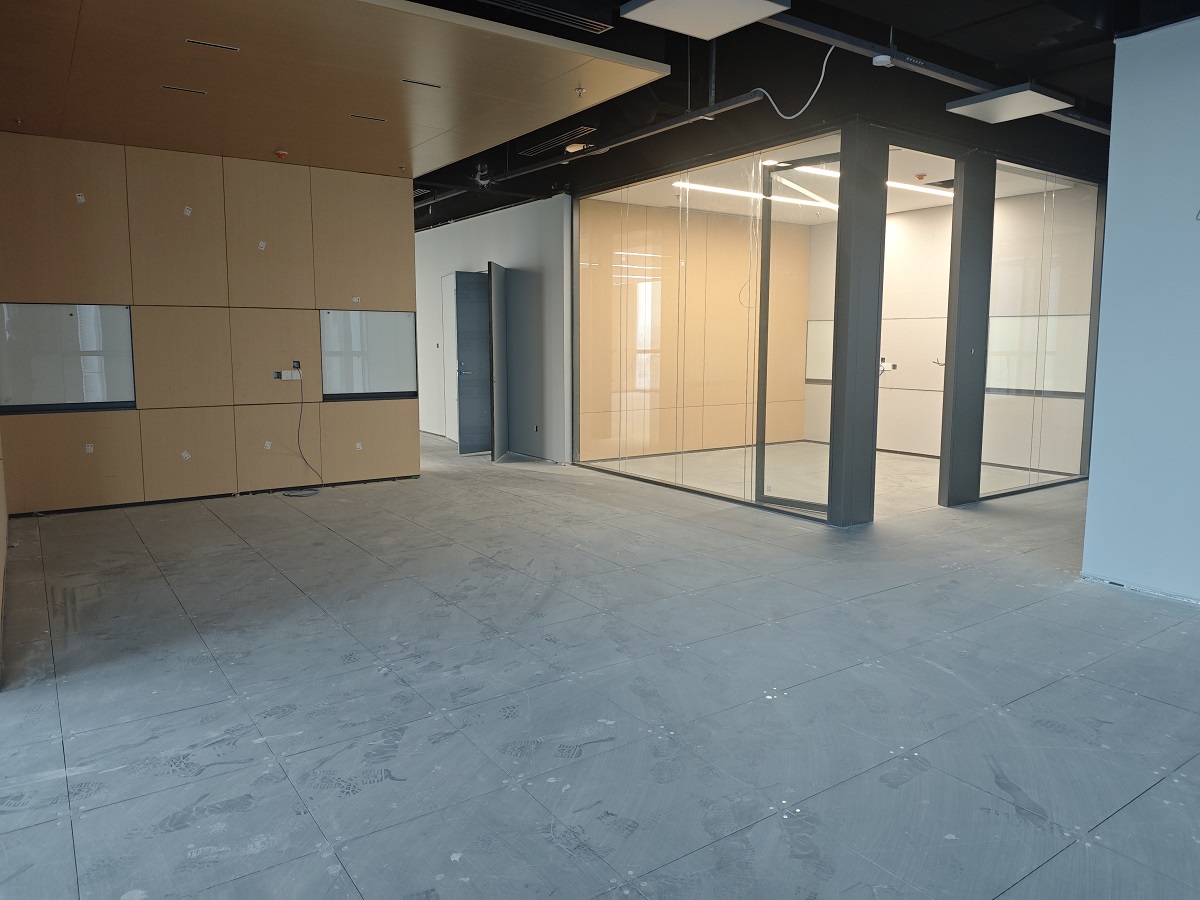
35,000㎡ of HUIYA SC800 steel cementitious raised access floor was installed in the research office space of Shanghai Xuhui Pujiang Laboratory, with HUIYA SC1500 heavy-duty raised floor specifically deployed in the theater/auditorium zone. Throughout the project, Japanese KONISHI KU928C-X pedestal adhesive was used as the supporting auxiliary material, delivering a stable, low-noise, and flexibly cabled overall ground solution for artificial intelligence and high-tech R&D environments.
Project Overview
- Project Name: Shanghai Xuhui Pujiang Laboratory SC800 Raised Access Floor Project
- Project Address: Longhua Subdistrict, Xuhui District, Shanghai (bordered by Xitai North Road to the east, Longqi Road to the south, Longwu Road to the west, and Longlan Road to the north)
- Installation Period: December 23, 2025 – May 20, 2026
- Coverage Area: 35,000㎡
- Products Used: HUIYA SC800 Steel Cementitious Raised Access Floor (main areas) + HUIYA SC1500 Steel Cementitious Raised Access Floor (theater zone)
- Project Type: Artificial Intelligence & High-Tech R&D Office Space
I. Project Partner | Pujiang Laboratory – Strategic AI Stronghold of China
The Shanghai Xuhui Pujiang Laboratory raised access floor project covers approximately 35,000 square meters of integrated ground system installation across the laboratory’s research office space. Located in Longhua Subdistrict, Xuhui District – at the heart of the Xuhui Riverside Tech Innovation Cluster — the installation began on December 23, 2025, and was completed on May 20, 2026. The main areas use HUIYA SC800 steel cementitious raised access floor, while specialized spaces such as the theater are equipped with the higher-load HUIYA SC1500 steel cementitious raised floor.
Pujiang Laboratory · An R&D Stronghold for AI and Frontier Technology
Pujiang Laboratory is a high-level scientific research institution focused on cutting-edge fields such as artificial intelligence and intelligent science. It carries the critical missions of fundamental research, key technology breakthroughs, and industrial transformation. As a key carrier for next-generation information technology and AI research, the laboratory hosts a vast array of high-performance computing equipment, data processing terminals, intelligent algorithm R&D platforms, and collaborative research spaces.
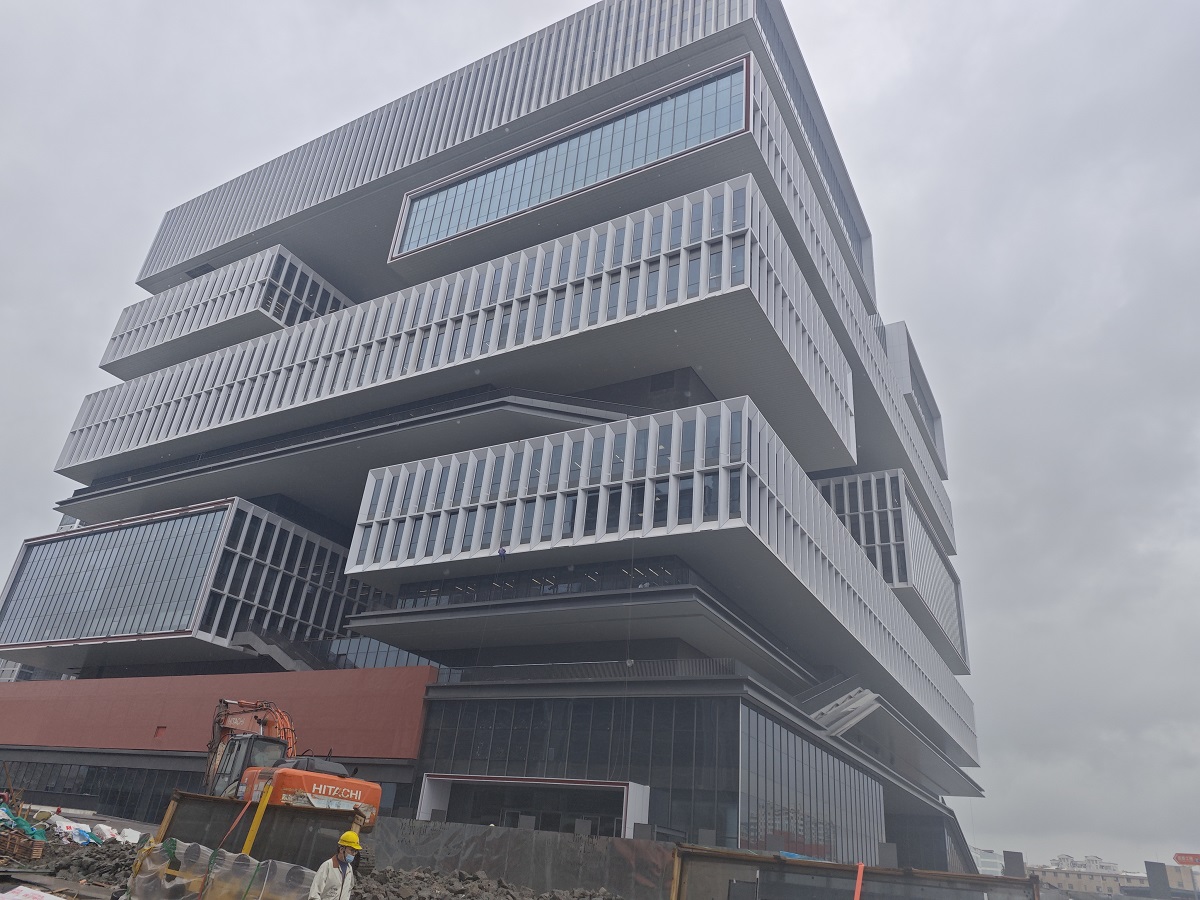
In AI and high-tech R&D scenarios, the massive computing equipment, dense network communication nodes, and frequently iterated workstation layouts impose comprehensive technical requirements on the underlying ground infrastructure that far exceed those of ordinary office environments. A stable, reliably cabled, acoustically comfortable, and flexibly reconfigurable raised access floor system is essential infrastructure for supporting efficient frontier scientific research.
II. Project Requirements & Challenges | Stringent Demands of a Large-Scale AI R&D Space
As a large-scale research carrier dedicated to AI development, the Pujiang Laboratory project placed multidimensional professional demands on the floor system. The 35,000 ㎡ ultra-large installation scale, high-density research equipment deployment, diverse functional spaces, and the need for a quiet R&D environment required the floor system to simultaneously meet professional standards across cabling management, load-bearing stability, acoustic performance, ease of maintenance, and safety/eco-compliance.
🔸 ① Orderly management of large-scale, high-density integrated cabling
The AI laboratory and R&D office spaces deploy massive numbers of GPU servers, network switches, data transmission links, and weak-current signal cables. With cabling demands across 35,000 ㎡, the floor system must provide ample, organized raised cable channels enabling layered, partitioned, and concealed cable routing, while also supporting frequent workstation reconfigurations and network expansion.
🔸 ② Long-term stable load-bearing for research equipment and personnel traffic
The space must support sustained static loads from workstations, server cabinets, lab instruments, and storage units, while withstanding dynamic loads from heavy daily foot traffic. The floor system must remain structurally flat and stable over the long term, providing a continuously reliable foundation for the surface finish.
🔸 ③ Eliminating floor noise to ensure a quiet R&D environment
AI research demands deep concentration; any abnormal floor noise compromises environmental quality. If pedestals loosen or panels rub against each other, squeaks will diminish user experience. Acoustic control must therefore be addressed at both the structural design and installation workmanship levels.
🔸 ④ Differentiated adaptation across diverse functional spaces
The project encompasses research offices, conference rooms, private offices, computing-room support areas, theaters/multi-function halls, reception lobbies, and corridors. Usage intensity, load demand, and acoustic requirements vary significantly, the ground system must offer modular adaptability and differentiated configuration.
🔸 ⑤ Flexible reconfiguration and easy maintenance
Research institutions frequently adjust their organizational structure and project layout. Each reconfiguration may involve cable rerouting and partial floor disassembly. The floor system must support independent panel removal and reinstallation while maintaining pedestal stability across repeated cycles.
🔸 ⑥ Class A fire resistance and green/eco-compliance
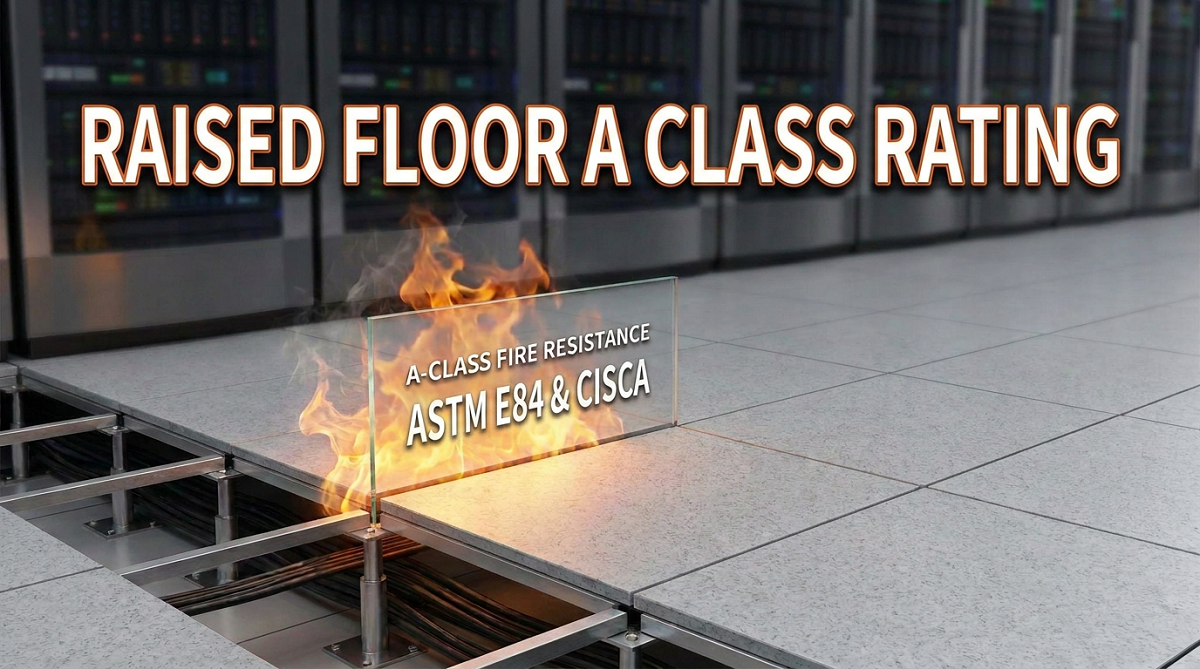
Research buildings have strict fire-resistance grade requirements for finish materials. As a long-term densely occupied indoor environment, control over formaldehyde and harmful VOC emissions is also tightly regulated. Both the floor system and all auxiliary materials must comply with applicable fire and environmental standards.。
After thorough product comparison and technical evaluation, the project ultimately selected the HUIYA SC800 Steel Cementitious Raised Access Floor as the main ground foundation system, with HUIYA SC1500 heavy-duty raised access floor in the theater zone, supported throughout by Japanese KONISHI KU928C-X pedestal adhesive as the fixing solution.
III. Main Ground Solution | HUIYA SC800 Steel Cementitious Raised Access Floor
After comprehensive comparison among multiple brands and models, the HUIYA SC (1000–3000) Steel Cementitious Raised Access Floor, specifically the SC800 model, was selected as the foundation of the research office space.
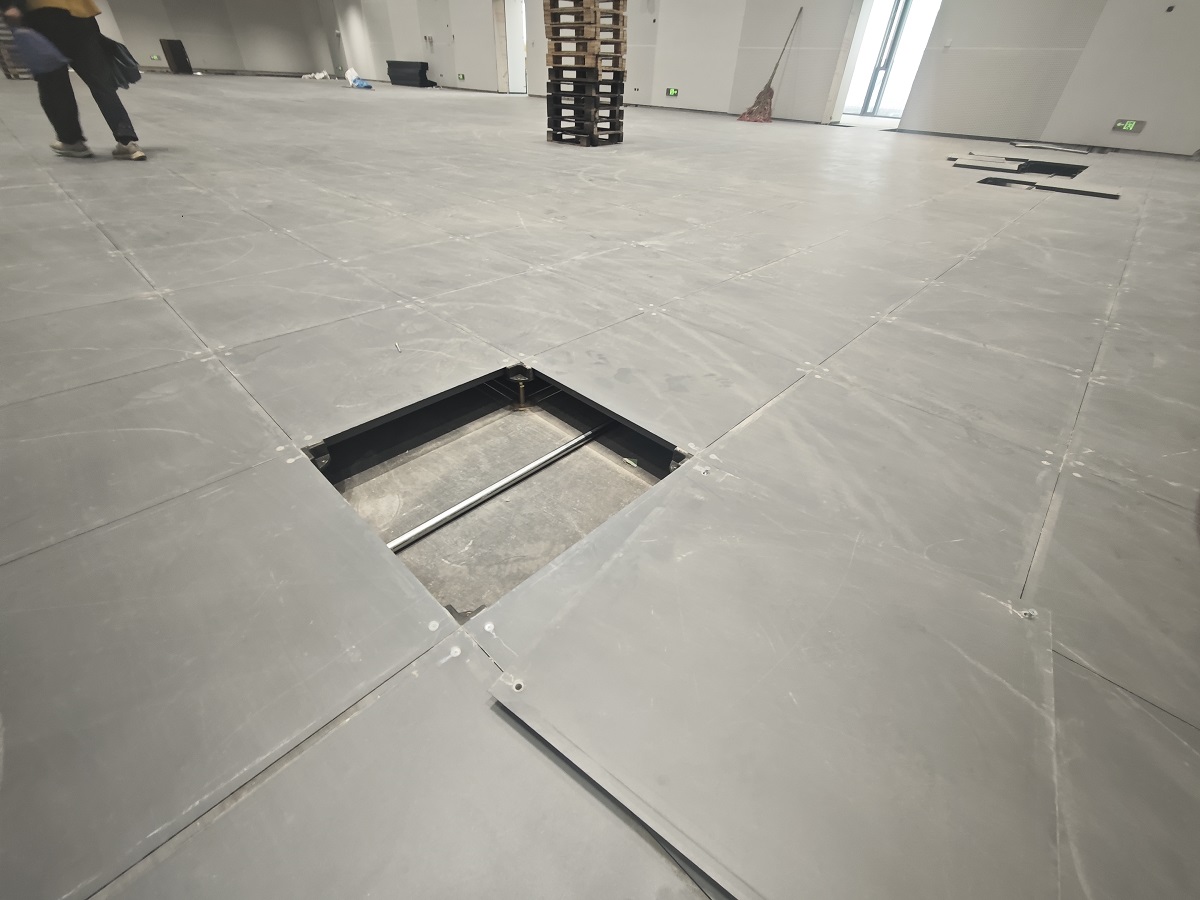
The HUIYA SC800 Steel Cementitious Raised Access Floor (HUIYA SC800 Light – 800 LBS) is a high-performance baseline product within HUIYA’s SC series, developed for office buildings, intelligent office spaces, research institutions, banks and financial institutions, and educational/library settings. It is constructed from two layers of SPCC cold-rolled steel plates joined via electric current welding, with the interior filled with lightweight foamed cement. The surface receives phosphate treatment and an epoxy anti-corrosion coating, delivering excellent structural stability and walking comfort.
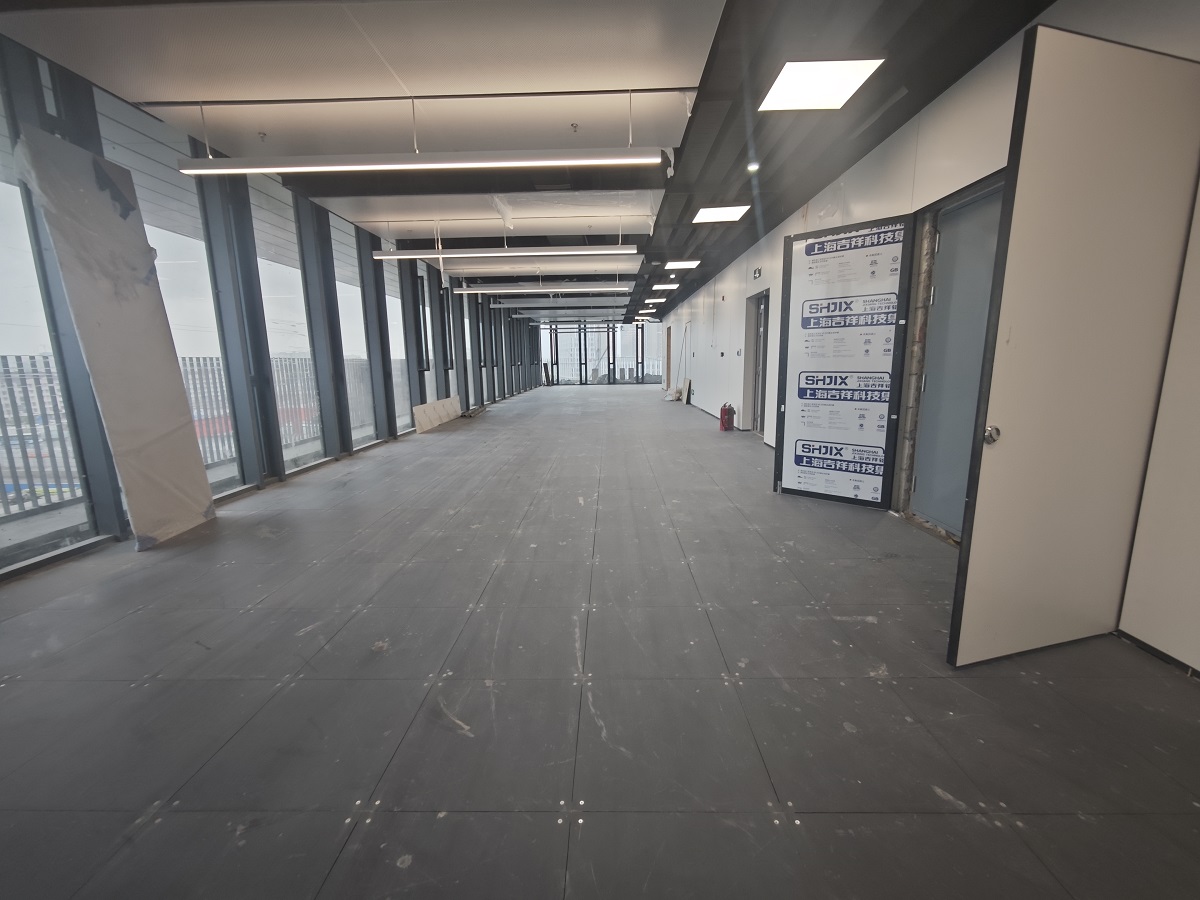
HUIYA SC800 Product Features
The HUIYA SC800 raised access floor belongs to HUIYA’s Steel Cementitious series, a high-performance raised access floor system engineered for Class A office buildings, intelligent research spaces, and AI R&D centers.
- Composite structure: Two premium cold-rolled steel sheets joined by electric current welding, internally filled with lightweight foamed cement
- Surface treatment: Smooth epoxy anti-corrosion coating with excellent durability
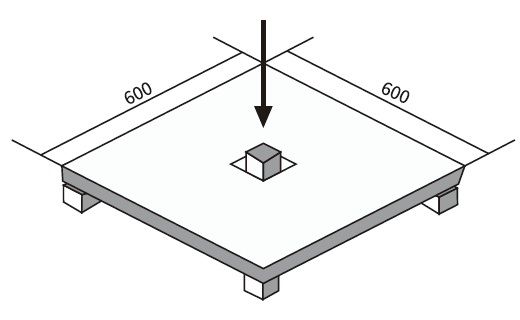
- Panel specification: 600×600 mm, panel thickness 34 mm
- Pedestal system: Adjustable steel pedestals, height range 55 mm to 2,000 mm
- Noise-reduction design: Each pedestal features a built-in flame-retardant acoustic gasket to reduce friction noise between metal pedestal and metal panel
- Eco-friendly bonding: Pedestal bases come with HUIYA eco-rubber gaskets made from recyclable green materials
SC800 Core Technical Specifications
| Parameter | Specification |
|---|---|
| Steel Plate Thickness | 0.6 / 0.7 mm |
| Uniform Load | 14.8 kN/m² |
| Concentrated Load | 3.70 kN |
| Panel Unit Weight | 14.15 kg |
| Panel Dimensions | 600×600 mm |
| Panel Thickness | 34 mm |
| Application Scenarios | Class A office buildings, AI research spaces, offices, conference rooms, etc. |
How SC800 Addresses the Core Needs of an AI Research Space
✅ Ample under-floor space supports high-density AI computing cabling
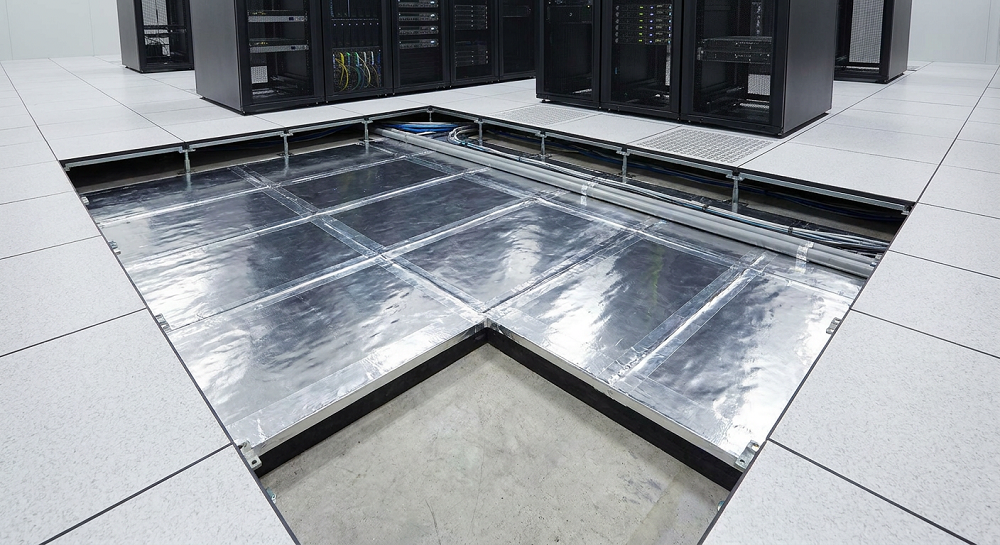
SC800 creates effective raised space between the panel and substrate, providing organized, partitioned independent channels for high-speed Ethernet, fiber-optic links, and power cables, supporting frequent computing-power expansion and network topology adjustments by AI research teams.
✅ Steel-cement composite structure delivers stable load-bearing for research equipment
SPCC cold-rolled steel stamped and combined with lightweight foamed cement filler provides stable structural strength to handle the combined loads of AI workstations, lab instruments, and human traffic.
✅ Built-in acoustic gaskets in pedestals – structural noise reduction
The flame-retardant acoustic gaskets inside each pedestal effectively reduce friction noise between metal pedestals and metal panels, providing a quiet working environment for AI research teams.
✅ High-precision flatness, compatible with multiple surface finishes
SC800 panels offer excellent flatness with uniform seams, accommodating carpet, PVC, stone, and other finish materials, providing a flexible base for the varied designs of Pujiang Laboratory’s diverse functional zones.
✅ Modular, removable design supports flexible maintenance
Individual panels can be independently removed and reinstalled, and pedestals are height-adjustable, fully supporting future cabling changes and equipment adjustments in the AI research space.
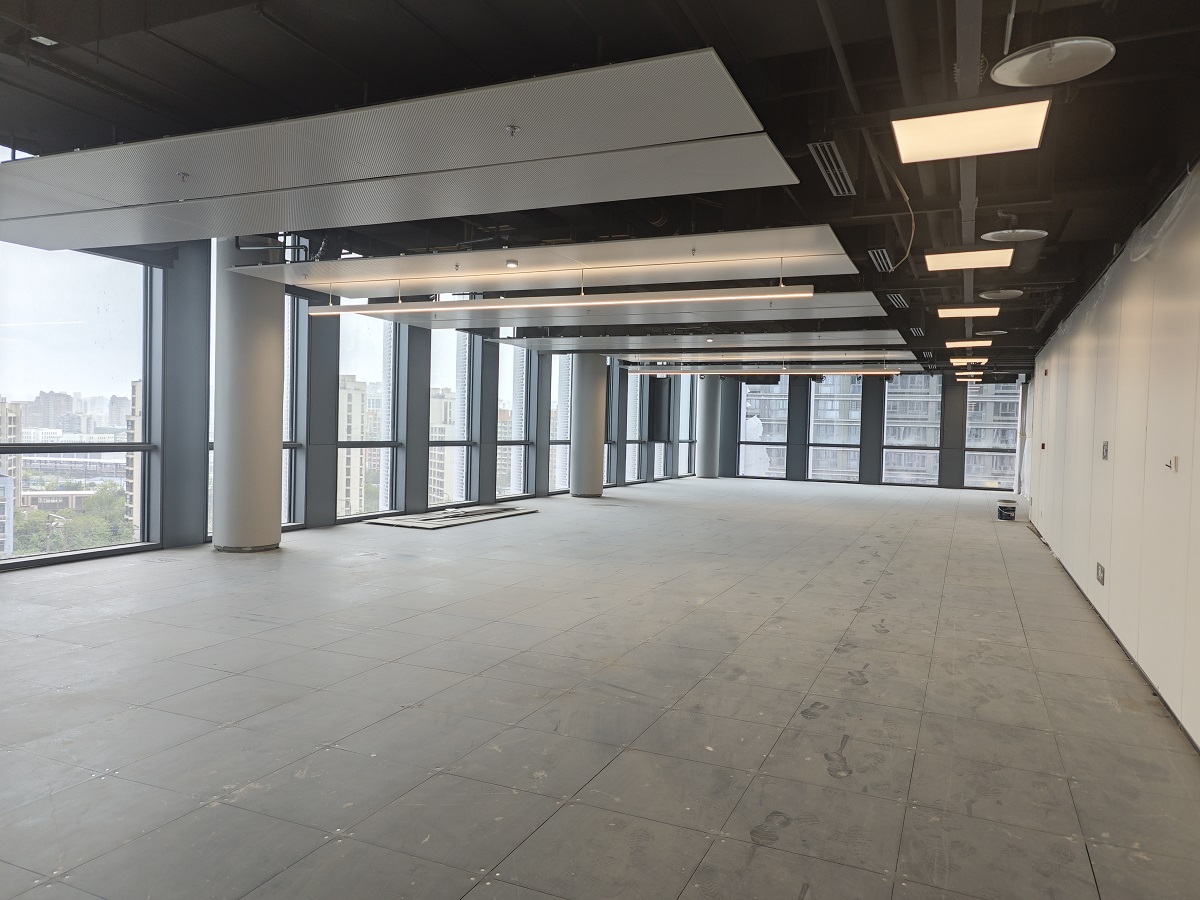
IV. Theater Zone Specialized Solution | HUIYA SC1500 Heavy-Duty Steel Cementitious Raised Access Floor
For the theater (auditorium) area within the project, which has higher load-bearing requirements, the HUIYA SC1500 Steel Cementitious Raised Access Floor (EXTRA HEAVY – 1500 LBS) was specified.
The theater space must support tiered seating structures, stage equipment, and audio-visual systems, loads that ordinary office-grade flooring cannot adequately handle. As the heavy-duty product within HUIYA’s SC series, SC1500 employs thicker steel plates with the same steel-cement composite process, delivering load capacity significantly higher than that of standard office-grade panels, providing a reliable ground foundation for high-load functional spaces.
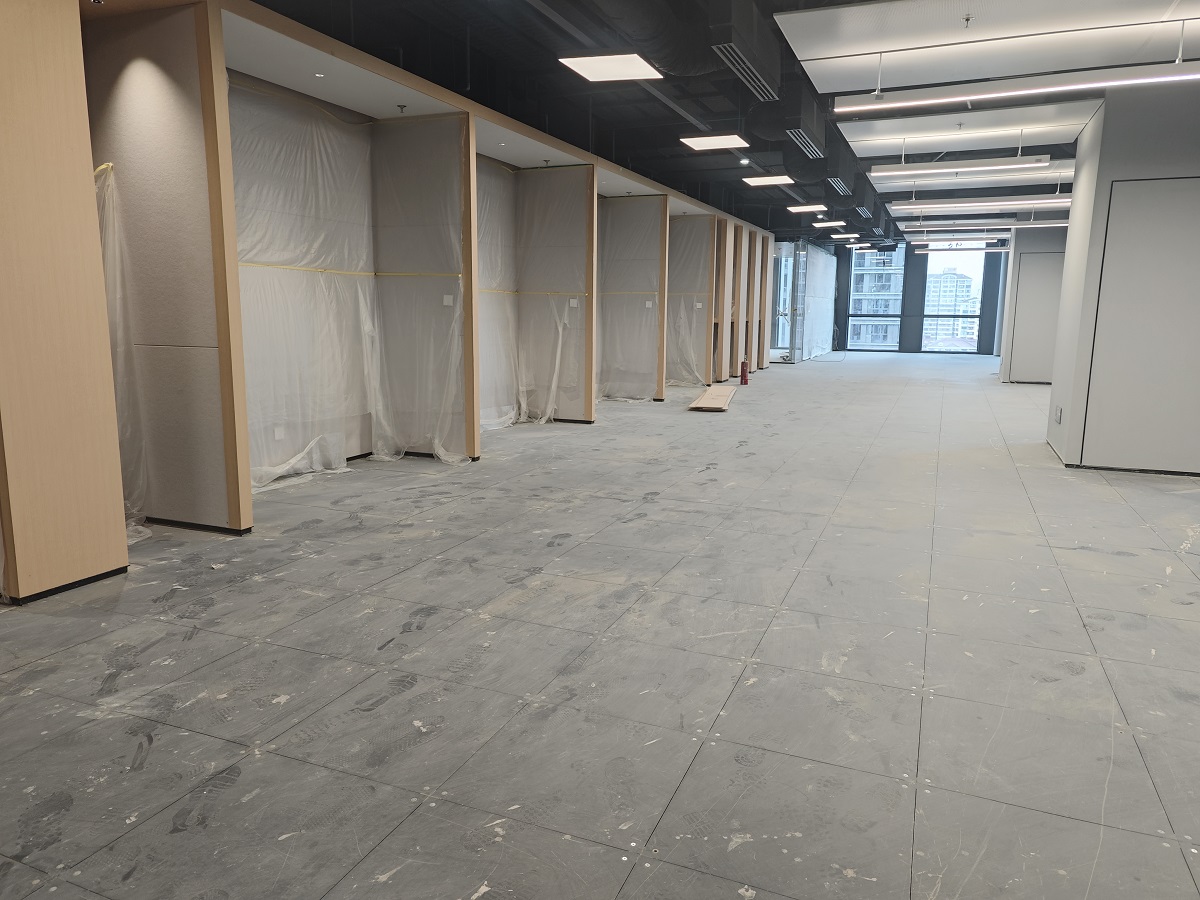
SC1500 Product Technical Specifications
HUIYA SC1500 is the heavy-duty grade product within HUIYA’s steel cementitious raised access floor series, engineered for special functional spaces with elevated load requirements.
| Parameter | Specification |
|---|---|
| Product Grade | EXTRA HEAVY 1500 LBS |
| Steel Plate Thickness | 0.9 / 1.4 mm |
| Uniform Load | 26.8 kN/m² |
| Concentrated Load | 6.7 kN |
| Panel Unit Weight | 18.50 kg |
| Panel Dimensions | 600×600 mm |
| Structural Features | Dual steel plates joined by electric current welding + foamed cement filling + epoxy anti-corrosion coating |
Why SC1500 Is Ideal for Theater Spaces
✅ Heavy-load capacity, comfortably handling stage and equipment loads
The 26.8 kN/m² uniform load capacity far exceeds standard office-scenario thresholds, stably supporting auditorium seating, professional audio equipment, stage machinery, lighting control systems, and dynamic loads from large audiences.
✅ Reinforced steel plate structure, enhanced rigidity
SC1500 uses 0.9 / 1.4 mm thickened double steel plates, which significantly improve structural stiffness and deformation resistance compared with SC800, well suited to spaces such as theaters that demand higher floor stability.
✅ Acoustic gaskets optimize the acoustic environment
Theater spaces are highly acoustically sensitive. SC1500 pedestals are also equipped with flame-retardant acoustic gaskets and, combined with the KONISHI KU928C-X adhesive workmanship described below, optimize space acoustics through both structural vibration isolation and interface buffering.
✅ Flexible cabling for complex audio-visual circuits
Theaters involve extensive A/V signal lines, professional lighting control circuits, and power loops. SC1500 retains the core advantages of raised access flooring, providing organized routing space for complex audio-visual cabling.
V. Eco-Friendly Auxiliary Material | Japanese KONISHI KU928C-X Professional Pedestal Adhesive
A 35,000 ㎡ raised access floor system involves hundreds of thousands of pedestal anchor points. Stable connection between pedestals and substrate is the foundation of the floor system’s long-term reliability. Throughout this project, Japanese KONISHI KU928C-X professional adhesive for raised access floor pedestals was used to ensure the system’s stability, low-noise operation, and long-term reliability.
About KONISHI (Japan)
KONISHI Co., Ltd. was founded in 1870 (Meiji Year 3) and has more than 155 years of history, making it one of Japan’s oldest and largest professional adhesive manufacturers. KONISHI went public in 1925 and is currently listed on the Tokyo Stock Exchange (Securities Code: 4956) — a century-old publicly traded enterprise. Headquartered in Osaka, its “BOND” brand has built deep R&D expertise in construction adhesives and industrial bonding materials throughout Japan and Asia.
KU928C-X Core Features
| Feature | Description |
|---|---|
| F☆☆☆☆ (F-Four-Star) Certification | Highest-grade environmental certification per Japan JIS A 5536, with formaldehyde emissions approaching zero |
| Composition | Single-component moisture-curing polyurethane resin, solvent-free formulation |
| Free of 13 Hazardous Substances | Free of toluene, xylene, and 11 other harmful VOCs |
| Bonding Strength | 2,750 N at 23°C × 24 h (between metal pedestal base and substrate) |
| 7-Day Cured Strength | Up to 3,483 N at 23°C × 7 days, max displacement 1.3 mm |
| Elastic Bonding Properties | Forms a flexible bond layer after curing — absorbs vibration and blocks sound transmission |
| Operating Environment | Suitable for indoor/outdoor use, with excellent thermal and humidity resistance |
| Packaging | 760 ml/tube, aluminum soft pack — minimal disposal volume |
Why AI Research Spaces Need KONISHI KU928C-X
In raised access floor installation, the connection stability between pedestal and substrate is the central determinant of long-term system quality. Traditional pedestals, which rely solely on self-weight and panel compression — present two quality risks in AI research environments:
Scenario 1 – Floor noise from frequent foot traffic.
AI R&D teams maintain intense work rhythms with frequent personnel movement. Without an elastic buffer between the pedestal base and floor substrate, hard contact between metal and concrete will produce “creaking” noises under repeated micro-vibration, disrupting AI algorithm research, academic discussions, and other deeply focused scientific work.
Scenario 2 – Cumulative pedestal misalignment from equipment adjustments.
During AI research project cycles, computing-power expansions, cabling adjustments, and workstation reorganizations are frequent. If pedestals shift each time the floor is disassembled, accurate panel reinstallation becomes difficult, compromising overall floor flatness.
Application of KONISHI KU928C-X at the Pujiang Laboratory Project
To address these concerns, after the entire 35,000 ㎡ of raised access flooring was leveled, the installation team applied KONISHI KU928C-X adhesive between every pedestal base and the substrate. After curing, the adhesive delivered two key functions:
Function 1 | Elastic Buffering – Eliminating Floor Noise at Its Source
The flexible elastic bond layer formed after KU928C-X curing effectively absorbs micro-vibrations transmitted to pedestals from foot traffic and equipment operation, eliminating squeaks caused by metal-to-concrete hard contact at their source — creating quiet conditions for AI research work. This elastic adhesive also blocks sound waves traveling through solid structures, positively impacting impact-sound insulation performance (such as Japan’s commonly used L-value standard).
Function 2 | Secure Locking – Preventing Cumulative Pedestal Misalignment
After curing, the adhesive firmly anchors pedestal bases to the substrate. Even after repeated panel disassembly for cable inspection or equipment adjustments, the pedestal system remains stable, allowing precise panel reinstallation and avoiding cumulative misalignment that would compromise overall flatness.
F☆☆☆☆ Eco-Grade – Safeguarding Researcher Health
F☆☆☆☆ is the highest-tier certification for formaldehyde emissions in construction finish materials under Japan Industrial Standard (JIS), requiring formaldehyde release of less than 5 µg/m²·h, and forbidding 13 hazardous substances including formaldehyde, toluene, and xylene. In long-term densely occupied indoor environments such as AI research spaces, KU928C-X adhesive safeguards indoor air quality at the auxiliary-material level, meeting the stringent environmental requirements of national-grade research institutions.
✅ Real-World Performance
After comprehensive application of KONISHI KU928C-X pedestal adhesive throughout the Pujiang Laboratory project, the entire 35,000 ㎡ pedestal system was firmly anchored. Walking tests during on-site acceptance confirmed the absence of any noticeable noise, with the overall floor remaining stable and flat. Both the SC800 main areas and the SC1500 theater zone achieved consistent and reliable installation quality, fully satisfying the AI research space’s combined demands for silence, stability, and environmental safety.
VI. Project Significance | Capability Leap from Enterprise Projects to National-Level Laboratories
HUIYA’s client base has long covered Fortune 500 enterprises, national-level development zones, large data centers, semiconductor cleanrooms, and international financial institutions. The successful delivery of the Pujiang Laboratory project marks an important breakthrough for HUIYA into national-grade research institution applications, expanding from enterprise-level service to serving China’s strategic scientific and technological forces.
HUIYA’s Client Capability Progression
Commercial Office Buildings → Data Centers → Fortune 500 HQs → National Development Zones → Semiconductor Smart Factories → ✨ National-Level Research Laboratories ✨


This progression reflects HUIYA's continued accumulation across product R&D, installation craftsmanship, project management, and quality control. From originally serving commercial office spaces, to gradually entering technically demanding domains such as data centers, multinational HQs, and semiconductor cleanrooms, and now successfully undertaking a national-level AI research base such as Pujiang Laboratory, HUIYA's client portfolio shows a clear upward trajectory from "commercial-grade" to "industrial-grade" to "national-grade."
The 35,000 ㎡ precision delivery is not only a milestone in scale, but also a key recognition of HUIYA’s professional capability in national strategic sci-tech infrastructure construction.
The “HUIYA Solution” for AI Lab Infrastructure
For frontier R&D scenarios such as artificial intelligence and high-tech research, HUIYA has, through the Pujiang Laboratory project, distilled a complete AI laboratory ground-system solution that can be replicated across similar national AI research institutions, intelligent computing centers, and frontier technology R&D platforms.
HUIYA Solution · Five Modules of an AI Laboratory Ground System
| Solution Module | Key Content |
|---|---|
| 🔧 Product Mix | SC800 steel cementitious raised access floor covers large research office areas, while SC1500 heavy-duty model reinforces critical zones such as theaters and multi-function halls – “zoning + grading” for differentiated adaptation |
| 🧪 Auxiliary-Material Specification | F☆☆☆☆-grade KONISHI KU928C-X pedestal adhesive applied site-wide, raising overall installation quality and environmental performance |
| ⚙️ Installation Workmanship | Large-scale projects use zoned pipeline workflows; laser-precision leveling ensures global flatness; standardized procedures guarantee consistent quality |
| 🔍 Quality Control | Three-tier inspection system, incoming material inspection, in-process inspection, and final acceptance inspection, with traceability records for all key procedures |
| 🤝 Service System | In-house professional installation team, extended warranty commitment, and lifetime technical support, forming a complete closed-loop from product to service |
The core value of this solution lies in breaking down the comprehensive ground-system requirements of national-level research institutions into executable, quantifiable, and replicable standardized modules — providing a clear implementation reference for future AI laboratories, intelligent computing centers, and frontier research platforms.
Continued Commitment to Shanghai’s Sci-Tech Innovation Core
Following representative projects such as Shanghai Caohejing Beiyang AI Town, Caohejing Kehui Building, and Shanghai Huanchuang Center, the Pujiang Laboratory project further consolidates HUIYA’s professional service position in Shanghai’s high-end sci-tech innovation space. From Xuhui Riverside to Yangpu Riverside, from the Caohejing Innovation Zone to the periphery of Zhangjiang Science City, HUIYA raised access flooring continues to participate in multiple key nodes of Shanghai’s global sci-tech innovation center construction.
📍 HUIYA’s Representative Shanghai Project Matrix
| Project Name | Project Type | Coverage Area |
|---|---|---|
| Shanghai Caohejing Beiyang AI Town | National-Level AI Industrial Park | 5,000 ㎡ |
| Shanghai Caohejing Kehui Mansion | Class A Commercial Office Building | 5,500 ㎡ |
| Shanghai Huanchuang Center | Class A Financial Office Building | 3,000 ㎡ |
| Shanghai Xuhui Pujiang Laboratory | National-Level AI Research Laboratory | 35,000 ㎡ |
This portfolio shows that HUIYA’s services in Shanghai now span multinational R&D headquarters, national AI industrial parks, Class A commercial office buildings, financial office spaces, and national research laboratories , forming a service network that covers every tier of Shanghai’s sci-tech innovation ecosystem. The 35,000 ㎡ scale of the Pujiang Laboratory project also stands as one of HUIYA’s flagship projects in the Shanghai region.
HUIYA is committed to continuing to serve Shanghai’s development as a global science and technology innovation hub, providing stable and reliable integrated ground solutions for more national research institutions, AI industrial platforms, and high-end commercial spaces with professional product capabilities and installation expertise.
HUIYA | A Professional Partner for AI Research Space Raised Access Floor Systems
The successful completion of the Shanghai Xuhui Pujiang Laboratory SC800 raised access floor project represents another flagship case of HUIYA’s steel cementitious raised access floor in the artificial intelligence and high-tech R&D field. The 35,000 ㎡ precision installation, spanning nearly five months, validated the performance of HUIYA’s products in stable load-bearing, high-precision flatness, flexible cabling, and fire safety, while also demonstrating HUIYA’s capability to deliver a complete “raised access floor + professional auxiliary materials + differentiated specification” solution for large-scale research projects.
Changzhou HUIYA New Material Technology Co., Ltd. (HUIYA) is a professional provider of raised access floor system solutions in China, specializing in the R&D, manufacturing, and sales of SC series steel cementitious raised access floors, CSL series calcium sulfate raised access floors, GRC inorganic cement raised access floors, and other raised access floor products. Our products are widely used in data centers, corporate headquarters, commercial office buildings, semiconductor factories, AI industrial parks, and other high-standard projects.
If your project also requires a raised access floor solution, please contact HUIYA – we will provide professional product selection advice and customized solutions.
📞 Hotline: +86 18706128688
🌐 Official Website: www.huiyainc.com
📧 Email: [[email protected]]
Related posts:
Huiya Real-Time News
Huiya Real-Time News is dedicated to providing you with the latest and most authoritative information on the raised flooring industry.
We provide 24/7 updates on industry policy interpretations, market trend analysis, company news.
MORE DOWNLOADS

GENERAL CATALOGUE
HUIYA INTRODUCTION

HUIYA GREEN LABEL
CAD/BIM FULL STEEL
APPLICATION SCENARIOS


