

From Commercial Data Centers to Family Living Rooms: Huiya Visits Huzhou, Zhejiang, to Inspect On-Site Double Floor Installation and Conduct In-Depth Research on the Implementation Path of the Japanese Residential Raised Floor System
On June 10, 2025, at the sincere invitation of Mr. Zhu Shenglong, General Manager of a domestic Double Floor promotion company, Mr. Gu Xuxiang, General Manager of Changzhou Huiya Decoration Materials Co., Ltd., led a delegation to Huzhou City, Zhejiang Province. The team visited a residential fine-decoration project under construction to comprehensively observe and study the actual installation techniques, joint detailing, and final delivery results of the Japanese-style “Double Floor (にじゅうゆか / Double Floor System)” in domestic residential projects.
This marks a critical step for Huiya, moving from “concept learning” to “field verification”, following the team’s earlier this year visit to Japan and technical dialogues with senior Japanese architectural designers regarding “new directions for Double Floor products.” From 1,000㎡ Grade-A office building OA network floors to 100㎡-level residential Double Floor installations, Huiya is seriously examining: can the commercial access floor technology refined over two decades truly “enter ordinary households”?
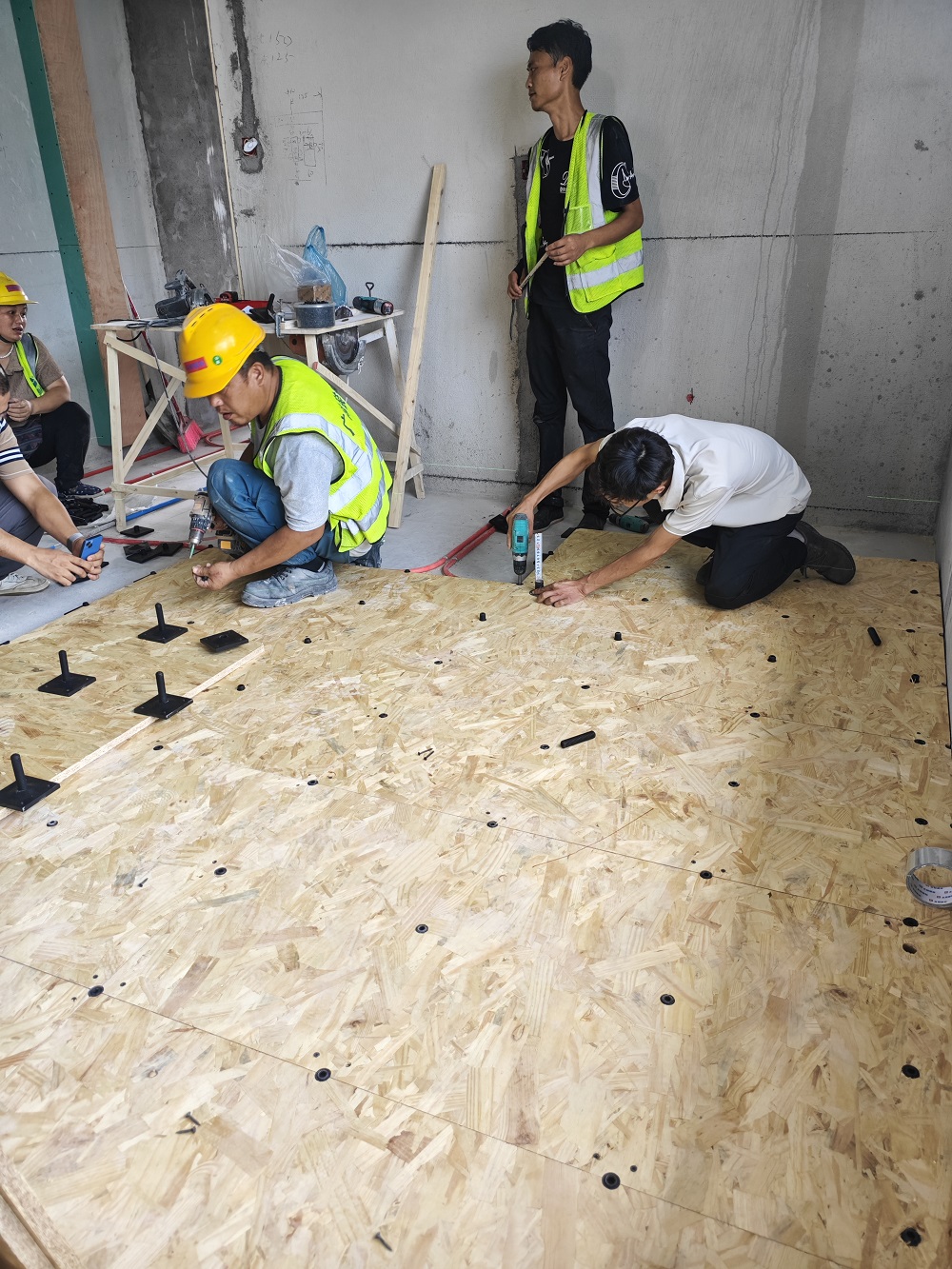
I. On-Site Observation: Real-World Implementation of the Japanese Double Floor System in Domestic Residences
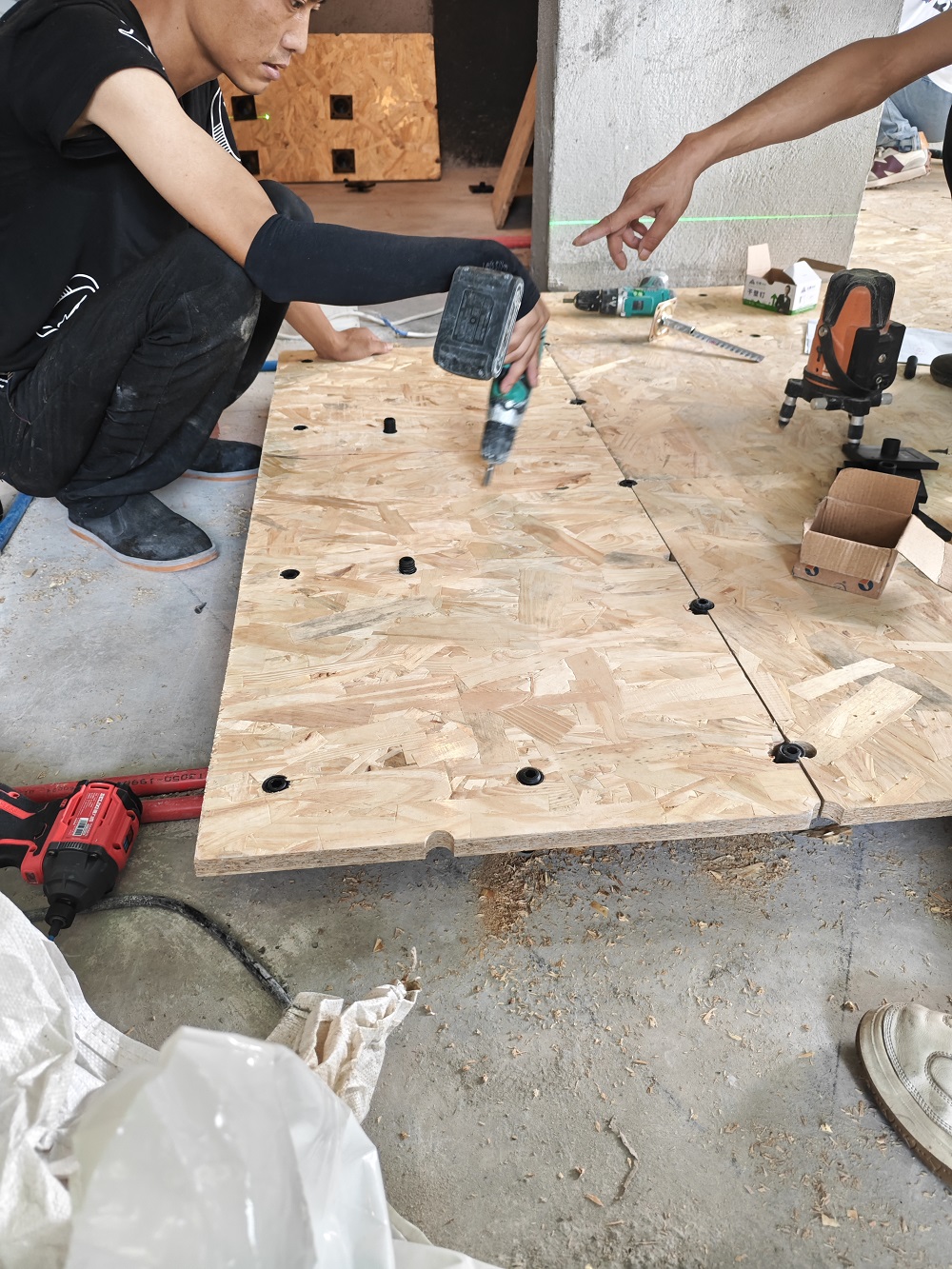
1. Construction Site Sketch
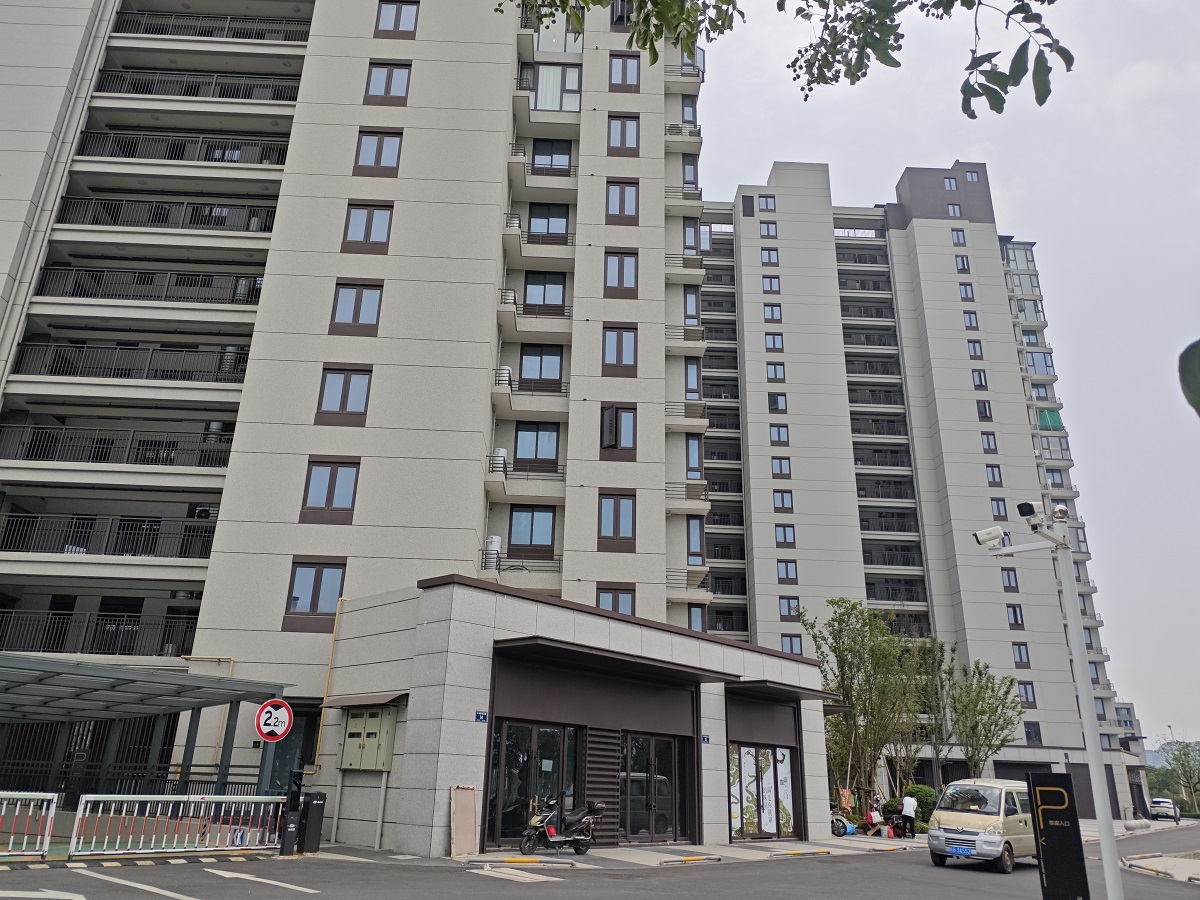
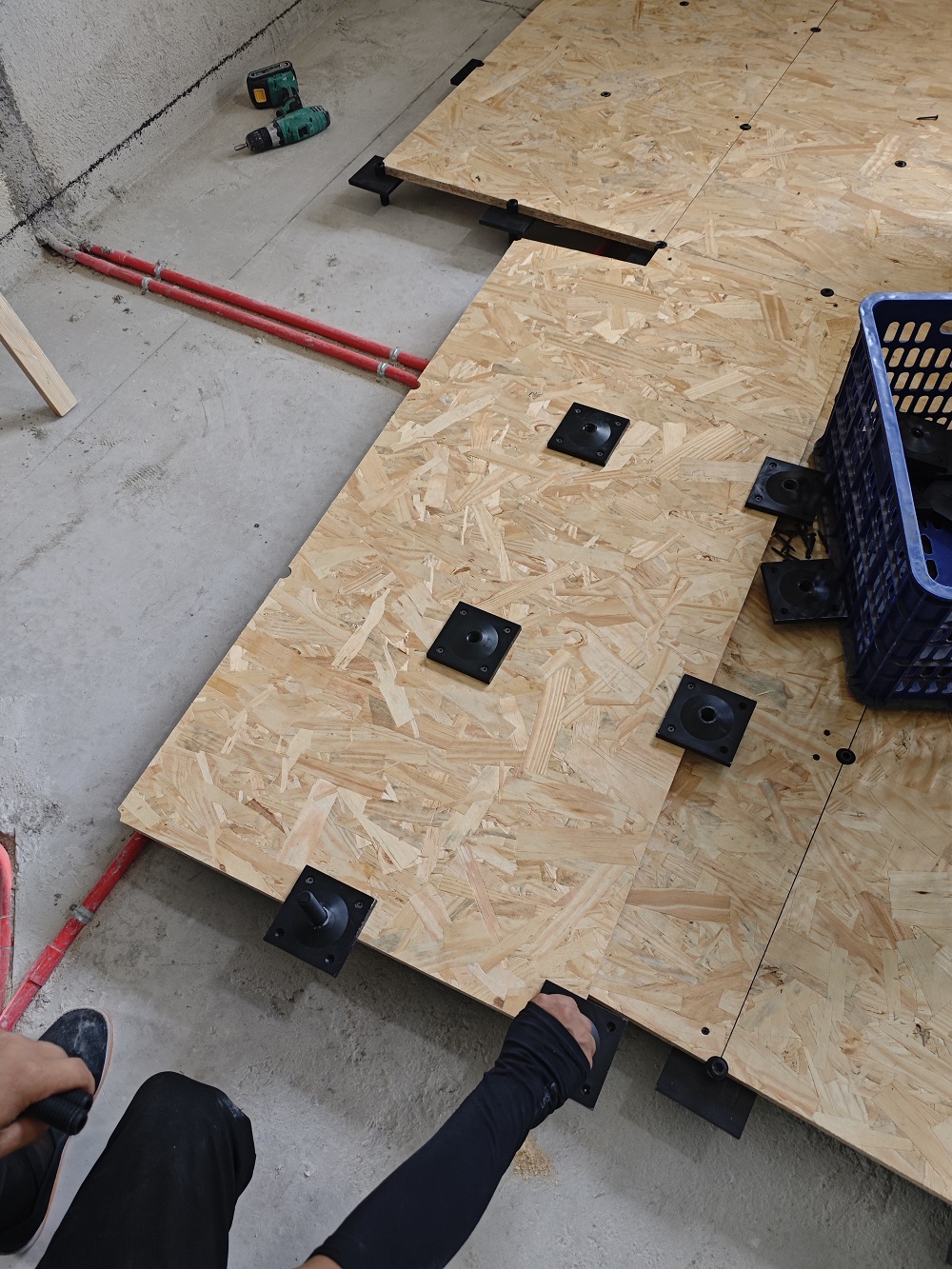
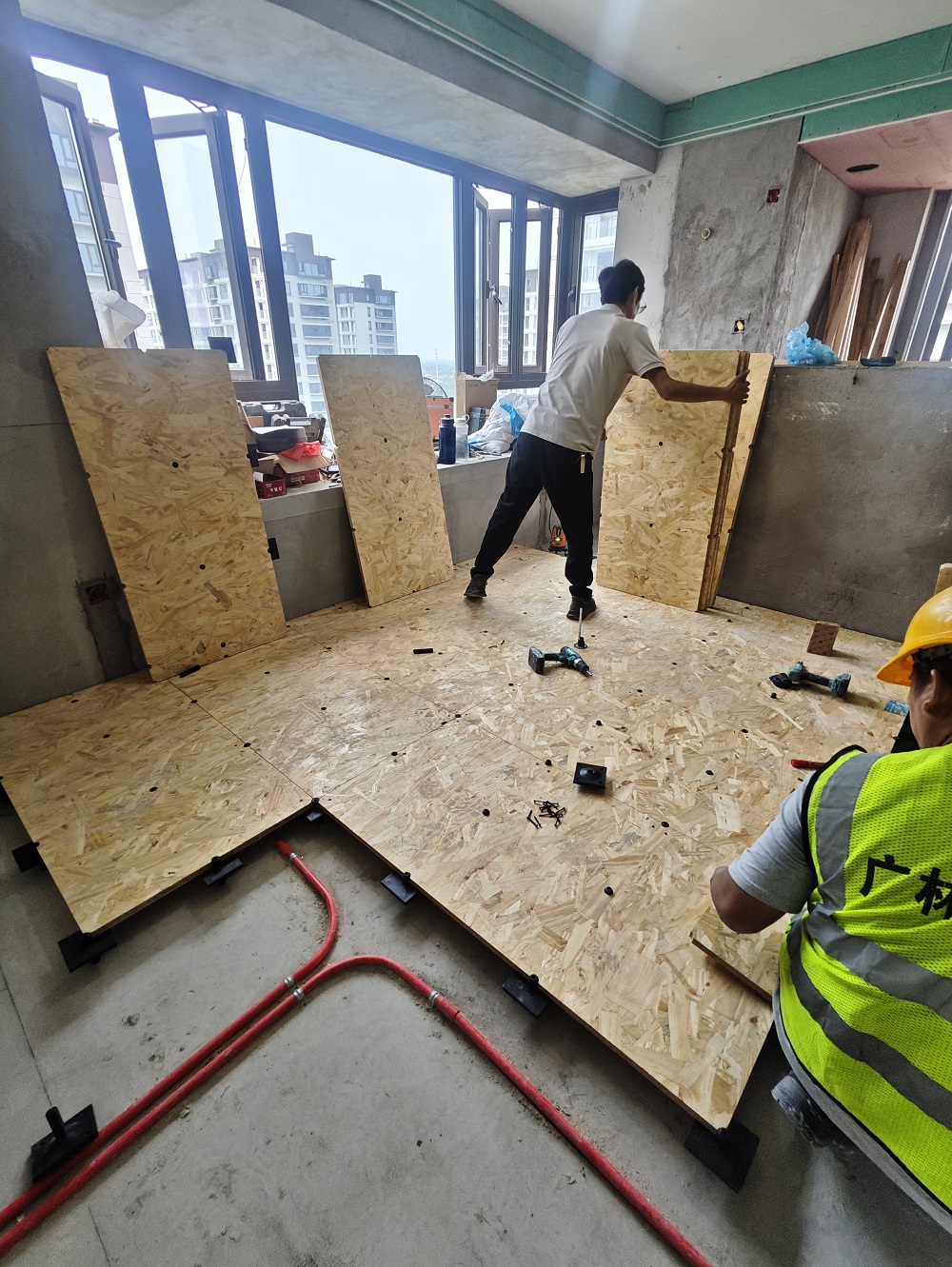
The Huzhou renovation site inspected was a high-rise residential unit’s living room, dining room, and main living spaces, with a total installation area of approximately 120㎡. The construction team adopted a typical Japanese Double Floor joint structure:
- Substrate: Original concrete slab (approximately 150mm thick, with red PEX water supply piping pre-laid)
- Pedestals: High-strength engineering plastic threaded adjustable pedestals (black square base + M16 adjustment bolt + anti-vibration rubber gasket)
- Panels: OSB (Oriented Strand Board) panels (modular cutting at approximately 600×900mm, tongue-and-groove jointing)
- Pedestal Distribution: 4–6 pedestals beneath each panel, spaced approximately 300–450mm apart
- Service Layer: Integrated water supply/drainage and strong/weak electrical conduits within the raised cavity for ease of future maintenance
Three prominent characteristics were observed throughout the construction process:
| Feature | On-Site Observation |
|---|---|
| Dry Construction | No cement mortar, no wet work throughout; daily output per unit reaches 30–50㎡ |
| Reversible Maintenance | Any panel can be independently removed; piping below can be inspected immediately |
| Leveling Precision | Threaded pedestals combined with laser levels achieve full-room flatness within ±2mm |
2. Fundamental Differences from Traditional Residential Flooring Methods
Compared to China’s mainstream “cement mortar leveling + composite flooring” process, the Japanese Double Floor system demonstrates clear generational differences:
| Comparison Dimension | Traditional Wet Method | Japanese Double Floor System |
|---|---|---|
| Construction Period | 7–14 days for leveling and curing | Same-day installation, walkable same day |
| Pipe Modification | Requires destroying the floor | Maintainable across the full lifecycle |
| Leveling | Heavily dependent on worker skill | Threaded pedestal precision, millimeter-level accuracy |
| Sound Insulation | Depends on slab thickness | Raised cavity + rubber damping, superior performance |
| Modifiability | One-time, irreversible | Fully removable and reusable |
II. In-Depth Research: What Makes the Japanese Double Floor System Truly “Excellent”?
Through this on-site investigation, combined with Japanese JIS A 1440-1, -2:2007 standards and technical materials publicly released by GBRC (General Building Research Corporation of Japan) on “Floor Impact Sound Reduction Performance Rating Marking (ΔL Rating)”, Huiya’s R&D team systematically organized the core technical value of the Japanese Double Floor system.
1. Floor Impact Sound Control – The “Soul Indicator” of Japanese Residential Flooring
As a nation of high-density collective housing, Japan is extremely sensitive to floor impact sound (床衝撃音) between adjacent upper and lower residential units. Its evaluation system underwent a major transformation from the “Estimated L-Rating” of the 1980s to a complete shift to the “ΔL Rating (Reduction Quantity Rating)” in 2008:
- ΔLL Rating (Light-Weight Impact, derived from JIS A 1440-1): Evaluates high-frequency impacts such as high heels and dropped tableware
- ΔLH Rating (Heavy-Weight Impact, derived from JIS A 1440-2): Evaluates low-frequency impacts such as children running and furniture dragging
The ΔL rating is divided into 5 tiers (ΔLL-1 to ΔLL-5); higher numbers indicate superior noise reduction performance. Mainstream dry-type Double Floor products in the Japanese market typically fall within ΔLL(II)-2 ~ -3 and ΔLH(II)-1 ~ -2.
? Key Insight: The performance of Japanese Double Floor goes beyond merely “creating a raised cavity” , it requires full-frequency-band testing from 63Hz to 2kHz through box-type laboratory wall-construction measurements, including complete wall-edge node reproduction with skirting boards (幅木) + anti-vibration edge joists (際根太) + standardized field installation. This shares a deeply common testing philosophy with Huiya’s already-established JIS A 1450:2021 testing system.
2. Load-Bearing Performance – The “Residential-Grade” Loading Logic
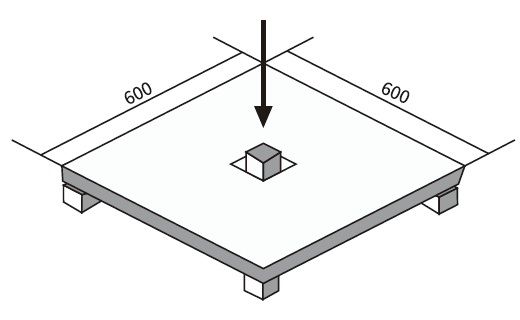
The JAFA-specified Double Floor load test uses a Φ80mm pressure plate, with a maximum 100kg (25kg×4) localized concentrated load, simultaneously measuring deflection (settlement) at four typical positions: “central joint, central panel center, directly above pedestals, and wall edge.”
- Central Average Deflection: approximately 4mm
- Edge (Wall-Side) Average Deflection: approximately 2mm
This indicator is far below the load-bearing rating of commercial OA flooring (Huiya’s commercial products show only 1.3mm deflection under 3000N concentrated load) but is more aligned with the actual operating conditions of localized static loads from household furniture (bookcases, pianos, refrigerators).
3. Three Irreplaceable System Values
? One: Maintainability = Sustainability Across the Building’s Full Lifecycle
The average lifespan of Japanese residences reaches 60–100 years, with the core principle being the “skin, flesh, bone” separation design. The Double Floor isolates the service layer from the concrete, reserving unlimited possibilities for future water/electrical renovations, heating upgrades, and smart wiring over the next 30 years.
? Two: Sound Insulation & Vibration Damping = Physical Insurance for Neighborhood Relations
Through the rubber damping pad beneath each pedestal + the anti-vibration nodes of the edge joists + the gap design of the skirting boards (typically 2mm floating clearance), the system systematically severs the solid-borne sound transmission path of floor impact noise.
? Three: Floor Heating Compatibility = Natural Fit for Northern Centralized & Southern Independent Heating
The raised cavity can integrate hydronic heating coils or electric heating film. Compared to traditional pebble-backfilled floor heating, it offers faster heating, lower thermal inertia, and lower energy consumption.
III. Industry Insights: Current Status of Domestic Double Floor Systems and “Localization” Challenges
1. Two Major Schools of Domestic Double Floor Pedestal Structures
Through on-site observation and peer exchanges, domestic Double Floor systems currently being promoted are mainly divided into two pedestal types:
| Type | Advantages | Disadvantages |
|---|---|---|
| Metal Pedestals (Steel/Galvanized) | High load capacity, structural stability, long lifespan | Higher cost, thermal bridging, heavy transport |
| Plastic Pedestals (Engineering Plastic) | Lightweight, good thermal insulation, low cost, corrosion-resistant | Requires denser pedestal layout under high-load conditions |
The core technologies accumulated by Huiya’s commercial OA network floor series (HUIYA SC Steel Cementious raised floor, ECS steel-encased calcium sulfate raised floor, aluminum alloy raised floor, etc.), including pedestal locking structures, green-head bracket corner locks, and threaded adjustment precision, are fully transferable to the Double Floor residential domain.
2. Three “Localization” Challenges That Must Be Confronted
? Challenge One: The “Cliff-Drop” Difference in Project Scale
| Indicator | Commercial OA Floor Project | Residential Double Floor Project |
|---|---|---|
| Single Project Area | 1,000 – 35,000㎡ | 80 – 200㎡ |
| Decision Cycle | 3–12 months (bidding) | 7–30 days (homeowner immediate decision) |
| Installation Team Configuration | 8–20 person professional team | 2–4 person small team |
| Site Coordination | General contractor + supervisor + design institute | Homeowner + decoration company + plumber/electrician |
The “standardized large-formation operations” model of commercial projects cannot be directly applied to the “guerrilla warfare” of residential scenarios. Rising per-unit-area installation management costs and compressed single-point profit margins are operational hurdles that must be overcome.
? Challenge Two: Comprehensive Reconstruction of Marketing Channels
Huiya’s commercial channels have long served:
- General contractors (China Construction, Shanghai Construction Group, etc.)
- Design institutes and data center integrators
- Major Tier-A clients (Siemens, Tokyo Electron, Kingboard, etc.)
However, the decision-making path of potential residential Double Floor customers is entirely different:
- C-end homeowners (sourcing information from Xiaohongshu, Douyin, decoration forums)
- Home decoration designers/design studios
- Full-package decoration companies / fine decoration companies
- Renovation service providers
Huiya needs to establish an entirely new B2C / B2-small-B marketing cognition system, including product experience stores, designer training programs, and showroom partnerships.
? Challenge Three: “Granularity” Upgrade in Service Standards
After commercial project delivery, customers care about overall performance compliance; residential customers care about every screw, every joint, every sound. After-sales response must shift from the “project cycle” to the “homeowner life cycle.”
IV. Opportunity Assessment: China’s Old Housing Renovation – The Largest Market Window for the Double Floor System
1. Dual Drivers from Policy and Market
According to public data from the Ministry of Housing and Urban-Rural Development, urban old residential communities built before 2000 involve approximately 220,000 communities, 42 million households, and nearly 4 billion ㎡ of building area. They share common pain points:
- Thin floor slabs (mostly 100–120mm prefabricated slabs), poor sound insulation
- Aged piping with irregular routing; renovation requires destroying the floors
- Bathrooms and kitchens cannot accommodate significant floor sinking
- Restrictions on adding floor heating
- Extremely high cost for re-renovation after initial decoration
The Double Floor system is precisely the “systematic solution” to this series of pain points.
2. Huiya’s Differentiated Entry Strategy
Huiya does not intend to directly compete with existing home decoration companies. Instead, based on twenty years of commercial access floor industry accumulation, it positions itself as a “high-quality Double Floor base component supplier + standardized installation solution provider”:
? Product Side:
Develop residential-oriented lightweight, low-height (80–150mm), low-cost Double Floor series, leveraging Huiya’s mature pedestal precision adjustment technology, anti-static surface processing, and JIS A 1450 testing capabilities.
? Channel Side:
- Establish strategic partnerships with national home decoration chains and full-package decoration companies
- Enter old residential community renovation projects (supported by old-renovation special funds)
- Enter the pre-installation market for fine-decoration property developers
- Through Qiao De (Changzhou) Import & Export Trading Co., Ltd., handle export orders for Japanese residential clients
? Standards Side:
- Reference both JIS A 1450 (Access Floor Test) + JIS A 1440 (Floor Impact Sound) Japanese dual standards
- Promote the establishment of a domestic residential Double Floor industry recommended specification
- Build a Sino-Japanese joint technical IP based on nearly 40 years of cooperative experience with senior Japanese architectural designers
3. Three Typical Applications in Old Housing Renovation Scenarios
| Scenario | Double Floor Solution Value |
|---|---|
| 20–30-Year-Old Public Housing Comprehensive Renovation | One-time solution for the four major issues of piping, leveling, sound insulation, and floor heating |
| Aging-Friendly Renovation | Threshold-free, anti-slip, warm feet from floor heating, convenient emergency maintenance |
| Home Office / SOHO Upgrade | Flexible strong/weak electrical wiring, supports computer equipment, printers, etc. |
V. The Boundaries of Technology Have Never Been the Industry – Only the Imagination
From data centers to living rooms, from OA office buildings to Double Floor residences, from JIS A 1450 to JIS A 1440, Huiya is systematically “translating” all the testing systems, production processes, and installation experience accumulated over the past twenty years into product language that household customers can perceive and trust.
This is not a simple product extension; it is Huiya’s proactive pivot in response to China’s real estate market transitioning from the “incremental era” to the “stock renovation era.”
Challenges and opportunities coexist, but the path is now clearly visible.
? Official Website: www.huiyainc.com
? Business Inquiries: Home decoration companies, design studios, renovation service providers, and residential developers are welcome to discuss Double Floor system collaboration.
Huiya Real-Time News
Huiya Real-Time News is dedicated to providing you with the latest and most authoritative information on the raised flooring industry.
We provide 24/7 updates on industry policy interpretations, market trend analysis, company news.

MORE DOWNLOADS

GENERAL CATALOGUE
HUIYA INTRODUCTION

HUIYA GREEN LABEL
CAD/BIM FULL STEEL
APPLICATION SCENARIOS


